The headlines are predictable. They bloom every rainy season like the fungi they demonize. "California mushroom poisonings on the rise." "Stay out of the woods." "Experts warn of deadly lookalikes." It is a tired, fear-mongering narrative that treats nature like a minefield and the public like helpless children.
The media wants you to believe that the Amanita phalloides—the infamous Death Cap—is a lurking predator. They want you to think the "solution" is more warning signs, more government pamphlets, and more fear. They are wrong.
The rise in poisonings isn't a mushroom problem. It is a fundamental failure of modern literacy. We have traded ancestral knowledge for Google Lens, and it is killing people.
The Myth of the "Tricky" Mushroom
The core argument of every mainstream safety article is that poisonous mushrooms are "deceptive." They claim that the Death Cap looks "just like" an edible Paddy Straw mushroom.
This is an insult to biology.
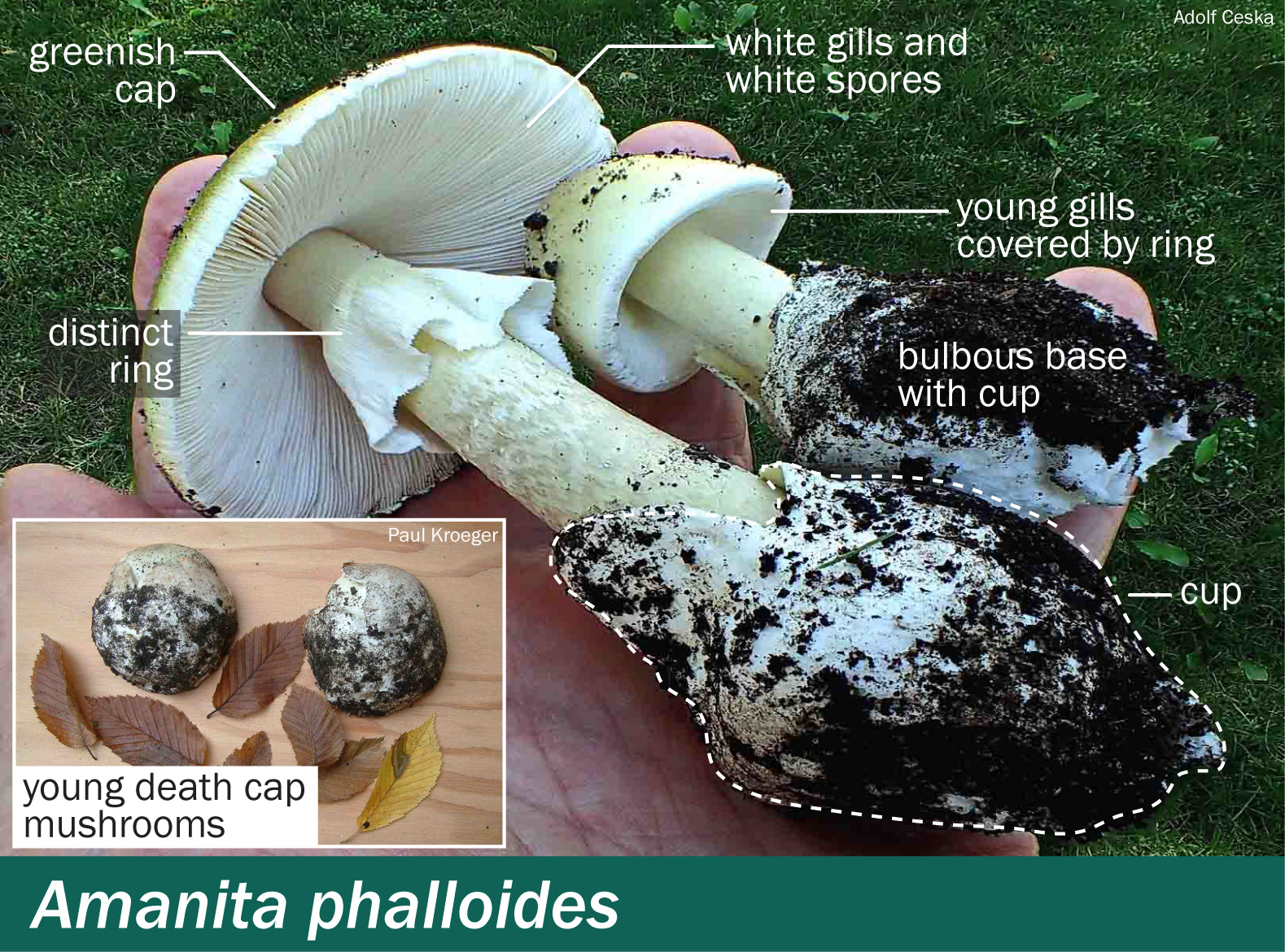
An Amanita phalloides has a distinct volva (a cup-like structure at the base), a ring on the stem, and white gills that do not touch the stalk. A Paddy Straw mushroom (Volvariella volvacea) has pinkish spores and lacks a ring. To a trained eye, these two are as different as a wolf and a Golden Retriever.
The "deception" only exists if you are looking at the world through a low-resolution lens of urban detachment. We’ve spent forty years telling people "don't touch that," instead of teaching them "how to see that." When you discourage education in favor of abstinence, you don't create safety. You create a vacuum of knowledge that gets filled by overconfident amateurs with a smartphone app.
Your Foraging App is a Death Trap
The "lazy consensus" suggests that technology will bridge the gap. If you don't know what it is, just snap a photo!
As someone who has spent decades in the field, I can tell you that trusting a neural network with your liver is a form of digital Darwinism. Machine learning models are trained on curated datasets. They struggle with variations in lighting, age, and environmental stress. A Death Cap in the sun looks different than a Death Cap in the shade. An old specimen might lose its ring or its characteristic olive-green tint.
The app sees a "98% match" for a Meadow Mushroom. You see a meal. The hospital sees a candidate for a liver transplant.
We are subsidizing stupidity by suggesting these tools are "improving." They aren't a safety net; they are a false sense of security that emboldens the incompetent. If you cannot identify a mushroom using three distinct morphological features and a spore print, you have no business touching it.
The Amatoxin Reality Check
Let’s talk about the actual chemistry, because the "warnings" usually gloss over the brutality of the biology. Most people think "poisoning" means an upset stomach and a night over the toilet.
With Amanita species, you deal with amatoxins. These are heat-stable bicyclic octapeptides. They do not care if you cook the mushroom, dry it, or soak it in vinegar. They work by inhibiting RNA polymerase II. In plain English: they stop your cells from being able to process DNA into proteins.
The process is agonizingly clinical:
- The Latency Period: You feel fine for 6 to 24 hours. You think you’re in the clear.
- The Gastrointestinal Phase: Violent vomiting and cholera-like diarrhea.
- The False Recovery: You feel better. The doctors might even send you home.
- The Hepatorenal Phase: Your liver and kidneys disintegrate.
The "solution" being pushed by California health departments is "curbing exposure" through signage. But signs don't stop people who believe they are the exception to the rule. We don't need fewer foragers; we need better foragers.
The Cultural Competency Gap
The rise in California poisonings is frequently linked to immigrant communities. The mainstream response is to translate the same ineffective warning signs into five more languages.
This misses the nuance of "ecological displacement."
A forager from Southeast Asia isn't "stupid" for picking a Death Cap; they are applying a valid mental model from one ecosystem to a different one where the rules have changed. In their home environment, the "white mushroom with a cup" might be a safe, delicious staple.
The "insider" truth that nobody wants to say out loud is that we are failing these communities by not providing hands-on, comparative education. We tell them "Stop foraging," which they ignore because foraging is a deep cultural touchstone. We should be saying: "Here is exactly how the California Death Cap differs from the mushrooms you grew up with."
Instead of banning the activity, we should be hosting mandatory "ID clinics" for anyone harvesting on public lands. But that requires effort and expertise, and the government prefers the cheap route of plastic signs and vague press releases.
The Problem with "Universal" Foraging Rules
You’ve heard the "rules."
"Avoid anything with white gills."
"Don't eat mushrooms growing on wood."
"If it peels, it's safe."
Every single one of these rules is dangerously wrong. Many of the world’s best edibles have white gills. Many deadly ones grow on wood. The "peeling" test is a myth that has killed dozens.
The "lazy consensus" loves these shortcuts because they are easy to remember. But in mycology, a shortcut is a shortcut to the morgue. There is no substitute for taxonomic rigor.
The Institutional Failure of "Safety First"
The California Department of Public Health and various mycological societies often advocate for a "when in doubt, throw it out" policy. It sounds responsible. It’s actually a surrender.
By pushing a "nature is scary" agenda, we’ve raised a generation of people who can identify 500 corporate logos but can’t distinguish a Chanterelle from a Jack O' Lantern. This lack of "biological literacy" makes people more susceptible to poisoning, not less. When you treat all mushrooms as "potentially deadly," people stop listening. They see a friend eat a wild mushroom and survive, and they conclude that the "experts" were just being dramatic. They then apply that same logic to an Amanita.
Stop "Curbing Exposure" and Start Demanding Competence
If we actually wanted to stop poisonings, we would stop the "awareness" campaigns and start implementing "certification" for foragers.
Imagine a scenario where foraging in a State Park required a basic proficiency test. Not a fee—a test. Prove you know the difference between an Agaricus and an Amanita. Prove you know what a vulva is.
The pushback would be immense. People claim they have a "right" to the land. But we require licenses to fish, licenses to hunt, and licenses to drive. Why do we allow people to gamble with their lives—and the resources of the public healthcare system—on a whim?
A single liver transplant resulting from a mushroom poisoning can cost upwards of $800,000. That is a massive public burden caused by avoidable ignorance.
The Contrarian Path Forward
The status quo isn't working. Poisonings are up because our connection to the land is shallow and mediated by screens.
The answer isn't to stay indoors. The answer is to get more aggressive with the education.
- Abolish the use of ID apps for anything destined for the plate.
- Fund comparative mycology, specifically targeting the differences between Mediterranean/Asian species and North American lookalikes.
- Stop the "Nature is a Mystery" rhetoric. Nature is a system. Learn the system or stay out of the kitchen.
The Death Cap isn't a villain. It's a fungus doing exactly what it evolved to do. The "rise in poisonings" is simply the data point that proves we are becoming a scientifically illiterate society.
Quit looking for a sign to save you. Pick up a dichotomous key, buy a 10x hand lens, and learn the morphology of the forest. If you aren't willing to do the work, stick to the grocery store.
The mushrooms don't care about your "intent." They only care about your chemistry.
Go get a textbook and learn to see the world in high definition, or keep your hands in your pockets.