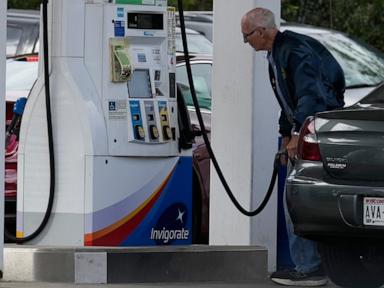
When retail gasoline prices spike past historical moving averages, political incentives align in a predictable direction. Incumbents face immediate electoral punishment from voters experiencing direct utility loss at the pump. In response, state legislatures frequently deploy a straightforward fiscal intervention: suspending state motor fuel excise taxes. While framed as direct relief for constituent purchasing power, this policy mechanism operates within a complex economic feedback loop that often distorts fuel markets, creates municipal budget deficits, and fails to deliver the promised net savings to consumers. Deconstructing this political strategy requires examining the transmission mechanism of fuel taxes, the elasticity of supply and demand in retail petroleum markets, and the structural misalignment between short-term electoral horizons and long-term fiscal stability.
The mechanics of a state fuel tax holiday are deceptively simple. A typical state imposes a fixed cents-per-gallon excise tax on gasoline and diesel to fund highway trust funds, bridge maintenance, and public transportation infrastructure. By legislative decree, this tax is either temporarily reduced to zero or frozen for a specified duration, usually ranging from three to six months, often coinciding with an active election cycle. The primary objective is to lower the retail price at the point of sale, thereby cushioning household balance sheets against macroeconomic commodity shocks driven by crude oil supply constraints or geopolitical conflicts.
However, petroleum markets do not operate in a vacuum of perfect competition or instant transmission. To understand why state fuel tax suspensions frequently underperform their stated objectives, one must examine the incidence of taxation and the market power of actors along the supply chain. Tax incidence economics dictates that the burden of a tax does not necessarily fall entirely on the entity legally mandated to pay it. Instead, the distribution of the tax burden depends on the relative price elasticities of supply and demand.
In the short run, the demand for retail gasoline is highly inelastic. Consumers require fuel for commuting, logistics, and essential travel, meaning that a sudden increase in price does not result in a proportional decrease in consumption. Conversely, the short-run supply curve is also relatively inelastic because refining capacity, distribution logistics, and crude oil extraction rates cannot be instantaneously scaled. When a state removes an excise tax, it alters the marginal cost structure for retailers and distributors.
In an unconstrained market with robust competition, suppliers pass the entire tax savings through to the consumer in the form of lower retail prices. Yet, empirical studies of past state tax holidays reveal that pass-through rates are rarely one hundred percent. Retailers, wholesalers, and refiners often absorb a portion of the tax cut as increased profit margins, particularly if regional refining bottlenecks or supply shortages give them localized market power. When overall market demand remains robust and supply is constrained, the removal of a tax wedge can induce an upward adjustment in pre-tax prices by suppliers seeking to capture the surplus. Consequently, the consumer surplus generated by the legislative action is shared between motorists and the petroleum supply chain, blunting the intended relief effect.
Beyond the question of price transmission, a fuel tax holiday creates an immediate structural deficit in state infrastructure funding. State departments of transportation rely on dedicated motor fuel tax revenues as a predictable, pay-as-you-go funding stream for capital improvement projects and ongoing maintenance. When these revenues are suspended, states face three primary choices: defer critical infrastructure maintenance, utilize general fund surpluses to backfill the shortfall, or issue municipal debt.
Deferring maintenance introduces compounding long-term costs. Infrastructure degradation follows a non-linear trajectory; repairing a road base early is exponentially cheaper than reconstructing a failed sub-base years later. Utilizing general fund surpluses, while feasible during periods of temporary state fiscal windfalls, diverts capital from other pressing public needs such as education, public health, or tax reform. Relying on debt financing shifts the fiscal burden onto future taxpayers, effectively trading a current political crisis for a future solvency challenge.
Furthermore, the duration of these policies creates behavioral anomalies. Because tax holidays are temporary and explicitly time-bound, they fail to incentivize structural behavioral adjustments such as fleet electrification, route optimization, or modal shifts toward public transit. Instead, they subsidize incumbent consumption patterns while artificially suppressing price signals that would otherwise encourage energy conservation during a period of scarcity.
The intersection of fiscal policy and electoral politics thus reveals a fundamental divergence between optimal economic design and political optimization. A fixed-rate excise tax suspension is an attractive instrument for policymakers because its costs are diffuse, deferred, and hidden within capital maintenance backlogs, while its benefits are concentrated, immediate, and highly visible during an election season.
To evaluate alternative interventions, policymakers must weigh the transactional friction of price controls and tax waivers against targeted direct-assistance models. Direct, means-tested cash transfers or refundable tax credits deliver relief directly to vulnerable households without distorting commodity price signals or degrading public infrastructure funding mechanisms. While structurally more complex to administer than a blanket legislative suspension of an excise tax, targeted transfers preserve the integrity of price discovery in energy markets and protect state fiscal health.
The recurring reliance on fuel tax holidays during electoral cycles underscores a persistent tension in public administration. When confronted with exogenous macroeconomic shocks, the political imperative to demonstrate immediate responsiveness frequently overrides long-term economic stewardship. Navigating this dynamic requires insulating critical infrastructure funding streams from cyclical political pressures and recognizing that attempting to legislate away the cost of a global commodity shock through temporary tax maneuvers produces secondary distortions that often outweigh the initial relief.