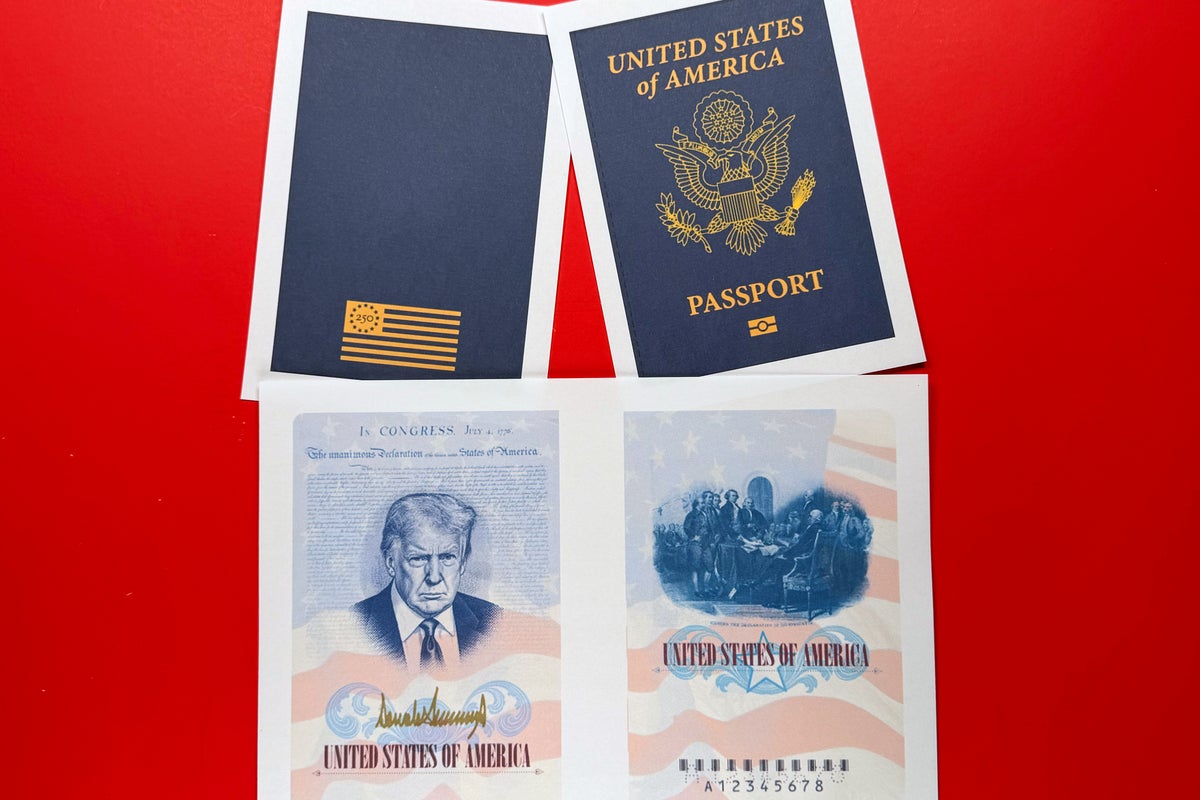
When the United States Department of State announced a nationwide rollout of limited-edition commemorative passports featuring the portrait and gold-embossed signature of a sitting president to mark the nation's 250th anniversary, official channels pointed to overwhelming public demand. Historically, travel documents issued by Washington have functioned as neutral instruments of state authority. They carry iconography tied to founding eras, natural landmarks, and collective civic heritage. Washington, Jefferson, Lincoln, and the monuments of Mount Rushmore anchor traditional documents. Introducing a living executive into that pantheon marks a departure in how symbols of state power are conceptualized and distributed.
The mechanics of this rollout tell a distinct story about modern administrative prioritization. Originally restricted to in-person applicants at the primary Washington, D.C. office, the program has expanded rapidly to twenty-seven regional passport agencies across the country. With an additional quarter-million copies earmarked for distribution, the initiative bridges the gap between state-sanctioned identification and personalized political iconography. Applicants must navigate specific scheduling requirements, selecting designated application days to secure the commemorative version instead of the standard blue biometric booklet.
This development does not happen in a vacuum. It sits alongside a broader administrative pattern that has sought to integrate presidential branding into federal spaces, currencies, and commemorative coin programs. From proposed modifications to paper tender to architectural additions within the capital, the administration has consistently treated civic infrastructure as an extension of personal and political identity. Yet a passport occupies a unique legal and psychological category. It is an internationally recognized credential, scrutinized by foreign border control agents, embassies, and customs officials worldwide.
International reception of travel documents tends to rely on standardized predictability. When a passport's visual vocabulary departs from timeless national symbols to emphasize a contemporary political figure, questions of protocol naturally arise among diplomatic observers. While sovereign states retain absolute authority over the design of their domestic and international credentials, standardizing a living political leader inside a document designed for cross-border transit tests long-standing conventions of administrative neutrality.
The rationale provided by federal spokespeople highlights public enthusiasm, pointing to a segment of the citizenry eager to claim a tangible piece of historical pageantry surrounding the nation's semi-quincentennial. For supporters, the document represents a bold reclamation of patriotism, an artifact of an era defined by populist disruption of traditional bureaucratic norms. Critics, conversely, view the design as an erosion of institutional boundaries, transforming a neutral federal identity document into a piece of collectible partisan memorabilia.
Logistically, the rollout introduces friction into an already overburdened passport issuance ecosystem. Regional agencies handling the special documents must manage separate appointment queues, segregating applicants who want the commemorative version from those seeking standard renewal services. Passport processing queues have historically served as a barometer of bureaucratic efficiency; injecting ideological customization into the mix adds administrative overhead at a time when consistency is at a premium.
As these documents circulate globally, they will cross foreign checkpoints where administrative norms vary wildly. Whether international border officials view the design as a mere curiosity or a break from traditional diplomatic custom remains to be seen. What is certain is that the initiative has permanently altered the conversation around how American power, identity, and executive presence are stamped onto the physical artifacts of citizenship.
Trump Marks America's 250th With New Limited-Edition Passport
This video provides an overview of the new passport design and its release details.