Video-driven coverage of crackdowns on Pakistan Tehreek-e-Insaf (PTI) supporters in Khyber Pakhtunkhwa captures visceral street-level friction while overlooking the structural constitutional and coercive mechanics driving the conflict. A high-rigor analysis moves past raw footage to examine how federal authority, provincial governance, security forces, and mass mobilization interact under emergency conditions. The blueprint of this analysis rests on four operational dimensions: the constitutional suspension of provincial autonomy, the coercive cost function of street protests, the information and mobility bottlenecks engineered during security operations, and the strategic trade-offs facing both state executives and opposition organizers.
Deconstructing the Video-First Reporting Model
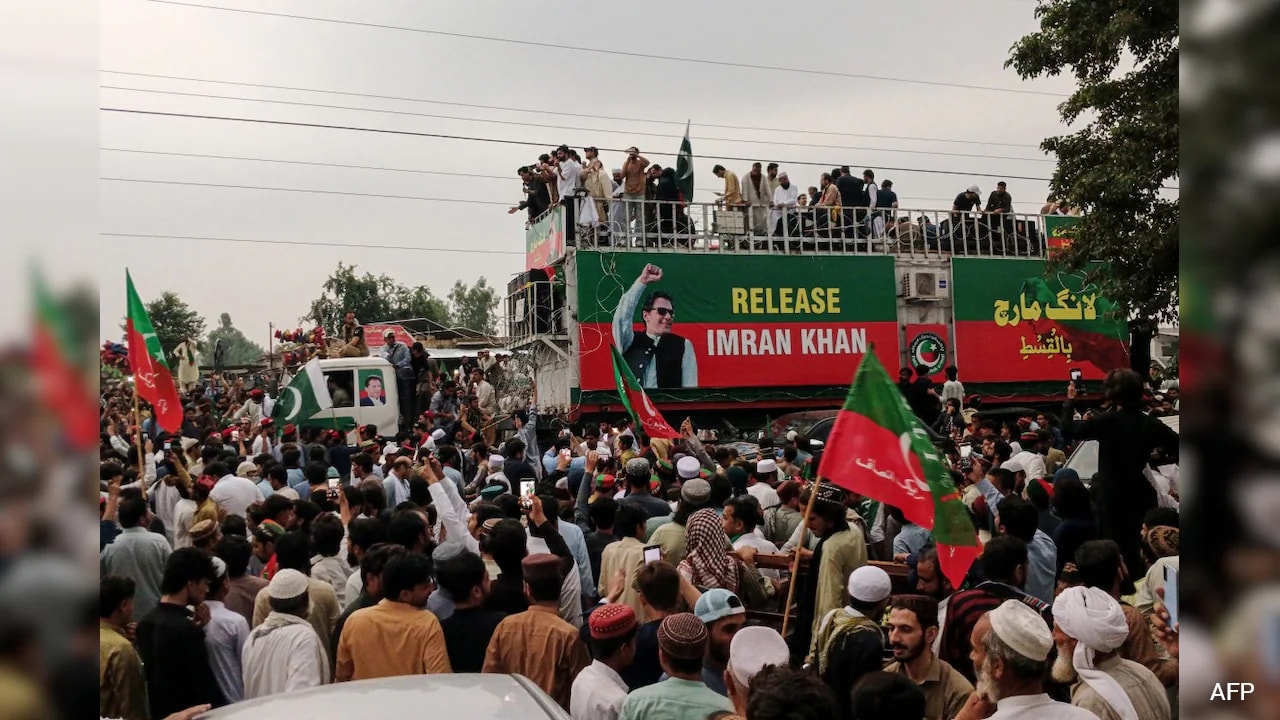
Standard video reports on clashes between security forces and Imran Khan's supporters treat each protest and police intervention as a self-contained episode of disorder. Clips showing barricades, tear gas, road closures, or clashes in Peshawar and along transit arteries toward Islamabad deliver immediate visual impact, yet they flatten complex institutional dynamics into a binary of protesters versus police.
Three analytical blind spots limit purely visual reporting:
- Cause-and-effect inversion: Visual coverage often presents street clashes as the primary political event, whereas executive decrees—such as suspending a provincial assembly or imposing governor's rule and emergency powers—alter the legal rules of engagement beforehand.
- Asymmetric attribution: Crowd footage rarely distinguishes between routine riot control, armed confrontation, or disputed accounts of live fire versus warning shots, even though those distinctions shape legal accountability and public legitimacy.
- Missing endurance variables: Short clips show peak confrontation rather than multi-day logistics, supply lines, arrest processing capacity, and economic spillover across urban corridors.
Distinguishing verified institutional actions from contested claims is essential. That federal authorities have invoked emergency measures, suspended provincial governance, closed major highways, and detained protesters and party figures is documented across reporting. By contrast, exact casualty tallies, whether gunfire was aimed into crowds or fired into the air, and the precise internal deliberations of security commanders or opposition strategists often involve conflicting accounts or educated inference rather than settled public record.
The Four Pillars of Provincial Crackdown Dynamics
To understand why confrontations in Khyber Pakhtunkhwa recur and escalate, analyze the conflict through four interlocking mechanisms rather than isolated street scenes.
1. Constitutional Overrides and Subnational Control
When an opposition party controls a provincial government while its leader remains imprisoned and in conflict with the federal center and security establishment, subnational institutions become contested bases of power. Provincial administrations can mobilize administrative resources, local networks, and rally logistics toward Islamabad or major regional hubs.
Imposing emergency rule, governor's rule, or direct security deployments rewires that chain of command. Instead of negotiating with an elected provincial executive, the center shifts authority toward federal administration and uniformed enforcement. The first-order effect is immediate disruption of organized mobilization; the second-order effect is hardening grievance, as supporters view constitutional suspension as an assault on their electoral mandate.
2. The Coercion and Mobilization Cost Function
Every large protest march or crackdown operates as a dynamic cost function for both sides. State planners weigh the political and economic cost of allowing prolonged highway blockades or capital sit-ins against the reputational, legal, and escalatory cost of mass arrests and kinetic force. Government spokespeople have explicitly framed pre-emptive road closures and security deployments around preventing multi-day shutdowns that paralyze commerce and administrative centers.
Protest organizers face a parallel equation. Sustaining a long march or multi-day sit-in requires transport coordination, food and medical support, legal aid for detainees, and leadership cohesion. When arrests sweep up local coordinators and mid-level organizers alongside rank-and-file demonstrators, mobilization friction rises sharply—even when emotional commitment to Imran Khan remains high.
3. Chokepoints, Mobility Denial, and Information Friction
Geography in northwestern Pakistan amplifies physical control tactics. Routes connecting Khyber Pakhtunkhwa—including Peshawar—toward Islamabad pass through defined highway and motorway corridors where shipping containers, checkpoints, and police cordons can choke movement at scale.
Controlling physical arteries usually pairs with controlling information channels. Temporary telecom or mobile data restrictions disrupt real-time crowd routing, live coordination among decentralized protest cells, and immediate video verification. Yet total information blackout carries a counter-effect: when official channels and live feeds are throttled, rumors travel faster, raising perceived stakes and magnifying distrust once connectivity returns.
4. Convergence Risk Across Grievances
Protests centered on a single political figure or party grievance behave differently when they intersect with broader economic stress. Analysts and political observers have noted that state managers watch closely for the convergence of political mobilization with everyday pressures such as inflation and cost-of-living frustration. If a single-issue movement merges with wider economic discontent, the addressable base of street participation expands beyond core party loyalists, making containment far more resource-intensive.
How Street Escalation Unfolds in Practice
Consider a typical sequence when a major march is announced from Khyber Pakhtunkhwa toward the federal capital:
- Pre-emption and perimeter hardening: Authorities deploy containers, block key motorway links, increase checkpoints, and conduct pre-rally detentions of activists and local leaders to fracture staging before convoys coalesce.
- Convoy friction and dispersion: As columns attempt to bypass roadblocks or breach perimeters, riot police and security forces use containment, tear gas, baton charges, or—in contested flashpoints—firearms, producing injuries, arrests, and disputed narratives over force proportional to threat.
- Leadership calculation and de-escalation: Senior figures evaluate detainee numbers, injury reports, communications blackouts, and exhaustion among marchers, deciding whether to sustain attrition or suspend the push to preserve organizational survival.
- Post-crackdown recalibration: Following dispersion, both sides adjust—the state tightens administrative and legal pressure, while the movement regroups around legal battles, prisoner welfare, and messaging ahead of the next mobilization cycle.
Why Common Questions About the Crackdown Require Nuance
Observers frequently ask whether emergency rule and heavy security deployments permanently pacify Khyber Pakhtunkhwa. Coercive containment can reliably break up specific rallies, clear blocked highways, and deter immediate street gatherings, especially when paired with mass detentions. However, suppressing street visibility does not automatically erase underlying political allegiance; grievances often go underground or shift toward legal, online, and localized forms of resistance.
Another common question asks why protests persist despite repeated arrests and road closures. From a strategic standpoint, high-salience grievances around an imprisoned leader can sustain periodic bursts of high-risk participation even when expected street success is low, particularly when supporters perceive institutional avenues as blocked. At the same time, repeated high-cost crackdowns without clear tactical breakthroughs can also produce fatigue among participants over time.
Operational Trade-Offs and Analytical Limitations
Any strategy favored by state actors or opposition leaders carries steep operational limits:
- Hard security crackdowns restore short-term order and clear transit corridors, but risk severe reputational damage, heightened civilian-state hostility, and deeper alienation in a sensitive border province.
- Prolonged highway blockades and capital sit-ins maximize political pressure and media visibility, yet impose heavy economic costs on ordinary commuters and traders while exposing marchers to concentrated state force.
- External analytical models face data constraints during active crackdowns: curfews, internet throttling, conflicting official and party statements, and ongoing court proceedings limit real-time verification of exact counts and chain-of-command decisions.
Strategic Play for Tracking and Assessing Escalation
To evaluate future developments in Khyber Pakhtunkhwa ahead of headline clips, track three leading indicators rather than raw crowd estimates alone: first, whether federal authorities expand or roll back emergency and governor's rule powers; second, whether highway and telecom restrictions are applied selectively along transit corridors or broadly across districts; and third, whether protest calls remain focused strictly on political release demands or begin folding in broader economic grievances. When all three indicators trend upward simultaneously, expect sharper street friction and wider institutional disruption; when authorities lift mobility and communications curbs while talks or legal tracks resume, expect temporary containment rather than structural resolution.
Pakistan's Khyber Pakhtunkhwa Sees Massive Protests Against Emergency, More Arrests Amid Crackdown
This video provides visual coverage of demonstrations and arrests in Khyber Pakhtunkhwa following emergency measures, illustrating the street-level tensions analyzed above.