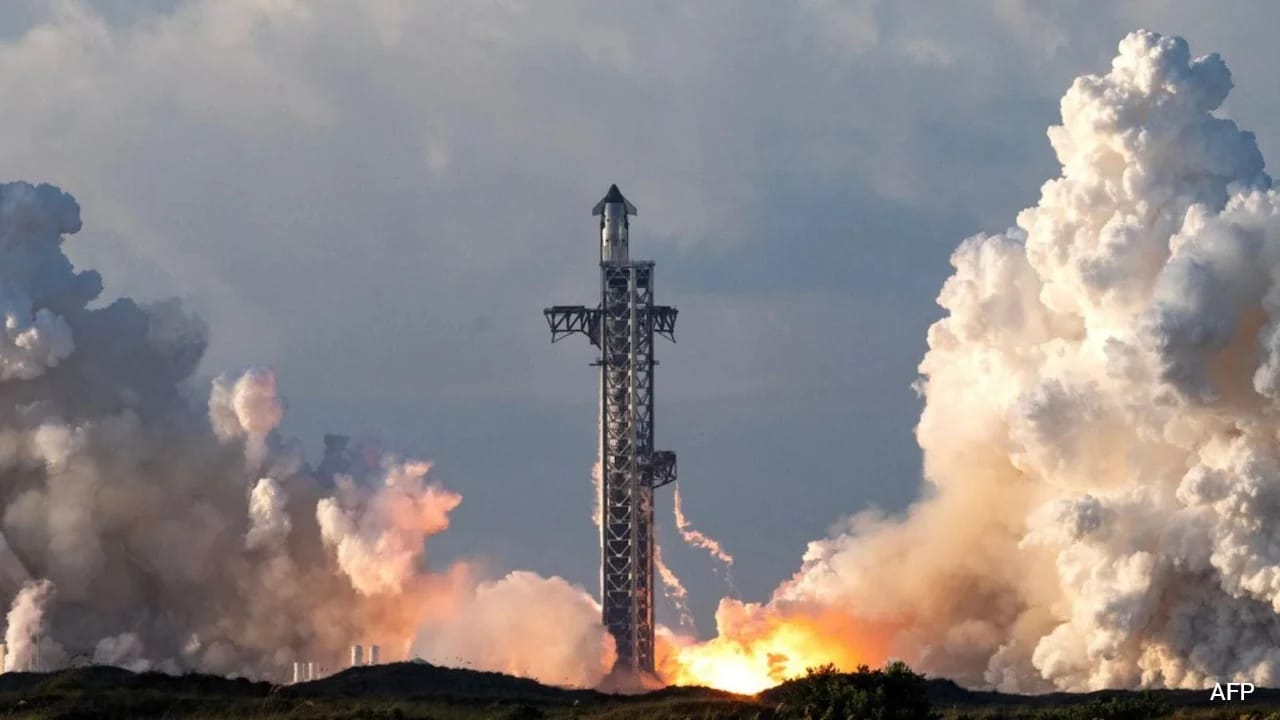
Rockets blow up. People panic. The media declares a crisis. Then the engineers go back to the drawing board, tweak some code, weld a new ring of steel, and try again. That is the rhythm of modern aerospace development, and nowhere is it more visible than in the testing campaign of SpaceX's Starship. When the massive megarocket finally punched its way into orbit during its dramatic flight test, champagne corks popped in Starbase, Texas, even though the mission ultimately cut its timeline short.
Most casual observers looked at the fiery finish and saw failure. They missed the entire point. In experimental rocket development, reaching space and surviving the extreme thermal stress of orbital insertion is the holy grail. The fact that the vehicle didn't complete every single secondary objective or make it to its planned terminal splashdown in pristine condition matters very little to the teams building the hardware. What matters is that the physics actually worked. The math checked out. The heaviest, most powerful flying machine ever constructed proved it could leave Earth's gravity behind and coast through the vacuum of space.
The Reality Of Reaching Orbital Velocity
Getting a skyscraper-sized stack of stainless steel off the launch pad is difficult enough. Keeping it moving fast enough and high enough to stay in orbit without tearing itself apart from aerodynamic pressure is an entirely different beast. For years, critics argued that SpaceX was years away from true orbital capability. They pointed to early suborbital hops, broken heat shield tiles, and spectacular mid-air detonations as proof that the entire architecture was flawed.
Those critics misunderstood how iterative engineering works. When Flight 14 cleared the atmosphere and successfully performed its orbital insertion burn, it silenced the noise. The vehicle achieved the necessary velocity and trajectory, proving that the Super Heavy booster and the Ship upper stage could work in concert under extreme loads. True, the flight ended early with a controlled or semi-controlled plunge into the ocean, but that was a feature of the test parameters, not a catastrophic design failure. Flight controllers pushed the vehicle right to its limits, testing attitude control, thermal protection systems, and structural integrity under real-world space conditions.
When you test hardware to destruction, you expect destruction. Every single anomaly provides gigabytes of telemetry data that computer simulations simply cannot replicate. You can run finite element analysis until your servers melt, but you cannot fake the plasma interaction of atmospheric reentry at seventeen thousand miles per hour.
Why The Early Ending Was Always Part Of The Plan
The phrase "flight ends early" triggers immediate anxiety for anyone watching a live stream. It sounds like an emergency. In the context of a flight test campaign, however, it usually means the safety systems or automated flight controllers did exactly what they were programmed to do.
If an onboard sensor detects minor fuel sloshing anomalies, unexpected thermal spikes on a flap actuator, or slight deviations in guidance navigation and control, the mission profile changes instantly. Instead of risking an uncontrolled breakup over populated landmasses or losing valuable tracking data, mission controllers or automated abort sequences terminate the mission early. They bring the bird down in a safe ocean zone where telemetry can still be harvested.
This philosophy starkly contrasts with legacy aerospace programs where every single flight has billions of dollars and years of bureaucratic survival riding on it. When a traditional NASA or defense contractor rocket fails, congressional hearings happen and programs get canceled for a decade. SpaceX treats multi-million-dollar steel ships like test mules in a Detroit automotive wind tunnel. If one breaks, you sweep up the scrap, look at the sensor logs, fix the bug in software, and roll out the next ship sitting right next to it in the high bay.
Transforming Satellite Deployment Economics
Beyond the engineering theatre, this milestone fundamentally alters the commercial calculus of low Earth orbit. Starship is not just a transport truck for astronauts heading to the moon. It is a brutal economic disruptor designed to render traditional launch providers obsolete through sheer scale.
During its landmark orbital tests, the vehicle successfully deployed batches of Starlink V3 satellites. Let us look at the raw numbers. A single Starship payload fairing can swallow dozens of these next-generation satellites in one go. That single launch carries a bandwidth capacity equivalent to more than a dozen Falcon 9 missions.
Think about what that means for operational costs. The price per kilogram to orbit drops by an order of magnitude when you eliminate the need to stack, prep, and fly fifteen separate medium-lift rockets. Competitors who spent the last decade building expensive, expendable rockets capable of lifting medium payloads are suddenly staring down an opponent who can launch a massive constellation in a single afternoon. This shift explains why global space agencies and rival commercial entities are scrambling to redesign their heavy-lift roadmaps. They aren't just competing with a rocket company anymore; they are competing with a vertically integrated manufacturing line that treats orbital hardware like disposable packaging.
The Brutal Physics Of Heat Shields And Reusability
If orbit is the first mountain, full and rapid reusability is the second, much steeper mountain. Everyone remembers the iconic footage of boosters returning to land back at the launch tower, caught mid-air by the massive mechanical arms known affectionately as the chopsticks. It looks like science fiction brought to life.
Yet, bringing an upper stage back from orbital velocity is an entirely different challenge compared to returning a first-stage booster. The thermal energy accumulated during orbital reentry is staggering. The plasma sheath surrounding the ship reaches temperatures hot enough to melt titanium.
Earlier flights suffered heavy tile loss because adhesive bonds couldn't handle the sheer acoustic vibration during launch combined with the thermal shock of braking in the upper atmosphere. SpaceX engineers responded by reworking the entire heat shield architecture, replacing fragile ceramic tiles in high-stress zones with ablative sub-layers and active cooling channels. Recovered ships fished out of the ocean or landed on target provide physical evidence of how well these new materials hold up under fire. When engineers can peel back a returned heat shield and see only minor scorching instead of bare steel, they know they are winning the war against thermal physics.
What Most People Get Wrong About Orbital Mechanics
Internet comment sections during a Starship launch are fascinating sociological artifacts. You will see people arguing passionately about whether the ship actually reached orbit or if it fell a few meters per second short.
The confusion usually stems from the difference between Earth-Centered Earth-Fixed (ECEF) velocity and Earth-Centered Inertial (ECI) velocity. To an observer standing on the rotating surface of the Earth, the orbital math looks different than it does to a satellite tracking station in space. Starship frequently utilizes specific suborbital or low-energy orbital trajectories during early tests to ensure natural disposal if something goes wrong. However, once the vehicle establishes a stable perigee above the atmosphere with a positive orbital period, it is legally and physically in orbit.
Arguing over whether a sub-orbital arc versus a full circular orbit matters for a test article misses the forest for the trees. The vehicle achieved space vacuum conditions, microgravity coasting, payload deployment mechanisms, and orientation maneuvers. Whether it orbited once or twenty times before coming down is secondary to proving that the systems survived the vacuum and thermal transition.
The Road To Artemis And Lunar Infrastructure
Every single test flight, including the ones that end early in a fiery splashdown, serves as a direct stepping stone for NASA's Artemis program. NASA contracted Starship as the human landing system designed to take astronauts down to the lunar surface.
That assignment requires capabilities that have never existed in human spaceflight history. You cannot fly a single Starship from the surface of Earth all the way to the moon and back without refueling. The math of the Tsiolkovsky rocket equation makes it impossible.
This reality forces SpaceX to master orbital propellant transfer. Multiple tankers must launch into low Earth orbit, dock with a propellant depot, transfer super-chilled liquid oxygen and liquid methane in zero gravity, and top off the lunar lander before it burns for deep space. Proving that Starship can reach orbit reliably, hold cryogenic propellants for days or weeks without boil-off, and execute precise orbital maneuvers is the foundational prerequisite for landing humans on the moon. When a flight ends early, it reminds engineers which valves, seals, or software loops need strengthening before they ever put human lives on top of that mountain of steel.
Reading Past The Sensationalist Headlines
When you see a news alert screaming about a rocket test ending early, take a deep breath. Look past the dramatic thumbnail images of explosions over the ocean.
Aerospace engineering is hard. It is expensive, messy, and relentlessly unforgiving of small mistakes. The companies that succeed are the ones willing to fail openly, learn quickly, and build relentlessly. SpaceX didn't reach this milestone by playing it safe. They reached it by embracing the chaos of rapid prototyping and squeezing every ounce of data out of every single vehicle that leaves the pad.
Track the telemetry trends, watch how fast they turn around the launch pads, and notice how structural problems that grounded rockets for months a few years ago are now fixed between flight windows. That is the real story of modern spaceflight. The hardware is evolving faster than the industry can write about it, and the sky is no longer the ceiling.
Check the launch windows, keep an eye on the FAA license approvals, and watch the horizon for the next massive stack to clear the tower.