Standardization is the silent killer of the American cafe.
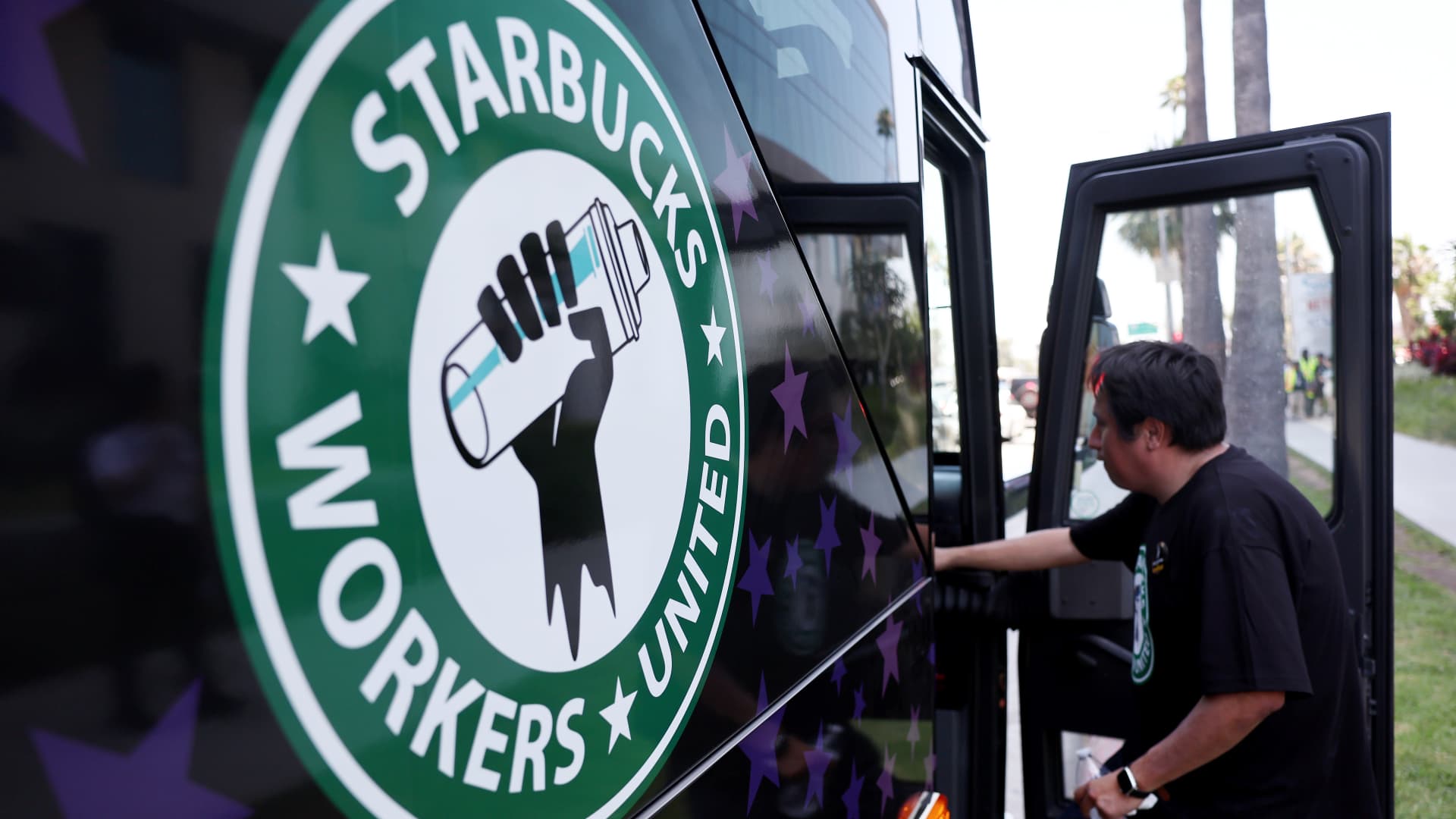
While the media fawns over the "historic" contract proposals sent by Starbucks Workers United, they are missing the catastrophic reality: you cannot unionize a vibe, and you certainly cannot legislate excellence. The proposed contract isn't a victory for workers; it is a blueprint for the "McDonalization" of a brand that once pretended to care about the third place.
The consensus is lazy. Most commentators think this is a simple tug-of-war over wages and credit card tips. It isn't. This is a fundamental shift from a merit-based craft to a seniority-based bureaucracy. If these proposals pass, the "partner" experience dies, replaced by a punch-clock mentality that will drive every talented barista into the arms of local independent shops.
The Seniority Trap: Killing the Hustle
The union’s demand for seniority-based scheduling and promotions is the most toxic element of the proposal.
In a high-volume environment, the best worker should get the best shifts. Period. If a twenty-year-old barista can work the bar during a 7:00 AM rush with the precision of a surgeon while a five-year veteran fumbles the oat milk, the twenty-year-old deserves the prime hours and the path to management.
By prioritizing "time served" over "value delivered," the union is effectively telling high-performers that their talent doesn't matter. I have seen retail operations grind to a halt because the most experienced people were also the most burnt out, yet they held the keys to the schedule.
This creates a Talent Drain.
- Top-tier baristas realize their skill has no market value within the company.
- They leave for specialty roasters where skill is rewarded with better pay and respect.
- Starbucks is left with a workforce of "homesteaders"—people who stay not because they love the work, but because they’ve clocked enough years to be un-fireable.
The Myth of the "Living Wage" in a Commodity Business
The union wants a starting wage of $20 per hour. On the surface, it sounds moral. In practice, it’s a math problem that ends in automation.
Starbucks operates on margins that are thinner than most realize. When labor costs spike artificially—meaning, not because the market demanded it, but because a contract forced it—the company has two levers: raise prices or cut heads.
We are already seeing the "Siren" pivot toward Clover Vertica brewers and automated cold foam dispensers. Every time a union rep demands a higher floor without a corresponding increase in throughput, they are just voting for their own replacement by a machine.
Imagine a scenario where every Starbucks has a $20 minimum. To maintain the $25 billion in annual gross profit Wall Street demands, the company will simply reduce the "labor-to-cup" ratio. You’ll get your $20 an hour, but you’ll be doing the work of three people while a robotic arm handles the lattes. The "human connection" the union claims to protect is the first thing the company will sacrifice to balance the ledger.
Just Cause is Just Code for Mediocrity
The demand for "Just Cause" discipline sounds fair. No one wants to be fired because a manager is having a bad day.
However, in the service industry, "Just Cause" is often a shield for the "Quiet Quitter." It turns a simple termination into a legal marathon. I’ve consulted for firms where firing a toxic employee took six months of documented "coaching" and "progressive discipline."
During those six months, the toxic employee poisoned the culture, slowed down the line, and made the "Third Place" miserable for customers. If Starbucks loses the ability to trim the fat quickly, the customer experience will continue its current nose-dive. You can already feel it—the sticky tables, the 15-minute waits for a drip coffee, the baristas who are too busy chatting to acknowledge the line.
A union contract codifies this apathy. It makes "doing the bare minimum" a protected right.
Credit Card Tips are a Distraction
The union is fighting hard for credit card tipping. They see it as "free money" from the company.
It’s actually a transfer of the wage burden from the employer to the customer. It’s a cowardly move. Instead of Starbucks paying a competitive wage out of their own pockets, they are asking the customer—who is already paying $7 for a burnt bean Frappuccino—to subsidize the baristas.
This creates "Tip Fatigue." When every digital interface asks for 20%, the customer eventually snaps. They stop coming. Or they stop tipping altogether, including at the local mom-and-pop shop where the tip actually matters. The union isn't "winning" pay; they are gambling on the fluctuating generosity of a frustrated public.
The Specialty Coffee Divergence
The most "pro-worker" thing a barista can do is leave Starbucks.
The industry is currently splitting into two distinct worlds:
- The Fast-Food Tier: Starbucks, Dunkin', Dutch Bros. This is about speed, sugar, and scale.
- The Craft Tier: Intelligentsia, Blue Bottle (pre-Nestle), and your local micro-roaster. This is about extraction, origin, and technique.
By trying to turn Starbucks into a unionized trade, the workers are pretending they are in the Craft Tier while working in the Fast-Food Tier. You cannot have it both ways. You cannot demand the protections of a guild while pumping out 400 pumpkin spice lattes a shift.
If you want to be treated like a professional, go to a place that values the $10,000 espresso machine and the $50-per-pound beans. If you stay at the Siren, you are a cog in a very large, very efficient machine. Cogs don't get to rewrite the manual.
Stop Asking for a Seat at the Table
The union wants a "seat at the table" regarding store layouts and equipment.
This is a hallucination. Howard Schultz and his successors aren't interested in a barista's opinion on ergonomics if it slows down the drive-thru. Starbucks is a real estate and logistics company that happens to sell caffeinated milk.
The union's proposal tries to fix the symptoms of a corporate giant that has lost its soul. You can't fix a soul with a 30-page collective bargaining agreement.
Workers think they are fighting for a better job. They are actually fighting to stay in a dying one. The "win" isn't a better contract at Starbucks; the win is building a skillset that makes Starbucks irrelevant to your future.
The harder the union pushes, the faster the automation arrives. The more they demand seniority, the faster the talent leaves. The more they insist on "Just Cause," the worse the service gets.
This contract isn't the beginning of a new era for labor. It's the final chapter of the coffee house as we knew it.
Quit your job. Start a cart. Buy a roaster. Do anything except wait for a multi-billion dollar corporation to give you a "fair" piece of a soul they sold decades ago.
Would you like me to analyze the specific economic impact of the proposed "guaranteed hours" clause on franchise-equivalent corporate modeling?