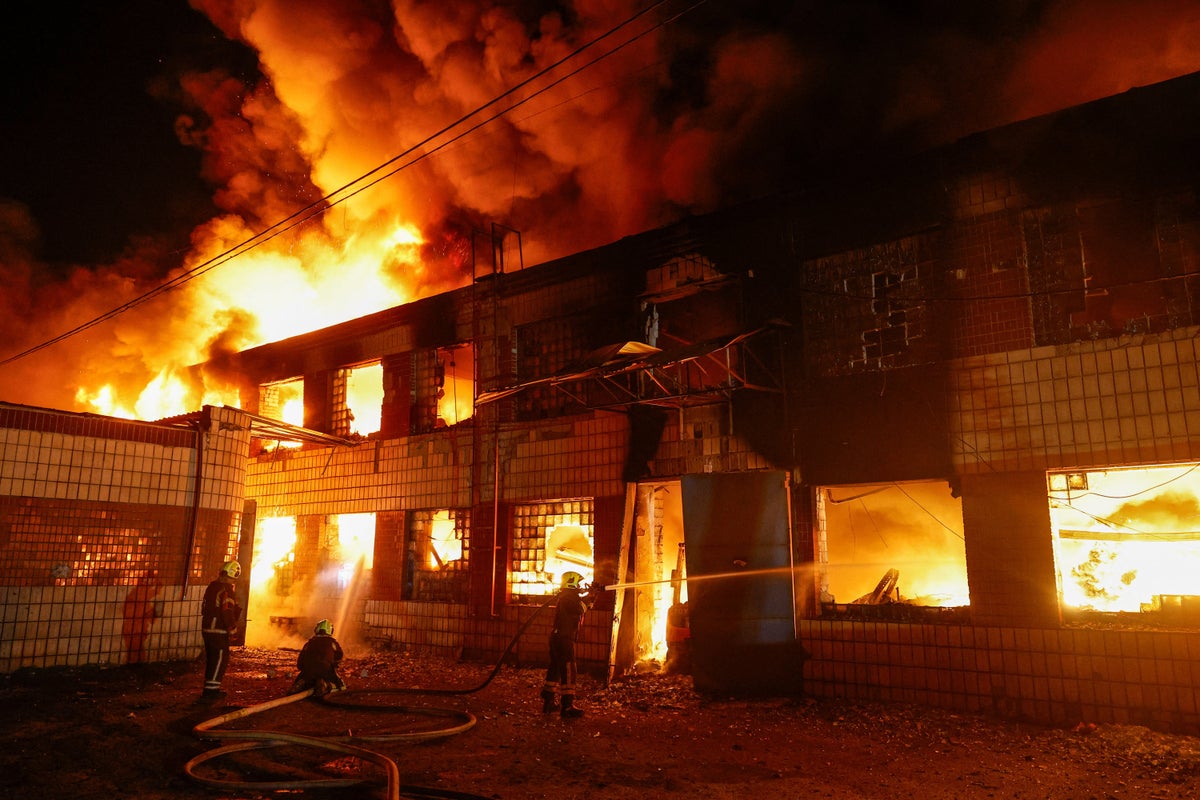
The kettle was just beginning to whistle when the sky ripped open.
In Kyiv, you do not wait for the air raid sirens to finish their crescendo before you move. You memorize the different pitches of violence. There is the low, rumbling hum of a slow-moving drone, a sound like a broken lawnmower hovering somewhere in the clouds. There is the sharp, whip-crack static of air defense systems scrambling to intercept. And then, there is the ballistic missile.
A ballistic missile does not tease. It travels along a high, silent arc through the upper atmosphere before plunging downward at hypersonic speeds. You do not hear it coming until it is already there.
Imagine a woman named Olena. She is thirty-four, an architect, and she has kept a packed suitcase by her front door for over two years. On this particular morning, her fingers were wrapped around a ceramic mug. When the shockwave hit, the glass in her kitchen window did not just break; it atomized, turning into a cloud of glittering, lethal dust that peppered the far wall. The mug survived. Her kitchen did not.
This is the reality of a Tuesday morning under a ballistic barrage. It is not a abstract map with red arrows pointing toward a capital city. It is the smell of pulverized drywall, the taste of cold copper in the back of your throat, and the sudden, frantic inventory of your own limbs.
The Geography of Panic
When Moscow launches a coordinated ballistic strike, the strategy relies on sheer velocity. Unlike cruise missiles, which can hug the terrain and dodge radar, ballistic missiles are brute-force instruments. They are designed to overwhelm. They fly high, they fly fast, and they strike with a kinetic energy that can collapse entire multi-story apartment buildings into neat piles of gray concrete dust.
But the physical destruction is only half the objective. The true target is the mind.
Consider the mechanics of the early morning commute in a city under siege. Kyiv’s metro system is one of the deepest in the world. Stations like Arsenalna plunge more than three hundred feet below the surface. On mornings like this, these cavernous underground spaces cease to be transit hubs. They become subterranean cities.
Thousands of people, clutching children, cats in plastic carriers, and rapidly depleting thermoses of coffee, sit shoulder-to-shoulder on the cold granite steps. There is a strange, heavy silence down there. The air is thick with the scent of damp wool and old concrete. Upstairs, the world is ending. Downstairs, people are checking their phones, trying to see if their workplaces still exist, or if the school run is canceled for the third time this week.
This shift from normalcy to survival happens in a heartbeat. One moment you are worrying about a presentation or a dent in your car bumper. The next, you are calculating the structural integrity of the ceiling above your head.
The Cost of the Shield
To understand how Kyiv survives these mornings, you have to understand the invisible canopy overhead. It is a complex, multi-layered net woven from Western air defense systems and Soviet-era hardware. Patriot batteries, NASAMS, and Gepard mobile guns scan the skies, searching for anomalies in the dark.
Every interception is a triumph of engineering, but it comes with a terrifying caveat.
When a defense missile collides with a ballistic threat, the energy released is catastrophic. The missile does not simply vanish. Tons of burning metal, unspent fuel, and fragmented steel rain down over the residential districts below. A successful intercept can still set a high-rise on fire, crush parked cars, or shear the roof off a school.
The citizens of Kyiv know this. They live with the paradox that the very systems saving their lives are also creating a deadly lottery of falling debris.
The financial calculus is equally staggering. A single interceptor missile can cost millions of dollars. The drone or decoy it destroys might cost a fraction of that. It is an asymmetric war of attrition, played out in the clouds above a sleeping city. Every siren is a test of logistics, a question of how long the shield can hold before the supply runs dry.
The Rhythm of the Aftermath
By noon, the smoke begins to clear. The sirens fall silent, replaced by the persistent, urgent wail of fire engines and ambulances.
Street sweepers appear on the avenues, sweeping up the mounds of shattered glass with a rhythmic, scraping sound that has become the soundtrack of the city. Volunteers in orange vests set up folding tables to hand out hot tea and plastic sheeting to cover blown-out windows. Neighbors help neighbors carry ruined furniture down five flights of stairs because the elevators have lost power.
This is not resilience in the way politicians use the word. It is not heroic or grand. It is exhausting, repetitive, and deeply unfair. It is the sheer, stubborn refusal to let the chaos win the day.
Olena did not go to the office on Tuesday. Instead, she spent the afternoon sweeping the glittering dust from her kitchen floor, carefully stepping around the shattered remnants of her window frame. She worked in silence, her movements methodical and slow.
As the sun began to set, casting a pale orange glow over the damaged skyline, she sat on her balcony. The air was cold, smelling faintly of burning rubber and wet plaster. She held a new mug, filled with instant coffee, and watched the headlights of cars creeping across the bridge over the Dnipro River. The city was still moving. The lights were coming back on, window by window, defying the dark.