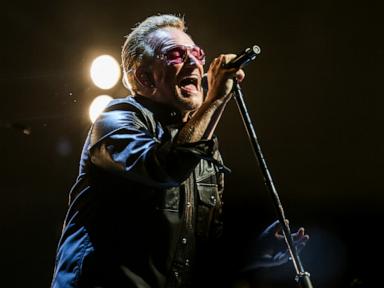
Static hums from a towering stack of vintage monitors. Backstage, the air smells of ozone, damp wool, and the nervous sweat of a thousand tuning guitars. It is twenty minutes before showtime in a stadium that swallows the horizon, and Bono is standing in the dim, amber-lit corridor. He is not running vocal scales. He is not reviewing a setlist. He is listening.
Listen closely.
Through the concrete walls comes the dull, seismic roar of seventy thousand people breathing as one single, chaotic organism. That sound is what built rock and roll. But over four decades, behind the stadium lights and the stadium-sized ego trips, that same collective voice has funded something quieter. Something lifesaving.
When MusiCares announced that U2 would be honored as the 2027 Persons of the Year during Grammy weekend, the music industry reacted with polite applause. Another trophy. Another gala. Another velvet-roped ballroom where executives sip champagne and applaud their own reflection.
They missed the point entirely.
This isn't about a statue. This is about a quiet revolution that has saved musicians from the edge of the abyss for decades.
The Long Dark Night of the Tour Bus
Imagine sitting in the back of a van in 1988. The heater is broken. Your thumb is infected from a splintered bass guitar neck, and the local clinic just handed you a bill you cannot pronounce, let alone pay. You are twenty-four. You wrote a song that made three hundred strangers cry in a basement pub in Dublin, but tonight, you are choosing between groceries and antibiotics.
This is the invisible reality of the creative life. We romanticize the spotlight. We worship the diamond-encrusted album sales, the stadium tours, the myth of the tortured genius who suffers for their art and emerges immortal. We forget that genius is fragile. We forget that the artist on the stage is often one shattered knee, one broken vocal cord, or one silent bout of clinical depression away from ruin.
Bono, The Edge, Adam Clayton, and Larry Mullen Jr. know this ache intimately. Long before they were filling spaceships with light in Las Vegas, they were four teenagers in a Dublin kitchen trying to figure out if art could save them from the gray dampness of a city wrapped in political violence. They learned early that music is a communal pact. You do not just play for an audience; you survive alongside them.
When MusiCares steps in to honor them, it is a recognition of that pact. Founded by the Recording Academy, this organization operates as an emergency room for the soul of the music industry. They pay for addiction treatment when insurance laughs in a roadie's face. They cover surgery costs for drummers whose wrists have finally given out after thirty years of relentless backbeats. They keep the lights on when the royalties dry up and the applause fades.
The Anatomy of an Anthem
U2 never wrote simple love songs. They wrote prayers disguised as pop music.
Consider how a song like "One" or "Where the Streets Have No Name" operates in a live setting. It begins with a single, trembling guitar hook. The Edge builds a cathedral out of delay pedals and spatial reverb. Then Bono steps to the microphone, his voice dropping to a gravelly whisper before exploding into a cry that pulls every soul in the upper deck onto their feet.
That architecture of sound is deliberate. It is designed to take individual isolation and dissolve it into a shared pulse.
Now translate that architecture into philanthropy. For years, the band has woven social activism into the DNA of their art. They did not just sing about human rights; they forced politicians into rooms to cancel crushing third-world debt. They stood up for Amnesty International when it was uncool, inconvenient, and dangerous.
Yet, their most profound work happens in the shadows. It happens in the quiet grants funded by organizations like MusiCares, where legendary session players who laid down the basslines on your favorite records receive anonymous checks to cover rent during chemotherapy.
When the Grammy week gala arrives in 2027, the speeches will be long. Celebrities will wear expensive suits that cost more than a Honda Civic. The wine will flow. But beneath the flashing cameras and the red carpet interviews, there will be a palpable sense of reckoning.
Why This Honor Matters Right Now
We live in an era where algorithms strip the humanity out of creation. Artificial intelligence can mimic a chord progression in three seconds. Streaming services pay fractions of a penny per stream, turning artists into digital ghosts trapped on a screen. The modern musician is more isolated, more financially fragile, and more vulnerable than at any point since the birth of recorded sound.
In this landscape, honoring U2 is a statement of values.
It is a reminder that rock and roll is not a corporate product. It is a brotherhood. It is a safety net thrown across a canyon.
When MusiCares selects their Person of the Year, they look for artists who understand that success is an obligation, not just an achievement. They look for people who use their cultural gravity to bend the world toward empathy. U2 has spent forty-plus years doing precisely that—whether they were singing under a giant metallic claw or quietly funding humanitarian efforts across the globe.
Think of the roadies who carry the weight. Think of the jazz saxophonist playing empty clubs in New Orleans who suddenly needs emergency heart surgery. Think of the kid in a garage right now, hammering out chords on a battered Fender, wondering if anyone cares if they make it through the winter.
MusiCares cares. And U2, by lending their name, their legacy, and their formidable presence to this moment, is telling that kid: Keep playing. We've got you.
The lights in the arena will dim. The first chord will ring out across the Los Angeles ballroom. And for one night, the noise of the industry will fall away, leaving only the raw, resonant truth of what happens when we refuse to let our artists fall alone in the dark.