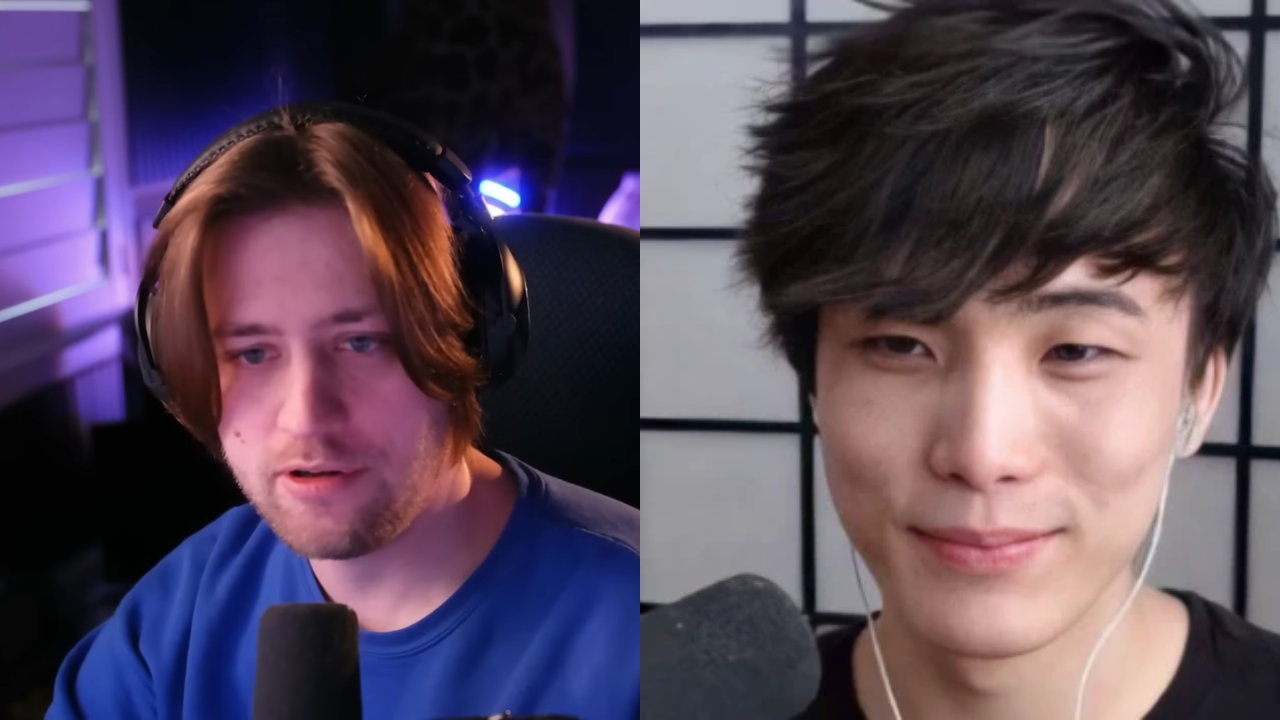
Sodapoppin isn't exactly known for holding back. If you've watched Chance Morris for more than five minutes over the last decade, you know his brand is built on a specific type of unfiltered, often cynical honesty. But his recent comments about Sykkuno took things to a different level. When he muttered the words "I'm glad he's exposed," it wasn't just a throwaway line during a WoW raid. It felt like a dam breaking.
For years, the streaming world has treated Sykkuno as the "golden boy." He’s the soft-spoken, hand-over-mouth laughing, seemingly innocent heart of the OTV and Friends circle. But as the "Among Us" era fades further into the rearview mirror, the cracks in that persona are becoming harder for his peers to ignore. Sodapoppin's outburst wasn't a random attack. It was a reaction to the friction between "old guard" streamers who value raw authenticity and the newer wave of highly curated, character-driven creators.
People are searching for the drama because they want to know if their favorite streamer is a "villain" now. That's the wrong way to look at it. This isn't about one person being evil. It’s about the exhaustion that comes from working alongside someone whose public image feels like a constant performance.
The Breaking Point for Sodapoppin
Sodapoppin has been in this game since the Justin.tv days. He’s seen every trend come and go. He’s seen streamers go from being basement-dwelling nerds to multimillionaire celebrities. To him, the worst sin you can commit isn't being rude or being loud. It's being fake.
The controversy peaked when Sykkuno’s behavior during collaborative events started to rub people the wrong way. It wasn't one big event. It was a thousand small ones. The "I'm just a small streamer, I don't know what I'm doing" routine starts to wear thin when you have millions of followers and a massive contract. Sodapoppin’s frustration stems from the fact that he—and many other veteran streamers—know exactly how the sausage is made. They know how much of the "shy" persona is a tactical choice to avoid accountability.
When Sodapoppin says he’s glad someone is "exposed," he isn't talking about a secret crime. He’s talking about the mask slipping. He’s talking about that moment when the audience realizes the person they’re watching is a savvy businessman, not a fragile anime protagonist.
The Sykkuno Effect and Audience Shielding
Sykkuno has one of the most protective fanbases on the internet. If you criticize him, you aren't just giving an opinion; you're "bullying" a "sweet person." This is a powerful shield. It makes other streamers hesitant to speak up because they don't want to deal with the inevitable swarm of defensive tweets and hate raids.
Sodapoppin doesn't care. He’s built a community that thrives on chaos and irony. He can say the things that others whisper in private Discord calls. The "exposed" comment refers to a specific instance where Sykkuno’s competitive side—or perhaps his less-than-polite side—came out during a high-stakes stream. For a moment, the stuttering and the humble-bragging stopped.
Fans of the OTV circle often see this as a betrayal. They see Sodapoppin as the grumpy old man of Twitch. But if you look at the history of these interactions, Chance has always been the one to call out what he perceives as "cringe." To him, the "uwu" culture that Sykkuno helped popularize is the ultimate cringe.
Why Authenticity is the New Currency in 2026
We've reached a point in digital media where everyone is hyper-aware of branding. We know when a YouTuber is using a "thumbnail face." We know when a tweet is written by a PR person. Streaming was supposed to be the antidote to that. It was supposed to be live, raw, and unedited.
When a creator like Sykkuno leans so heavily into a character, it creates a weird tension with streamers like Sodapoppin who show up, complain about their day, and play games without a script. The "controversy" is actually a clash of philosophies.
- The Performance School: Content is a show. You play a character that people love. You maintain that character 24/7 to keep the brand safe.
- The Reality School: Content is a window. You are who you are. If you're having a bad day, the audience knows. If you're an asshole, you don't hide it.
Sodapoppin represents the latter. He sees the former as a threat to the medium. He thinks that if everyone starts acting like a cartoon character, the "realness" of Twitch dies. That's why he’s "glad." He wants the audience to see the human behind the hand-over-mouth laugh. He wants the playing field to be level.
The Role of Competitive Ego
Don't let the soft voice fool you. You don't get to the top of the gaming world without a massive ego and a competitive streak. Sykkuno is an incredibly skilled gamer. You see it in his Valorant plays and his high-level League of Legends history.
Sodapoppin’s "blast" also touches on this hidden competitiveness. There’s a certain frustration in playing against someone who beats you and then says, "Oh gosh, I’m so bad at this, I just got lucky." It’s a subtle form of disrespect to your opponents. It’s "smurfing" your personality.
Veterans like Soda find this infuriating. They’d rather you talk trash. They’d rather you own your skill. The "humble" act is seen as a way to win without ever having to put your pride on the line. If you lose, you were "just memeing." If you win, it was a "fluke." It’s a win-win for the persona, but a lose-lose for the social circle.
Understanding the Backlash to the Backlash
Immediately after Sodapoppin made his comments, the internet split. One side claimed Soda was being a bitter gatekeeper. The other side felt like he finally said what everyone was thinking.
The reality is somewhere in the middle. Sodapoppin can be a jerk. He’s admitted it. But he’s an honest jerk. Sykkuno might actually be a very nice guy, but his public persona is so thick that it’s impossible to tell where the person ends and the brand begins.
This tension is healthy for the platform. It prevents Twitch from becoming a sanitized, corporate version of itself. We need people like Sodapoppin to poke holes in the pedestals we build for creators. Without that friction, streaming becomes just another branch of television.
What Happens When the Mask Slips
When we talk about streamers being "exposed," we usually mean something terrible. We mean they’re scammers or bigots. In this case, "exposed" just means "humanized."
Sodapoppin's comments forced a conversation about what we expect from our entertainers. Do we want a perfect, safe, adorable character to keep us company? Or do we want a person?
If you're a viewer, you have to decide what you value. If you like the comfort of the Sykkuno brand, Soda’s comments probably felt like an unprovoked attack. But if you’ve been watching for years and felt like something was "off," Soda gave you the validation you were looking for.
The Fallout and the Future of the Circle
This isn't going to end Sykkuno’s career. If anything, the drama helps his numbers. But it does change the internal politics of the "streamer meta."
We're seeing a shift where the "untouchable" status of certain creators is being challenged by their own peers. It’s no longer enough to be popular; you have to be respected by the people you work with. Sodapoppin’s "blast" is a signal that the respect isn't there for the character—only for the person behind it, whoever that may be.
The "Among Us" group isn't the tight-knit family it used to be. People have moved on to different games, different cities, and different social circles. As these groups drift apart, the "politeness" requirements vanish. We’re going to see more of this. More honesty. More call-outs. More "old school" streamers refusing to play along with the "new school" branding.
Stop expecting streamers to be your friends. They’re entertainers. Some are method actors, and some are just guys with a webcam and a bad attitude. Sodapoppin reminded everyone of that distinction. He didn't ruin Sykkuno. He just reminded us that the guy on the screen is a professional, not a pet.
If you're following this drama, stop looking for a "good guy" and a "bad guy." Look for the truth in the middle. Sodapoppin is loud and abrasive, but he’s rarely wrong about the vibes of the industry. Sykkuno is a genius at audience retention, but that genius comes at the cost of authenticity.
Pay attention to how these streamers interact in the next big collaborative event. Watch the body language. Listen to the tone. The era of fake-nice is ending, and the era of the "exposed" streamer is just beginning.