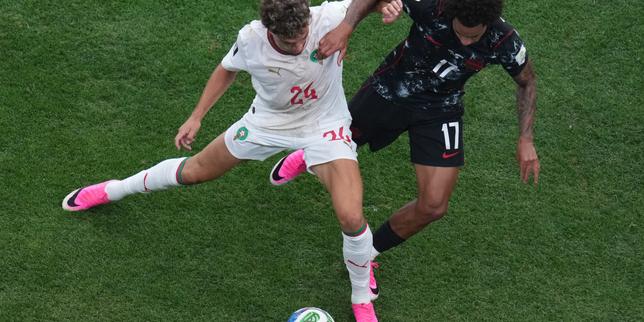
Millions of people don't care about politics when a striker is bearing down on a goalkeeper in the 90th minute. They just scream.
Right now, the United States is hosting the 2026 FIFA World Cup alongside Mexico and Canada. It's happening during a period of massive political polarization, culture wars, and endless debates over what it means to be American. Yet, stadiums from Miami to Seattle are packed to the rafters. Fans are spending thousands of dollars to watch a game that, historically, mainstream America spent decades ignoring.
The old narrative said soccer couldn't make it here because it was too slow, too foreign, or too soft. That's dead. Instead, soccer has become a massive shield against the daily exhaustion of political turmoil. It isn't just offering a temporary distraction. It's forcing an entirely new version of American identity into the open, whether politicians like it or not.
How the Beautiful Game Hits Different in 2026
If you watch a game at Lincoln Financial Field or MetLife Stadium right now, you aren't seeing a perfectly manicured corporate audience. You're seeing the real America. The Department of Homeland Security recently posted an image of US Men's National Team players Chris Richards, Sergiño Dest, and Folarin Balogun celebrating, using the caption "DEFEND THE HOMELAND."
The irony is thick enough to choke on.
Dest was born in the Netherlands. Richards grew up partly in Europe as a military brat. Balogun is a British-Nigerian who holds a passport because of birthright citizenship, a concept under constant fire in Washington courts. While politicians argue about who belongs on American soil, these guys are literal exemplars of the country on the pitch. Soccer doesn't succeed despite this mixed identity. It succeeds because of it.
The stands tell the exact same story. When Cape Verde, Haiti, or the Democratic Republic of Congo play games in Houston or Philadelphia, their diaspora communities show up in waves. Flags fly. Drums beat. It turns out the tournament isn't just bringing the world to America. It's showing America exactly how global its own neighborhoods already are.
The Escape from the Culture War
Most traditional American sports have been completely swallowed by the culture wars. Football has been a political battleground for a decade. Baseball leans heavily into traditionalism. Basketball is often hyper-polarized along political lines.
Soccer avoids this trap by operating on a completely different frequency. It didn't grow out of the American university system or rural towns. It grew out of immigrant social clubs, urban leagues, and suburban youth complexes. It belongs to everyone and no one at the same time.
When 33.5 million Americans tuned in to watch the US team recently, smashing domestic soccer broadcast records, they weren't checking the political registration of the people next to them in the bar. They were riding the emotional rollercoaster of a global tournament. Soccer provides an escape because the stakes are purely athletic, yet the scale is massive. You're part of something global, which makes local political bickering feel small.
Why Soccer Resists Modern Populism
Populist movements rely on drawing hard borders around who is "in" and who is "out." They want homogeneity. Soccer rejects that by its very design.
Look at the current squad under Mauricio Pochettino. It's a collection of global citizens who play in London, Milan, and Eindhoven. They speak multiple languages. They navigate different cultures weekly. You can't fit this team into a neat, isolationist box.
When fans see a player like Malik Tillman bleeding through his sock to secure a result, they see a guy fighting for the shirt. They don't care about his accent or where he spends his winters. The sheer kinetic energy of the game pushes tribal political instincts aside, replacing them with a different, healthier kind of tribalism—supporting a team.
Getting Skin in the Game
If you're tired of the noise and want to experience this shift yourself, stop watching the news pundits and go find the game. Here's how to actually lean into what's happening right now.
- Find an independent supporters' bar. Skip the massive chain restaurants. Find the local pub where fans of the USMNT, Mexico, or specific European clubs gather. The energy there is organic, diverse, and completely detached from corporate media narratives.
- Watch the smaller nations. Don't just watch Brazil or France. Go to a match or a watch party for the underdogs. Seeing what a World Cup run means to communities from smaller countries will completely reset your perspective on what sports can do.
- Support local soccer infrastructure. The real work of blending communities happens at the youth level in cities across the country. Look into local community leagues that provide free or low-cost soccer access to immigrant and low-income kids.
The World Cup will wrap up soon, and the trophy will go home with one nation. But the cultural shift happening in American stadiums isn't going away when the grass pitches are rolled up. Soccer has already rewritten the script on American community. It proved that a patch of green field and a ball can still hold a fractured country together, even if it's only for ninety minutes at a time.