The modern corporate cubicle rarely smells like weed. It smells of burnt medium-roast coffee, industrial carpet cleaner, and the faint, ozonic heat of a dual-monitor setup humming through a ten-hour shift.
But look past the sterile air. The reality is hidden in the biochemistry of the workforce.
Consider a hypothetical corporate employee. Let's call her Sarah. She is a senior data analyst at a mid-sized logistics firm. She has never missed a deadline. Her spreadsheets are immaculate. Yet, every Friday night, after shutting down her company-issued laptop, Sarah opens a sleek, child-proof jar on her kitchen counter and eats a five-milligram THC gummy. For her, it is not about partying. It is about turning off the relentless, low-grade static of workplace anxiety so she can sleep.
On Monday morning, Sarah is back at her desk, perfectly sober, executing pivot tables with surgical precision. But if her company calls a random screening that afternoon, her career could end in a heartbeat.
Sarah is not an anomaly. She is the new normal.
The Microscopic Ledger
For decades, workplace drug testing relied almost exclusively on the standard urine sample. It was a blunt instrument. It caught the weekend casual user and missed the chronic user who timed their abstinence perfectly. But data from the latest Quest Diagnostics Drug Testing Index reveals a massive shifts in how Americans work, live, and medicate.
The most striking numbers come from hair follicle analysis. This testing method does not just look at what someone did last night; it unrolls a 90-day physical scroll of a person's habits.
The findings are stark. Nearly one in five American workers tested via hair analysis in 2025 returned a positive result for drug use. That is a 19.1% positivity rate, up dramatically from 13.1% just four years prior.
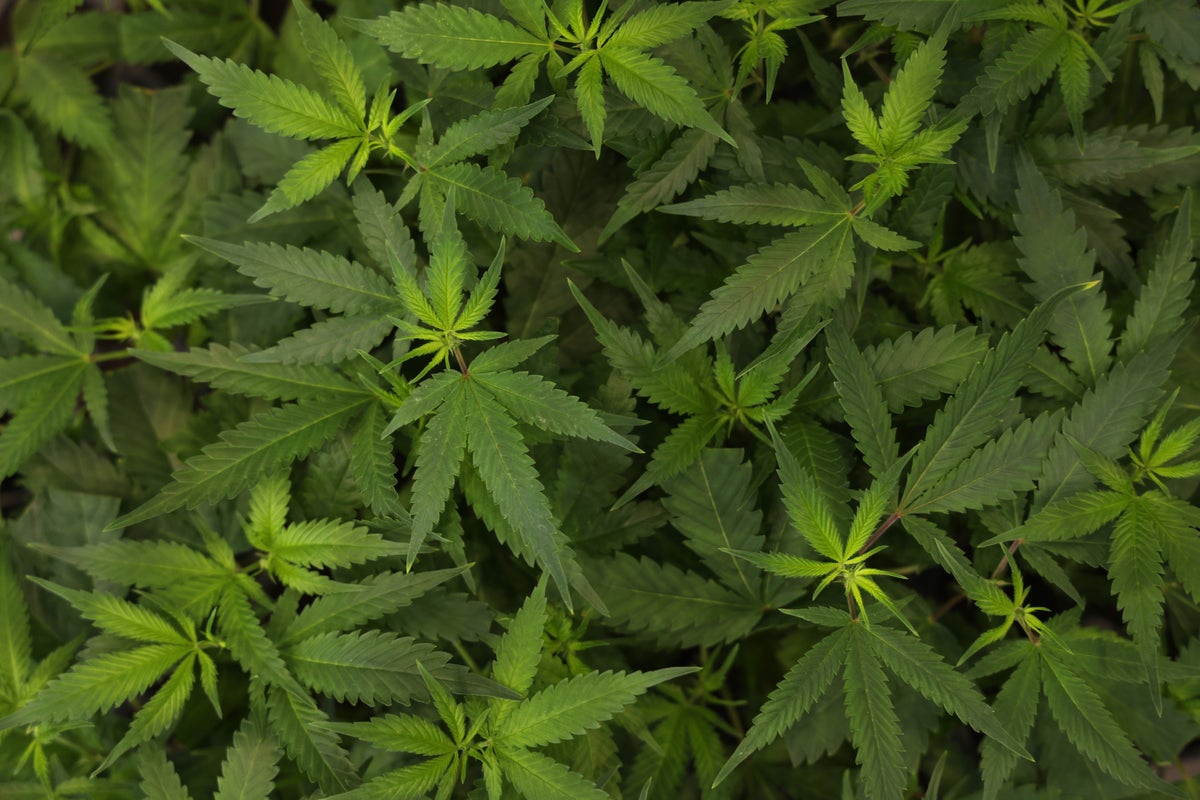
The undisputed driver of this surge? Marijuana.
Cannabis now accounts for more than half of all positive hair drug tests in the country. Over a five-year period, long-term marijuana positivity in hair tests jumped by nearly 60%, climbing to 15.1%. Whether through pre-employment screenings or sudden random checks, the biological signature of cannabis is showing up in corporate files at rates never seen before.
This creates a massive cultural disconnect. On one hand, the federal government is moving toward easing restrictions, with the Department of Justice signing orders to reclassify medical marijuana from Schedule I to Schedule III. On the other hand, the corporate machinery is catching more people than ever, trapped in a testing dragnet designed for an era that no longer exists.
The Illusion of Sobriety vs. Presence
The core friction of the modern workplace lies in the difference between impairment and history.
Think of traditional testing like a snapshot. If an employer uses oral fluid testing—which has seen its own jump to an 11.1% positivity rate for marijuana—they are looking through a very narrow window. Oral fluid captures what happened hours ago. It answers the question: Is this person high right now, at this forklift, or during this meeting?
Hair testing, however, is a biography. It tells an employer what an employee did on their vacation three weeks ago while sitting on a beach in a state where recreational cannabis is as legal and accessible as craft beer.
This presents an agonizing dilemma for executives and human resource directors.
If a company fires every worker who tests positive for cannabis on a long-term hair screen, they face an immediate, self-inflicted talent drought. In a hyper-competitive knowledge economy, replacing a highly skilled software engineer or a brilliant project manager because of a weekend habit is bad business. It costs time. It costs institutional knowledge.
Yet, doing nothing feels like a legal liability.
The tension builds loudest in safety-sensitive industries. When an accident occurs on a factory floor or a shipping dock, the post-accident drug screen is standard protocol. According to Quest's multi-year data, marijuana positivity following workplace accidents has lingered near record highs, hovering above 7%.
Did the cannabis cause the accident? The biology cannot tell us. Because THC remains stored in fat cells and hair follicles long after the psychoactive high has vanished, a positive test cannot prove current impairment. It only proves past presence.
This leaves employers navigating a legal minefield. They are trapped between protecting their teams from actual on-the-job impairment and alienating a massive, otherwise productive segment of the modern labor pool.
The Great Corporate Forgery
Because the stakes are so high—mortgages, health insurance, professional reputations—workers are fighting back with increasingly desperate measures.
A few years ago, cheating a drug test meant buying synthetic urine at a local smoke shop or chugging gallons of cranberry juice. Today, the subversion of workplace screenings has become an advanced game of cat-and-mouse. Quest Diagnostics previously noted a staggering 600% explosion in substituted or invalid urine specimens among the general workforce.
People are diluting their samples, using sophisticated warming packets, and turning to complex chemical masking agents to save their livelihoods.
It is a deeply human tragedy cloaked in corporate comedy. Adults with master's degrees and decades of executive experience are standing in laboratory bathrooms, trembling, trying to hide vials of clean urine under their clothes just so they can keep managing marketing budgets or engineering pipelines.
They are not doing this because they are addicts. They are doing it because the system demands absolute biochemical purity in a world that has largely accepted cannabis as a mainstream therapeutic tool.
The burden of this hypocrisy is weighing heavily on corporate leadership. Many executives will privately admit they do not care what their employees do on Friday nights. They care about performance. They care about presence. But the outdated frameworks of corporate insurance policies and federal compliance mandates force them to keep playing the role of the moral police.
A New Boundary
We are watching the slow, painful death of the twentieth-century workplace contract. That old agreement was simple: the company owned your body for eight hours a day, and you kept it clean enough to function.
Now, the lines are completely blurred. The remote work revolution brought the office into the living room. The stress of constant connectivity brought burnout to an all-time high. In response, millions of workers have turned to a legalized plant to cope, decompress, and reset.
The data proves that the zero-tolerance policy has failed to curb usage. It has only succeeded in turning millions of honest, capable professionals into anxious experts at beating a drug test.
Change is coming, driven not by corporate enlightenment, but by cold mathematics. When one-fifth of your potential talent pool tests positive on an advanced screening, the screening ceases to be a safety tool. It becomes a corporate suicide pact.
The companies that thrive tomorrow will not be the ones with the most sterile hair samples. They will be the ones that learn to judge an employee by the weight of their output, rather than the chemistry of their hair.
The jar on the kitchen counter stays where it is. The laptop closes. The weekend begins. And the corporate world will simply have to learn how to breathe through the smoke.