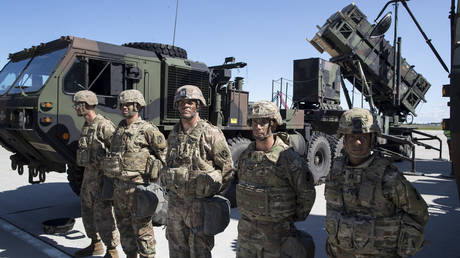
The coffee in the plastic cup goes cold long before the shift ends at the checkpoint outside Baghdad. To the young soldier standing watch, checking IDs with tired eyes, geopolitics is not a policy paper drafted in Washington or a fiery speech delivered in Tehran. It is the sudden tightening in the chest when the radio crackles. It is the heavy air of anticipation that settles over the concrete barriers whenever distant leaders trade threats.
We talk about the United States and Iran as if they are pieces on a chessboard moved by emotionless hands. We speak of red lines, proxy networks, and uranium enrichment percentages. But beneath the cold terminology of statecraft lies a human reality of profound fragility. A cycle is spinning up again. The machinery of escalation is humming back to life, fueled by decades of accumulated grievances, miscalculated signals, and the terrifying momentum of history.
To understand why this friction is returning to the boiling point, we have to look past the headlines and step into the rooms where choices are made under pressure.
The Architecture of Distrust
History is never truly past in the Middle East. It is a living, breathing weight.
Imagine sitting in a government office in Tehran. Surrounding you are memories of a 1953 coup engineered by foreign intelligence, a brutal eight-year war in the 1980s fought with chemical weapons while the world looked away, and decades of economic sanctions that have squeezed the daily life of ordinary teachers, bakers, and students. Every diplomatic overture is viewed through a lens shaped by broken promises. When leaders talk of defense, they mean survival. When they project power through regional militias in Lebanon, Iraq, Yemen, and Syria, they see it as the only effective shield against an overwhelmingly superior conventional adversary.
Now, shift the perspective to a briefing room in Washington or a command center in the Gulf. The view is entirely different, yet equally rooted in anxiety. Here, the map is dotted with the wreckage of past attacks, the ghosts of American service members lost to roadside bombs, and the constant threat to vital global shipping lanes. From this vantage point, Iran is not merely a regional government with local grievances; it is an ambitious revisionist power seeking to upend international norms, back terrorism, and race toward a nuclear threshold that would fundamentally alter global security.
When these two worldviews collide, compromise becomes nearly impossible. Each side interprets the other’s defensive preparations as aggressive posturing.
Consider a hypothetical scenario that plays out in navy war rooms with alarming frequency. An American destroyer patrols the narrow waters of the Strait of Hormuz, through which a massive portion of the world's petroleum flows. Fast attack boats belonging to Iran's Islamic Revolutionary Guard Corps approach at high speed, testing boundaries, probing reaction times. On the bridge of the American vessel, the captain has seconds to decide whether an approaching craft is executing a routine maneuver or initiating a suicide strike. One misread gesture, one nervous finger on a trigger, and the trajectory of history shifts in an instant.
This is the precipice. And right now, the ground beneath both nations is trembling.
The Anatomy of a Returning Crisis
Why is this confrontation ramping back up right now? The answer is not found in a single event, but in the convergence of multiple pressures, each reinforcing the worst instincts of both capitals.
First, the shadow of the nuclear file looms larger than ever. For years, the diplomatic architecture designed to cap Iran's nuclear ambitions has frayed. Without a functioning agreement, enrichment activities have crept closer to weapons-grade purity. For Israeli and American planners, this technical advancement represents an unacceptable threshold. The calculus is brutally simple: as the nuclear program grows more advanced, the window for effective intervention—whether through sabotage, economic strangulation, or military force—narrows dramatically.
Second, the Middle East has transformed into a chessboard of active proxy conflict. The events following October 2023 shattered any remaining illusions of regional stability. The "Axis of Resistance"—comprising groups backed by Tehran—has flexed its muscles, drawing the United States and its allies directly into the fray. When a drone strikes a base housing American personnel, or when commercial shipping in the Red Sea is disrupted by missile fire, Washington is compelled to respond.
Yet every American retaliation feeds the narrative in Tehran that the United States seeks regime change or total subjugation. This creates an endless feedback loop of action and reaction.
Action. Reaction. Escalation.
It is a machine that feeds on fear. Neither side actively desires an all-out regional war—the economic cost, human devastation, and political fallout would be catastrophic for both. But nations often stumble into conflicts they swore they would avoid, sliding down a slippery slope of escalation where backing down is perceived as fatal weakness.
The Human Toll Behind the Statistics
We lose sight of the human cost when we discuss sanctions percentages, barrel prices, and missile ranges.
In a modest apartment in Isfahan, a retired engineer looks at his monthly medical bill and watches his savings evaporate under the relentless pressure of inflation and currency devaluation. Sanctions designed to pressure leadership invariably strike the vulnerable hardest. They create a population under siege, which paradoxically hardens anti-Western sentiment rather than sparking the popular uprising that foreign strategists often model on whiteboards.
Half a world away, in a quiet suburb of Virginia, a military family watches the evening news with a quiet dread. They know that orders can change overnight. They know that an escalation in the Gulf means darkened living rooms, hushed phone calls, and the lingering terror of the knock on the door.
These parallel realities define the modern standoff. It is a game played by elites, but the currency is paid in the lives of ordinary people who simply want to wake up, go to work, and raise their children in peace.
The Danger of Calculated Risks
Statecraft often relies on deterrence—the art of convincing an opponent that the cost of an action outweighs any potential benefit. But deterrence is a psychological game, and psychology is notoriously fragile during periods of high tension.
When political leaders in Washington issue stern warnings, they believe they are drawing a clear boundary to prevent war. But when those same warnings are received in Tehran, they are often interpreted as proof of imminent hostility, justifying preemptive or hardening measures. This is the security dilemma in its purest, most dangerous form: the steps one nation takes to make itself more secure invariably make its rival feel less secure, prompting counter-steps that validate the original fear.
We have seen this script before. We watched it play out in the months leading up to previous regional flare-ups. The rhetoric sharpens. Intelligence agencies report suspicious movements of military assets. Naval task forces reposition. Cyberattacks hum silently through critical infrastructure networks, leaving invisible scars.
The danger today is not that someone will deliberately press a button to start a major war. The danger is that the accumulation of small, calculated risks will slip beyond human control. A miscalculated drone strike, a misinterpreted communication channel, a rogue proxy action—any of these could serve as the spark that turns smoldering embers into an uncontrollable blaze.
The coffee goes cold. The soldier at the checkpoint looks down the dusty road, waiting to see what the next shift brings.
The standoff between the United States and Iran is not a distant abstraction. It is a slow-motion collision of fears, histories, and ambitions. And as the tension creeps upward once again, the world holds its breath, hoping against hope that the machinery of peace can somehow outrun the momentum of war.