Rust stains the river. Or at least, it used to.
If you stood on the banks of the Monongahela River forty years ago, you wouldn't see the water. You wouldn't see much of the sky, either. You’d feel the ground thrumming beneath your boots, a heavy, rhythmic heartbeat driven by roaring blast furnaces and the unyielding weight of the American steel industry. Pittsburgh wasn't just a place. It was a furnace. It was fire, iron, soot, and the sweat of men who worked shifts so brutal their skin seemed permanently tinted grey.
Then, the fire went out.
Factories closed their heavy steel doors one by one. The whistles stopped blowing. Thousands of people watched their livelihoods evaporate into the rust-belt air, leaving behind an eerie, hollow silence and miles of abandoned industrial wasteland. These sprawling brownfield sites—once the envy of the global manufacturing economy—became monuments to an era that vanished overnight. They were graveyards of ambition.
For a long time, nobody knew what to do with Hazelwood Green.
That is the name of the 178-acre stretch of riverfront where the historic Jones & Laughlin Steel Company once operated. For decades, it sat empty. A vast, vacant scar wrapped in chain-link fences and overgrown weeds, guarding memories of molten metal. Cities usually don't know how to resurrect ghosts. They tear them down or pave over them. They forget.
Pittsburgh decided to remember instead.
Imagine walking across that concrete expanse today. The air smells different now. No sulfur, no acrid smoke. Just the crisp scent of the river and the hum of something entirely unexpected.
Robots.
Not the clanking, menacing robots of science fiction cinema, but sleek, precise machines designed to save lives, map terrain, and redefine how humans interact with physical space. Where giant ladles once poured liquid iron into molds, researchers and engineers are now assembling artificial intelligence systems, medical biotechnology laboratories, and public green spaces designed for people rather than machinery.
This is not a corporate boardroom transformation. It is a human story.
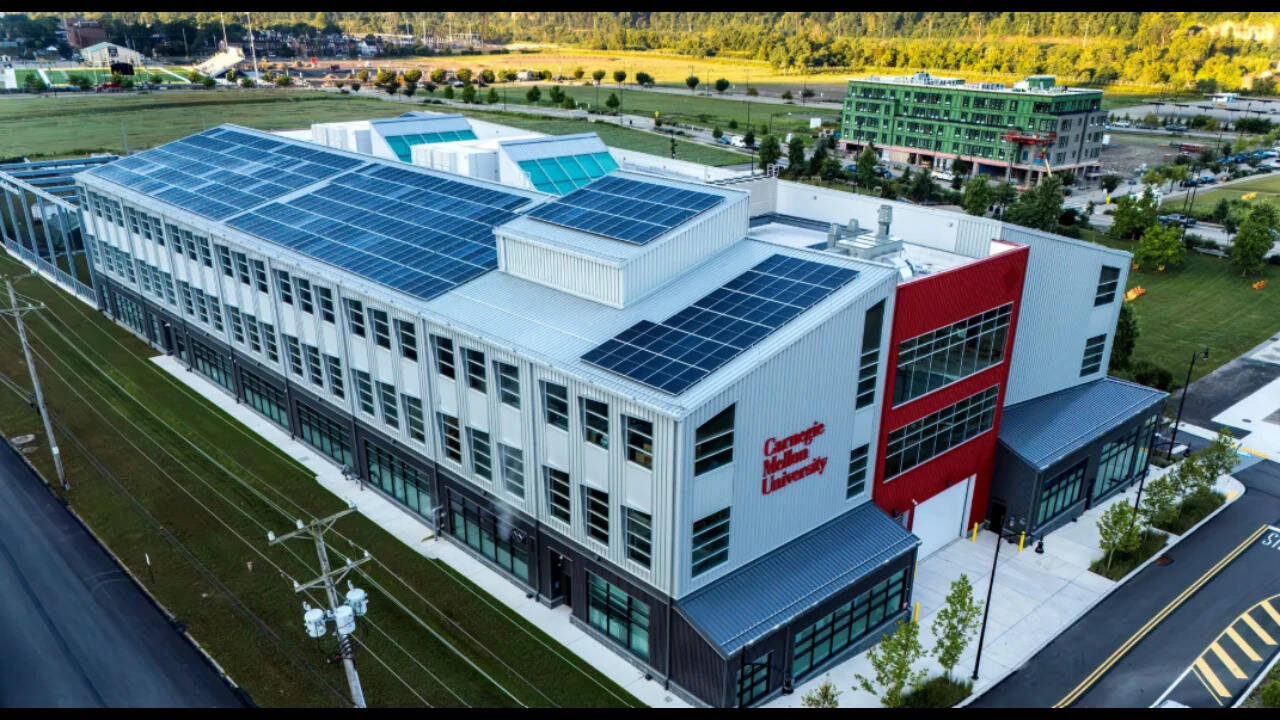
Consider a hypothetical engineer named Marcus. Marcus grew up hearing stories about his grandfather, a welder at the J&L plant who breathed in coal dust for thirty years to buy a house in the suburbs. Marcus doesn't weld steel. He writes code. He builds neural networks for autonomous vehicles and robotic appendages that help stroke patients regain mobility. When Marcus walks to work across the Hazelwood Green site, he walks past the preserved historic structures—the massive, cathedral-like mill buildings left standing as silent testaments to the past.
He isn't erasing his grandfather's legacy. He is extending it.
The transition of former industrial sites into modern innovation hubs is happening globally, but Pittsburgh’s approach carries a distinct emotional weight. It requires a delicate balance between honoring a grueling industrial heritage and embracing an intangible, high-tech future. You cannot simply bulldoze history. If you do, you lose the soul of the city.
The revival relies on a carefully orchestrated mix of sectors. Robotics leads the charge, anchored by institutions like Carnegie Mellon University and the University of Pittsburgh, which churn out some of the brightest minds in machine learning and automation. Biotech follows closely behind, turning old factory footprints into incubators for genetic research and advanced medicine.
Yet, the most radical part of this transformation isn't the technology. It’s the housing and the parks.
Historically, industrial zones were walled off from the communities surrounding them. They took up the riverbanks, cutting residents off from the water. Today, the master plan for these spaces prioritizes public access. Miles of riverfront trails are being carved out for cyclists and families. Affordable housing developments are rising where slag heaps once piled high. Parks are being planted with native trees, inviting birds and children back to a shoreline that was once toxic.
This approach acknowledges a hard truth. Innovation means nothing if it pushes people out.
When tech hubs boom in places like Silicon Valley or Seattle, they often bring skyrocketing housing costs that displace the very communities that made the region unique. Pittsburgh is attempting to write a different script. By integrating mixed-income housing, public parks, and community-first urban planning directly into the DNA of the tech district, the city aims to prevent the displacement trap.
It is messy. Progress always is. Skeptics point out that tech-driven revivals can alienate long-term residents who feel priced out of their own changing neighborhoods. Traffic patterns strain under new construction. The transition is not seamless.
But transformation rarely arrives wrapped in convenience. It arrives through grit.
The same stubborn resilience that kept steelworkers standing before roaring furnaces for twelve-hour shifts is now driving the software developers, urban planners, and community activists fighting to make these new spaces equitable. They are building a bridge between the city's blue-collar backbone and its white-collar horizon.
Look closely at the old mill structures still standing at Hazelwood Green. The brick is weathered. The steel framing is rusted at the edges. But look through the windows, or past the open-air courtyards. Inside, glowing computer screens reflect off polished concrete floors. 3D printers hum quietly in the corner. Young scientists lean over microscopes, discussing algorithms that could change early cancer detection forever.
The fire is back. It just burns cooler now.
As the afternoon sun dips below the hills surrounding the Monongahela, casting long shadows across the newly planted lawns and the preserved industrial skeletons, the river keeps moving. It flows past the old docks, past the new research labs, and out toward the Ohio River. It carries the history of a city that refused to die, proving that even the heaviest ruins can be transformed into a foundation for the future.