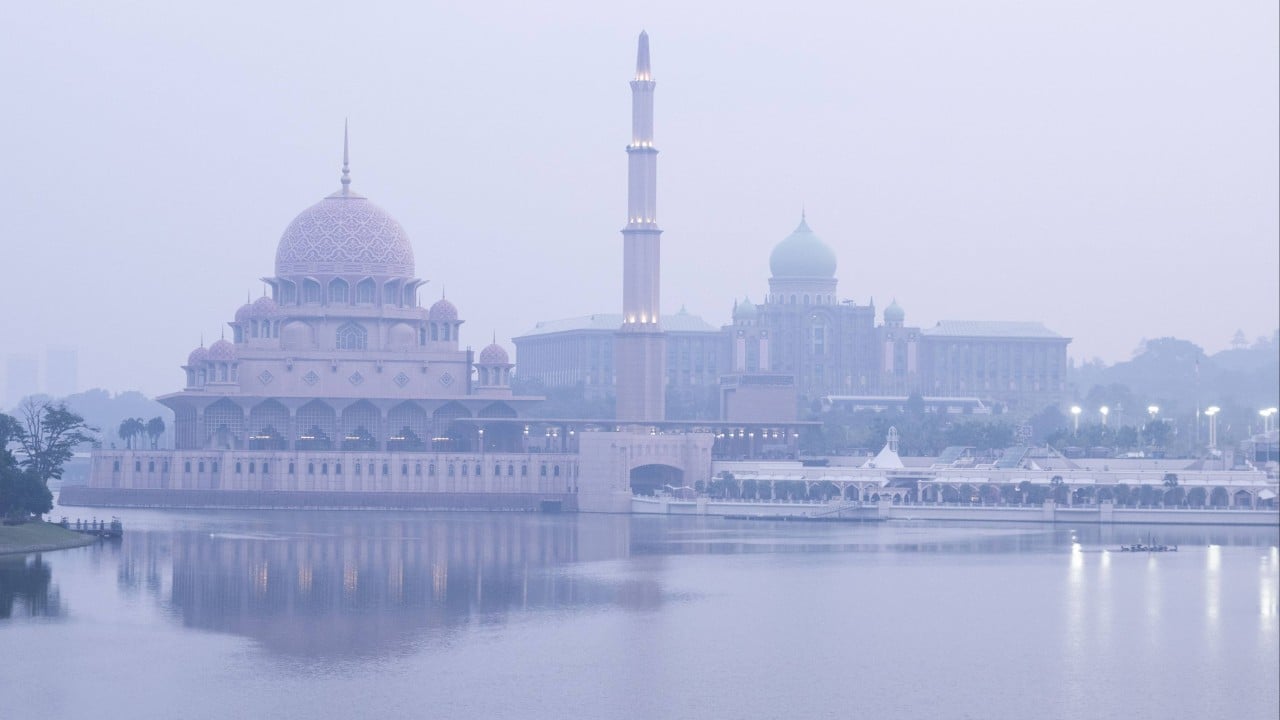
Malaysia has secured official clearance from Jakarta to puncture Indonesian airspace for cross-border cloud seeding operations, a diplomatic and operational necessity driven by an intensifying regional haze crisis. As the southwest monsoon converges with a strengthening El Nino cycle, peatland and forest fires across Sumatra and Borneo have choked millions in toxic smoke, pushing air quality index readings to hazardous levels in neighboring territories.
Diplomatic announcements tend to smooth over the raw edges of regional friction, but this agreement masks a recurring environmental failure. Transboundary smoke is not an act of God. It is an annual industrial calculation.
The Anatomy of a Regional Emergency
Every dry season, the landscape of Sumatra and Kalimantan transforms into a tinderbox. Plantations and smallholders utilize fire as an economical land-clearing tool, ignoring the fragile nature of drained carbon-rich peat soils. Once those subterranean layers ignite, conventional firefighting hits a brick wall. Surface water barely scratches the smoldering depths.
Malaysia stepping up with weather modification aircraft represents a tactical acknowledgment that smoke respects no sovereign boundary. Malaysian Natural Resources and Environmental Sustainability Minister Arthur Joseph Kurup confirmed that the National Disaster Management Agency and the Malaysian Meteorological Department are synchronizing timetables with Indonesian forces. Aircraft loaded with hygroscopic salts will target towering cumulus clouds along the shared border, hoping to wring out artificial downpours before particulate matter drifts over urban centers.
Yet, treating the sky with silver iodide or salt is the atmospheric equivalent of putting a band-aid on a structural hemorrhage. Cloud seeding requires actual clouds with adequate moisture content to yield results. When severe droughts take hold, even the most expensive weather modification sorties find a blank, dry sky.
Sovereignty Versus Survival
For decades, the politics of Southeast Asian haze bogged down regional cooperation in mutual finger-pointing. Indonesia historically bristled at foreign interference or unsolicited criticism over sovereignty issues tied to land management. Granting Malaysian planes access to domestic airspace signifies a pragmatic shift, born from desperation as hot spots multiply across Sumatra and Borneo.
The cost of inaction has become too high to hide behind bureaucratic formalities. In regions like Sarawak, unhealthy air quality metrics forced hundreds of school closures, disrupting the lives of hundreds of thousands of students. Hospitals report sharp upticks in respiratory admissions, asthma cases, and acute eye irritations. When visibility drops to dangerous levels on the ground, economic productivity stalls, aviation routes face chaotic re-timings, and public health systems strain under the weight of preventable ailments.
Indonesia itself has mobilized thousands of military personnel, deploying scores of water-bombing helicopters across Sumatra and Kalimantan alongside hundreds of localized weather modification flights. The BMKG weather agency notes that thousands of metric tons of artificial rainfall have been engineered over parched provinces. Still, the fires keep returning because the financial incentives for illegal clearing outweigh the threat of regulatory penalties.
The Limits of Weather Modification
Relying on artificial rain to suppress fires reveals an uncomfortable truth about modern environmental management. We have arrived at an era where geoengineering maneuvers are deployed as routine emergency responses.
Cloud seeding is fundamentally reactive. It treats the symptom while the root cause—corporate and smallholder agricultural burning combined with systemic peatland drainage—remains largely unchecked by strict, unyielding enforcement. Water-bombing helicopters and cross-border seeding missions provide good optics for ministers seeking to demonstrate decisive action ahead of national celebrations. They offer visible motion against an invisible threat.
When the monsoon shifts and the temporary downpours evaporate from the soil, the underlying carbon beds remain vulnerable. Until agricultural supply chains face genuine financial liability for the smoke they generate, bilateral airspace agreements will remain an annual ritual of desperation.
The planes will fly. The salt will disperse into the humid air. The rain will fall on burning forests. And next year, the smoke will return.