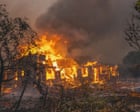
Ash does not respect lines drawn on parchment.
When the pine forests across the frontier ignite, the wind does not pause at the stone monuments or flash-painted boundary markers to check its passport. It carries the soot across valleys, turning the morning sun into a bruised amber eye over towns that thought they were safe.
Prime Minister Pedro Sánchez stood before the microphones recently with a reality that many politicians still try to sanitize with euphemism. Spain is burning. Not metaphorically, not in some distant future projection on a glowing screen, but right now. The soil is baking into dust. The air tastes of scorched resin. And across the border, in France, firefighters are fighting identical ghosts with inadequate water hoses and exhausted lungs.
We keep talking about climate change as if it were a weather report. It is not. It is an occupation.
Let us step back for a moment and look at the geometry of disaster. Imagine a firefighter—call him Mateo, though he could just as easily be a volunteer in the Pyrenees or a career professional in the Gironde. Mateo is forty-two. He has knees that ache when the humidity drops, and he knows the exact smell of burning eucalyptus versus dry oak. Ten years ago, Mateo could predict the fire season. It arrived with July, lingered through August, and retreated with the autumn rains.
Now, the calendar is broken.
The season starts in April and refuses to die in November. Mateo does not need a computer model to tell him this. He reads it in the brittle snap of the underbrush beneath his boots. He reads it in the humidity readings that hover near zero while the temperature climbs past forty degrees Celsius.
When Sánchez spoke, he was addressing more than just burned hectares. He was naming a creeping dread that millions of citizens feel every time they look out their windows at a sky that should be blue but is instead smeared with gray. The crisis has mutated from an environmental talking point into a daily tax on human peace of mind.
Why are we so surprised? For decades, industrial societies treated the planet like an infinite sponge. We pumped, we burned, we paved. We acted as though the atmosphere possessed an endless capacity to absorb our waste without changing its fundamental character. Physics does not negotiate. When you trap more heat, you evaporate more moisture. When you evaporate more moisture, you turn living forests into kindling.
It is cause and effect, as brutal and simple as gravity.
Yet, our institutions remain anchored to an outdated reality. Emergency funds are treated like unexpected rainy-day expenses—ironically enough—rather than permanent, foundational defense budgets. Governments scramble reactive forces after the smoke has already darkened the horizon, treating the symptom while ignoring the furnace stoking the flames.
Consider what happens next: the fire is put out. The media crews pack up their cameras. The politicians fly home. What remains?
Blackened hillsides. Poisoned watersheds. Families who return to find that their ancestral olive groves are now ash. And the psychological weight. That invisible, grinding anxiety that settles over a community when they realize their home is no longer a permanent fixture, but a temporary shelter waiting for the next spark.
Sánchez pointed a finger at a truth that extends far beyond the Iberian Peninsula. No single nation can build a wall high enough to keep out a changing climate. Spain’s struggle is France’s struggle. France’s struggle is California’s struggle, and Australia’s, and Canada’s. The borders we fought so many wars to establish are completely invisible to a wildfire driven by jet-stream anomalies and prolonged droughts.
We are living through a shared vulnerability.
To understand the human cost, you have to look past the macro-statistics. Do not just look at the ten thousand hectares lost. Look at the farmer who has spent thirty years coaxing life from stubborn, sun-baked earth, only to watch his entire livelihood turn into a column of smoke in twenty minutes. Look at the children in Madrid or Bordeaux who are told they cannot play outside today because the particulate count in the air will scar their developing lungs.
This is the hidden toll. It is measured in lost sleep, canceled crops, evacuation bags packed permanently by the front door, and a quiet, persistent grief for a predictable world that is not coming back.
We got the baseline assumptions backward. We thought we were managing nature. We thought we could tweak a variable here, implement a tax credit there, and keep the machine humming along. But nature is not a machine with a loose bolt. It is an interconnected web of life, and when you pull on one thread too hard, the entire tapestry begins to unravel.
Metaphor aside, the data confirms the human intuition. Temperatures in Southern Europe are rising at a rate faster than the global average. The Mediterranean basin is becoming a climate hotspot, a dry heartland where the margins for error are shrinking to zero.
So what do we do with this terrifying clarity?
We stop treating disasters as anomalies. We build societies that anticipate the heat, the drought, and the fire, rather than merely reacting to them after the sirens start wailing. We redesign our cities, our agriculture, and our energy grids for a hotter, harsher world. We invest in the people on the front lines—the Mateos of the world—giving them the tools, the pay, and the respect they deserve as the frontline defenders of our civilization.
The smoke will clear eventually. The wind will shift. The rains will come, even if they arrive late and violent.
When the air clears, the temptation will be to forget. To pretend that it was just a bad summer, an anomaly, a statistical outlier. That is the real danger. The fire in the forest is devastating, but the fire of human complacency is what truly consigns us to the ash.
Look out the window. Notice the color of the sky. The time for denial ended years ago. The time for adaptation is already running out.