Silence.
In the sterile, windowless bunkers buried beneath Seoul, Taipei, and Tokyo, silence does not mean peace; it means the radar operators are holding their breath while pale green dots drift across glass screens like embers carried on a changing wind.
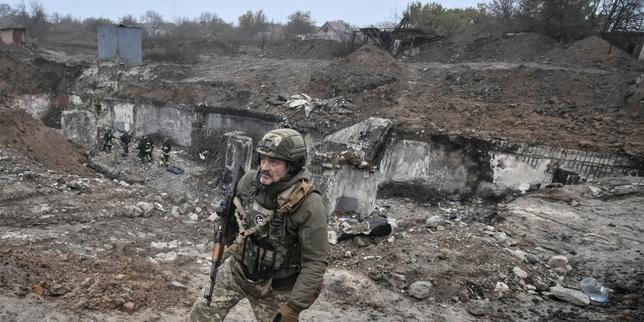
If you have ever sat in a darkened room at four in the morning waiting for a phone call that might change the trajectory of your life, you know the exact texture of that air. It tastes like stale coffee and static electricity. Thousands of miles away from the mud-choked trenches of eastern Ukraine, where artillery shells rewrite the geography of small villages every afternoon, the war just bled into the upper atmosphere of the Pacific. South Korea scrambled fighter jets after Russian military aircraft breached its air defense identification zone. Almost simultaneously, Taiwan and Japan snapped to high alert.
On paper, this looks like a dry, bureaucratic footnote in a sprawling live blog. A violation of a buffer zone. A routine intercept. A diplomatic protest filed in a folder nobody reads.
But step inside the cockpit, or stand on the tarmac where the smell of burning kerosene hangs thick in the damp morning fog, and the abstraction evaporates.
The Anatomy of an Invisible Line
To understand why three Asian capitals suddenly tensed their shoulders over a conflict happening on the other side of the Eurasian landmass, we have to look at what an air defense identification zone actually is.
Think of your front yard. Your house is your sovereign airspace—nobody steps inside without permission, or there is an immediate confrontation. Your front lawn, stretching out toward the street, is the identification zone. You do not strictly own the sidewalk, and people are allowed to walk past, yet when a stranger lingers by your gate at midnight with the engine idling, you turn on the porch light and watch through the blinds.
That porch light just clicked on across the East Sea and the western Pacific.
When Russian bombers and reconnaissance planes enter the Korea Air Defense Identification Zone without filing flight plans or responding to radio calls, they are not lost. Modern military navigation does not accidentally stray into heavily monitored corridors flanked by some of the most sophisticated radar arrays on earth. They are testing reaction times. They are measuring how many minutes elapse between the first blip on a South Korean console and the roar of an F-15K Slam Eagle lifting off the runway.
Consider a hypothetical young radar officer—let us call him Min-jun—sitting in a command center south of Seoul during one of these pre-dawn intrusions. He is twenty-six years old. His shift ends at seven, and he plans to buy warm sweet potatoes from a street vendor on his walk home. Suddenly, an unidentified track crosses the boundary line over the waters near Dokdo. Min-jun has less than ninety seconds to verify whether the transponder is dead, cross-reference commercial flight schedules, and alert his commanding officer. His pulse hammers against his collarbones. If he hesitates, a foreign warplane penetrates closer to coastal cities housing millions of sleeping families. If he overreacts, a miscommunication at Mach 1.5 sparks an international incident.
Multiply Min-jun by three nations.
Because when Russian aircraft skirt the Korean peninsula, they rarely stop there. Their flight paths frequently curve south toward the Miyako Strait, threading the needle between Okinawa and Taiwan, forcing Japanese Air Self-Defense Force pilots out of their bunks in Naha and putting Taiwanese air defense batteries on standby across the strait.
Why Ukraine Never Stayed in Europe
We used to comfort ourselves with the illusion of distance. Maps encourage this lie; they draw neat colored borders and vast blue oceans that trick the human brain into believing crises can be quarantined inside regional boxes.
I remember watching the early days of the invasion of Ukraine from an apartment in East Asia, listening to neighbors debate whether fuel prices would rise or whether semiconductor supply chains might hiccup. Back then, the fighting felt distant, tragic yet geographically contained, like watching thunderclouds gather over a mountain range two provinces away. We were wrong.
Moscow’s war machine is hungry, and hunger forces strange alliances. Isolated by Western sanctions and bleeding equipment on the Ukrainian front, Russia turned east, deepening military coordination with Beijing and striking arms deals with Pyongyang. Suddenly, North Korean artillery shells were landing in Ukrainian fields, and in exchange, Moscow began projecting air power into Northeast Asia with renewed aggression, often flying joint patrols with Chinese strategic bombers right through the backyard of American allies.
The war in Ukraine did not stay in Ukraine because the great powers decided the entire globe is a single connected circuit. Pull a wire in Donetsk, and a warning light flashes in Taipei.
People often ask whether these Russian flights are a prelude to a direct attack on South Korea or Japan. The honest, grounded answer is almost certainly no. Moscow lacks the spare capacity to open a genuine second military front in the Pacific while bogged down in Eastern Europe. Yet focusing solely on the likelihood of an immediate invasion misses the real danger entirely.
The real danger is normalization.
Every time Russian jets enter an identification zone without filing flight plans, they chip away at the unwritten rules that kept the Pacific stable for decades. If an intrusion happens once a year, it makes headlines. If it happens once a month, it becomes background noise. And when armed aircraft routinely fly within minutes of each other in crowded skies with transponders switched off, friction becomes inevitable.
The Weight of the Scramble
To appreciate the sheer physical toll of these alerts, look at what happens when a scramble order hits an airbase.
There is no cinematic slow-motion walk down the hangar. There is only the shriek of the klaxon, the heavy clatter of boots on concrete, and ground crews moving with rehearsed, frantic precision to pull safety pins from live air-to-air missiles. Within minutes, engines spool up to a deafening whine that vibrates in your teeth even through thick ear protection.
Take another illustrative scenario, this time in southern Taiwan. Imagine a veteran mechanic—we will name her Mei-ling—working the night shift at an airbase near Tainan. For three straight years, her crew has maintained fighter jets pushed to the edge of their operational limits by near-daily sorties responding to Chinese aircraft crossing the median line of the Taiwan Strait. Now, Russian long-range aviation appears on the northern perimeter, forcing Japanese and South Korean forces into posture while Taipei elevates its own readiness. Mei-ling wipes hydraulic fluid from her forehead, knowing that every unscheduled scramble burns through precious airframe hours, stretches maintenance cycles thinner, and leaves pilots slightly more exhausted than they were the morning before.
Exhaustion is an invisible weapon. You do not need to fire a single missile to degrade an opponent’s defenses; you only need to keep them awake, keep them burning fuel, and keep their finest pilots flying endless intercepts over empty gray water until metal fatigue sets in on both the machines and the men inside them.
Historical Echoes in Crowded Skies
If this feels unsettlingly familiar, history offers a sobering mirror.
During the height of the Cold War, Soviet Bear bombers routinely probed North American and European air defense zones off Alaska and Scotland, met every single time by Western interceptors who flew wingtip-to-wingtip, close enough to see the faces behind the oxygen masks. Those encounters became a grim, choreographed ballet. Both sides knew the steps, had dedicated hotlines to prevent misunderstandings, and operated within a bipolar framework where the rules were rigid, however terrifying.
Today, the sky over Northeast Asia is infinitely more crowded and far less predictable.
Instead of two superpowers dancing a known routine, you have four nuclear-armed or nuclear-threshold powers—Russia, China, North Korea, and the United States—plus high-tech militaries in Japan, South Korea, and Taiwan, all operating in a compact maritime basin where flight times are measured in minutes rather than hours. Worse, the diplomatic shock absorbers have largely rotted away. Communication channels between Moscow and Western-aligned capitals in Asia are frozen or reduced to bare formalities. When a Russian pilot refuses to answer a radio hail over the Sea of Japan, there is no trusted backchannel to clarify intent before tempers flare.
I will admit something that defense analysts rarely say out loud in television interviews: nobody truly knows where the breaking point sits. We talk confidently about deterrence theory, radar cross-sections, and interception protocols, as if human beings under extreme stress behave like predictable algorithms. They do not. A misjudged turn, a sudden downdraft, a nervous finger on a weapon release switch during a turbulent night intercept—history turns on hinges far smaller than grand strategy.
What Quietly Shifts When the Alerts Sound
When Seoul deploys its fighters and Tokyo and Taipei raise their guard, the immediate crisis usually passes within hours. The Russian aircraft eventually bank north, returning toward Vladivostok or bases in the Russian Far East. The interceptors return to base, taxiing back into hardened shelters while mechanics rush out with wheel chocks.
On the surface, life resumes its ordinary rhythm. Commuters crowd the subway platforms in Gangnam. Fishing boats push out from harbors in Hokkaido. Night markets in Taipei fill with the smell of sizzling scallions and fried chicken.
Yet beneath that calm exterior, the tectonic plates have shifted another millimeter.
Each incident hardens political resolve across the region. South Korea, traditionally cautious about antagonizing Moscow out of concern that Russia might transfer advanced missile technology to Pyongyang, finds itself pushed closer to Washington and Tokyo. Japan accelerates its historic military buildup, shedding decades of postwar pacifism with a speed that would have been unthinkable five years ago. Taiwan watches the coordination between Moscow and Beijing and realizes its own fate is inextricably tied to how the democratic world responds to aggression in Europe.
Even ordinary citizens feel the subtle gravitational pull. Conversations at dinner tables shift from mortgage rates and school exams to civil defense drills and reserve duty notices. You start noticing the blue-and-yellow shelter signs bolted to the concrete walls of underground parking garages—signs you walked past a thousand times without ever really seeing.
The View From Thirty Thousand Feet
Picture the scene high above the East Sea, just before dawn breaks over the horizon.
At thirty thousand feet, there is no noise, no diplomatic rhetoric, and no news ticker scrolling across the bottom of a screen. There is only the thin, freezing air, the deep indigo curve of the earth’s atmosphere, and two formations of sleek, lethal machinery flying parallel courses a few hundred yards apart.
Inside one cockpit sits a Russian crew carrying the weight of an embattled empire trying to prove its reach still spans the globe. Inside the other sits a South Korean pilot, young enough to have grown up in a peaceful, prosperous democracy, now staring across a narrow gap of empty sky at the wingtips of a war that started four thousand miles away.
Neither pilot wants to die before breakfast. Both know that a single degree of rudder could turn a routine intercept into an irreversible tragedy.
Down below, dark waves roll endlessly against the rocky islets of the Pacific rim, indifferent to the invisible lines drawn across the air above them, waiting to see who blinks first when the next shadow crosses the screen.