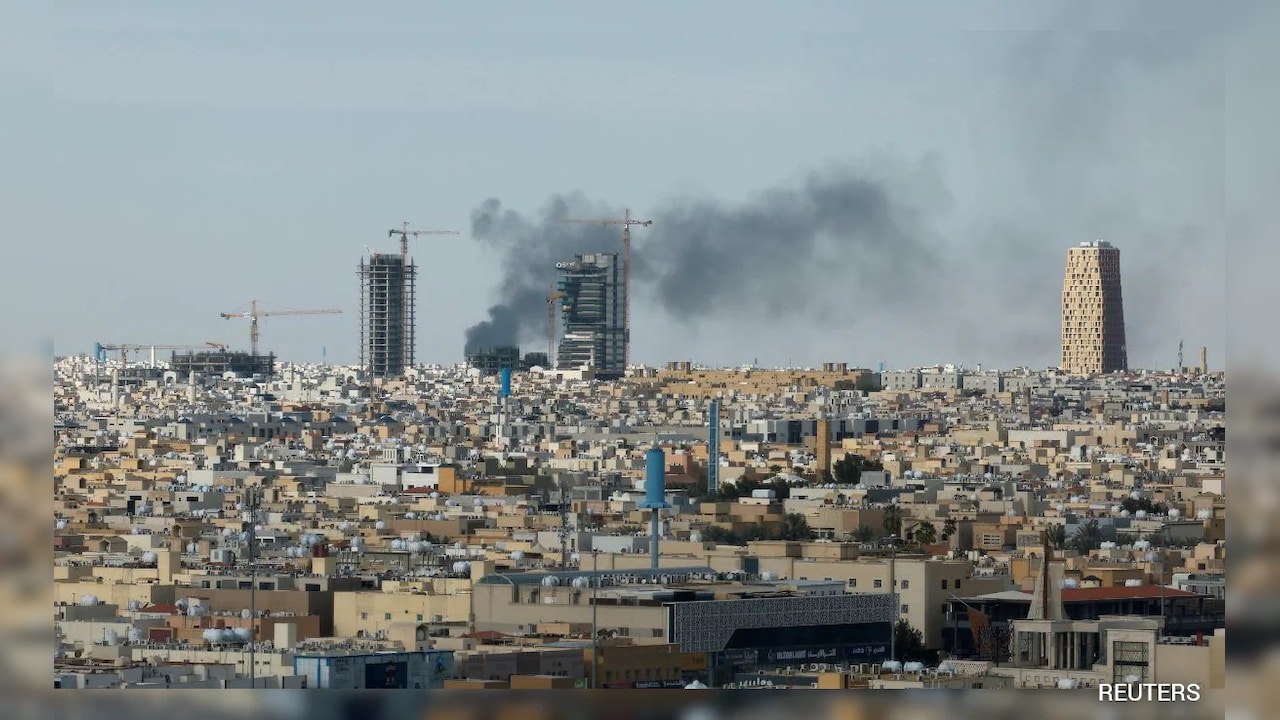
The coffee in the cup on my desk had gone stone cold, a small skin forming over the dark surface, mirroring the quiet dread settling over the room. Outside, Seoul was breathing its usual chaotic morning breath, traffic crawling along the Han River bridges, neon signs flickering against a hazy gray sky. But inside, the monitors told a different story. Numbers ticked upward. Telemetry data flashed in crimson. Ten. Ten missiles, arcing out of the North, climbing into the stratosphere before plunging violently into the freezing waters of the East Sea.
Silence followed. The kind of heavy, pressurized silence that lives right before a thunderstorm breaks.
Just twenty-four hours earlier, a decision had been inked half a world away. Washington and Seoul announced a scaling back of their joint military exercises, a diplomatic olive branch offered to Pyongyang, an attempt to cool a decades-long fever. Ink dries fast on paper. Missiles fly faster.
Consider what happens next when you pull a hand back from a clenched fist. Does the other person step forward in peace, or do they strike while the balance is off? History whispers a warning, and the radar screens in the bunker just shouted it.
The Weight of an Empty Sky
To understand the sound of ten ballistic missiles tearing through the atmosphere, you have to understand the geography of paranoia. Imagine standing on a hillside in Gangwon Province, looking north toward a ridge of mountains that hide a million secrets. You cannot see the launch pads. You cannot hear the ignition systems roaring to life beneath the earth in places like Wonsan or Sukchon. You only feel the aftermath. A distant, subterranean rumble that rattles the windowpanes and makes your teeth ache.
Diplomacy often moves at the speed of cautious committees. Military preparation moves at the speed of combustion.
When the United States and South Korea trimmed down their annual springtime war games—drills with names like Key Resolve and Foal Eagle, exercises that simulate the defense of a peninsula perched on a razor's edge—the stated goal was trust. The administration in Washington wanted a diplomatic opening. They wanted to coax leadership in Pyongyang back to the negotiating table with sweet talk and reduced footprints.
Pyongyang answered with fire.
It is a familiar script, written in the cold ink of the Cold War and updated for the digital age. When you stop flexing your muscles, an adversary does not see vulnerability as grace. They see it as an invitation. The ten short-range projectiles fired that morning were not random hardware malfunctions. They were punctuation marks. They were a message written in high explosives, sent across a maritime border that has never truly known peace.
The Anatomy of a Calculated Provocation
Let us look past the geopolitical chessboard for a moment and examine the machinery of escalation. Why ten? Why now?
Strategic communication in the hermit kingdom is rarely chaotic, no matter how erratic it appears on the nightly news. Every missile launch carries a price tag that could feed a village for a month, yet the resources are found. Why? Because power projection is the currency of survival for a regime built on perpetual siege mentality.
When joint drills are curtailed, the North Korean military apparatus faces a dilemma. Their entire internal propaganda machine relies on the existence of an imminent, demonic threat across the border. If the United States and South Korea soften their posture, the existential threat dims. And a dim threat makes it harder to justify empty stomachs, forced labor brigades, and a population kept in the dark.
By launching a barrage of missiles the very next day, Pyongyang achieved two goals with a single stroke of bad faith. First, it forced Washington and Seoul to react, instantly restoring the narrative of external danger. Second, it tested the reflexes of the newly adjusted defense posture. They were probing for seams in the armor. They wanted to see if the reduction in joint drills had slowed down warning times, if the radar operators were sipping tea instead of watching scopes, if the alliance had grown soft in the pursuit of peace.
I remember sitting in a command liaison office years ago, watching analysts tear apart telemetry from a similar test. People think military strategy is about grand sweeping gestures, maps with giant arrows, and grand speeches. It is not. It is about seconds. It is about a twenty-two-year-old radar technician blinking against the glare of a green-phosphor screen, trying to figure out if an anomalous blip is a flock of migrating geese or a solid-propellant threat heading toward a populated harbor at Mach 5.
When the drills are cut, those reflexes dull. Muscle memory fades. And that is a risk no nation on the peninsula can afford to take lightly.
The Trap of Appeasement
We romanticize peace as the absence of conflict. But true peace requires a foundation of absolute deterrence, a wall so high and so solid that nobody even thinks of scaling it. When you lower the wall in hopes that your neighbor will drop their weapons, you often find that they simply brought a taller ladder.
The sequence of events—drill reduction on Monday, missile barrage on Tuesday—exposes the fundamental flaw in unilateral concessions. In the brutal calculus of international relations, weakness is an aesthetic that invites aggression.
Think of a boxer in the center of the ring. If he drops his guard and steps back, telling his opponent he wants to talk things over, a disciplined fighter might lower his gloves too. But a cornered, desperate fighter with everything to lose will throw a left hook straight down the middle.
North Korea is that cornered fighter. Their economy is stagnant, squeezed by decades of international sanctions. Their nuclear and missile programs are the only chips they have left at the high-stakes poker table of global politics. Without them, they are irrelevant. With them, they can command the attention of the American president, disrupt regional stability in East Asia, and keep their domestic populace subjugated under the banner of eternal vigilance.
So when the joint drills were pruned back, Pyongyang did not exhale in relief. They seized the initiative. They proved, once again, that you cannot negotiate with a shadow by turning off the lights.
The Echoes Across the Water
The ripples of those ten missiles did not stop at the East Sea. They washed up on the shores of Tokyo, where defense officials immediately convened emergency briefings. They rattled markets in Seoul, where foreign investors have danced this tango for decades, knowing that today's missile test is tomorrow's footnote, until the day it isn't.
And in Washington, phones started ringing before dawn.
The diplomats are back at their desks now, drafting strongly worded statements, invoking United Nations resolutions, talking about paths to dialogue and the importance of regional stability. Meanwhile, in underground silos and mobile launcher bays north of the demarcation line, technicians are already fueling the next batch of hardware.
The sky over the 38th Parallel remains deceptive. It looks like any other sky, blue and vast, indifferent to the lines we draw in the dirt beneath it. But beneath that sky, two worlds remain locked in a perpetual stare, waiting for someone to blink, waiting for someone to miscalculate, waiting for the moment when a test becomes a tragedy.
The coffee on my desk is completely cold now. I pour it out into the sink, watching the dark liquid swirl down the drain, listening to the hollow echo of the pipes. Somewhere out there, another radar scope just lit up.