The desk clerk’s stamp used to feel like a countdown. For years, entering Saudi Arabia as a British traveler meant wrestling with a ticking clock, a flurry of expensive paperwork, and the constant, nagging awareness that your time was strictly rationed. You squeezed your meetings, your family visits, or your desert exploration into a breathless window, always keeping one eye on the exit.
Then the rules shifted.
Picture an independent consultant from Manchester, let’s call him David. David spends his winters helping tech startups in Riyadh build their infrastructure. Under the old system, David’s life was a frantic cycle of visa renewals, mad dashes back to Heathrow, and mounting fees. He spent more time worrying about compliance than culture. He knew the airport terminals better than he knew the historic alleys of Al-Balad.
But a quiet bureaucratic revolution has changed everything for people like David.
The Paper Fortress crumbles
Navigating international travel has historically meant dealing with a wall of administrative friction. It was slow. It was tedious. For British passport holders looking toward the Middle East, the process often felt like an interrogation of intent.
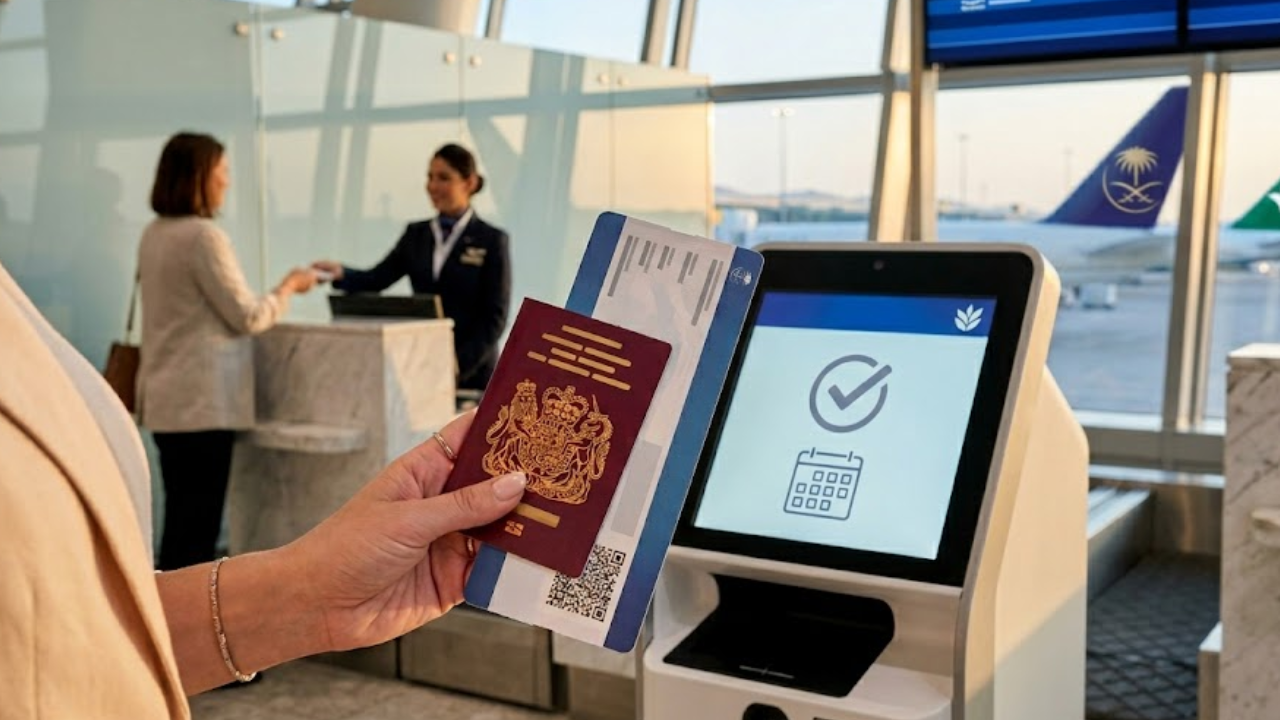
Starting this July, that wall is being dismantled. The introduction of a streamlined electronic travel permit marks a massive shift in how the UK interacts with the Kingdom. Instead of navigating a maze of consulate appointments and waiting weeks for a passport to be returned, travelers can secure their entry with a few clicks.
The headline number is 180.
That is how many days a British citizen can now remain in Saudi Arabia under the new permit. Half a year. It is a staggering stretch of time compared to the rigid, short-stay visas of the past. This is not just a tweak to a website or a minor reduction in a processing fee. It is an invitation to slow down.
Why time changes how we travel
When you only have two weeks in a country, you become a consumer of highlights. You rush from one landmark to the next, checking off boxes, taking photos, and leaving without ever truly understanding the rhythm of the place. You eat at hotel restaurants because they are safe and fast. You talk to tour guides instead of locals.
Six months changes the mathematics of human connection.
With 180 days, you can actually watch a city change colors through the seasons. You can find a favorite coffee shop in Riyadh where the barista eventually learns your name. You can venture beyond the glittering skyscrapers of the capital and spend weeks tracing the ancient incense routes through AlUla, or diving into the untouched marine ecosystems of the Red Sea without feeling like you are wasting precious daylight.
Consider what happens next when friction disappears: travel evolves from a luxury product into a lifestyle choice. The digital nomad who used to split their time between Lisbon and Bali suddenly has a massive, historically insulated geography opened up to them. The grandparent in London can now spend an entire winter with their family working in the Eastern Province, experiencing a full cycle of family life rather than a fleeting holiday visit.
The mechanics behind the magic
Naturally, a shift this significant brings questions. Travel regulations are notoriously dense, and it is easy to get lost in the fine print.
The new electronic system functions as a pre-travel authorization. It links directly to your digital passport, eliminating the need for physical stickers or ink stamps that take up valuable pages. While the permit allows for an extended stay of up to half a year, it is vital to understand the structure of the entry rules. The permit operates on a multi-entry basis, meaning you can come and go, but the cumulative or single-stay limit caps out at that 180-day mark within the year.
It is a trust-based system designed to foster genuine exchange rather than gatekeeping. The ease of access reflects a broader, sweeping effort by Saudi Arabia to transition from an economy built on oil to one powered by global tourism, culture, and international talent.
But bureaucracy is only interesting because of what it unlocks.
The shifting sands of the Gulf
For decades, the Kingdom was a place shrouded in mystery for the average Westerner. It was a destination reserved for oil executives, diplomatic corps, and religious pilgrims. The culture existed behind closed doors, viewed by the outside world through a narrow lens of news broadcasts and geopolitical analysis.
Now, the doors are fully unlocked.
The real magic of this policy shift is not found in the ease of the online application form. It is found in the moments that form allows to happen. It is found when a British traveler sits down in a traditional Hijazi house in Jeddah, sharing a cup of cardamom-infused coffee with someone whose life experiences seem entirely alien on paper, only to realize they share the exact same hopes for their children.
The clock is no longer ticking loudly in the background. The countdown has stopped.
A standard suitcase sits open on a bedroom floor in London, half-packed with lightweight linen and sturdy boots meant for the rocky terrain of the Hejaz mountains. The flight leaves in three weeks. For the first time, the return ticket is left completely open, floating somewhere in the distant winter.