Silence.
That is the strangest part of an earthquake alert when you are standing in a quiet kitchen with a mug of barley tea in your hand and the floor beneath your slippers hasn't moved a millimeter. For another perspective, see: this related article.
I know that sound. I have stood in a narrow concrete hallway in northern Japan while a phone on a counter screamed a high, frantic warble that sounds like a cross between an air-raid siren and a panicked bird. Your stomach drops before your brain catches up. You don't have time to put on shoes. You look at a heavy oak bookshelf and calculate how fast it would tip, how many seconds you have to duck under a table, whether the glass in the sliding door will shatter inward or outward. Every muscle in your body locks into a single primitive command: move.
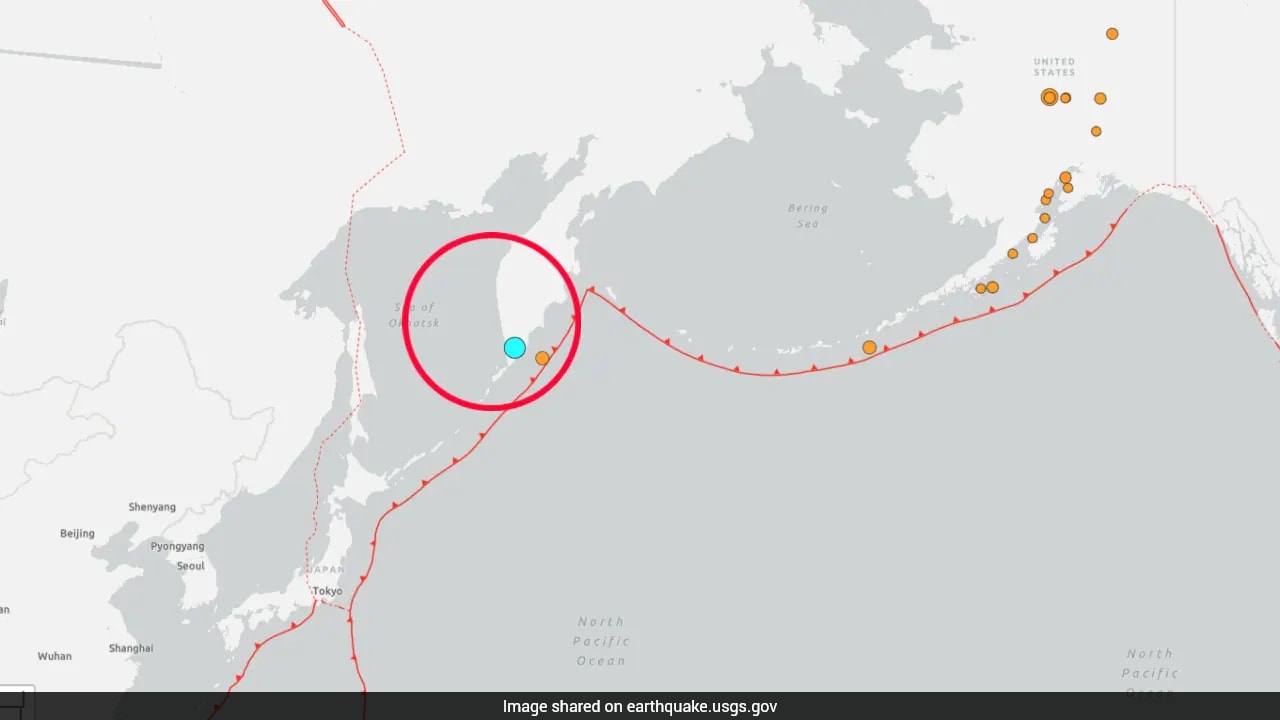
Now picture that same shriek ringing out across millions of screens when the real tremor is a magnitude 7 rolling across a sparsely populated stretch of Russia, and the automated warning system in Japan flashes a catastrophic 9.9. Similar coverage regarding this has been shared by Associated Press.
Nine point nine.
On the moment magnitude scale, there is no real-world precedent for a 9.9. Even the devastating 2011 Tohoku earthquake—the one that reshaped coastlines, crippled a nuclear plant, and remains etched into the collective memory of an entire nation—registered around 9.0 to 9.1. Because the scale is logarithmic, each whole number represents roughly ten times the wave amplitude and over thirty times the energy release. A 9.9 is not a bad day. It is an apocalyptic distortion of the planet's crust that pushes human engineering and coastal geography past every known threshold.
So when a magnitude 7 earthquake strikes Russia and a warning system across the sea shouts 9.9, two terrifying things happen at once. First, people brace for the end of the world. Second, when the end of the world doesn't arrive—when the waves are far smaller than feared or the shaking never reaches their street—a quiet, corrosive doubt seeps into the human nervous system.
What if the alarm is broken?
To understand why a 7.0 in Russia can trigger a 9.9 ghost in Japan, we have to step away from the news ticker and look at how split-second hazard warnings are actually built. This is not a story about clumsy people pressing the wrong button in a dark room. It is a story about speed, math, imperfect data, and the razor-thin margin between saving lives and wearing out human trust.
The Race Against Invisible Waves
Earthquakes do not arrive all at once. They travel.
When rock ruptures along a fault line in Russia—along the volatile Pacific Rim where tectonic plates grind and lock—energy radiates outward in waves. Primary waves (P-waves) move faster, squeezing and pulling the ground like an accordion. They are usually gentler, often felt as a sharp jolt or a low rumble. Secondary waves (S-waves) arrive later and do most of the violent horizontal shaking. And if the rupture happens beneath or near the ocean and lifts or drops the seafloor, it can displace vast volumes of water, sending a tsunami racing across open ocean at speeds that rival a commercial jet in deep water, slowing down and piling up into destructive walls as the seabed rises near shore.
Early warning systems exist for a simple, brutal reason: electronic signals travel near the speed of light, while seismic waves and ocean swells move vastly slower. Even a ten- or twenty-second head start can let a bullet train brake, a surgical team pause a delicate cut, or a family drop to the floor before the worst shaking hits.
To buy those precious seconds, automated systems cannot wait until the entire rupture finishes or until buoys across the Pacific confirm every detail. They have to estimate magnitude and potential impact from partial, incoming signals.
Think of it like trying to guess the size of a bonfire from a single flicker of flame seen through a keyhole in the first second after a match is struck. If you only see a bright burst from one angle—or if a sensor glitches, a data packet arrives out of sequence, or an algorithm over-extrapolates early readings—the math can shoot straight to the ceiling. A magnitude 7 earthquake in Russia is already a serious geological event capable of strong shaking near its epicenter and triggering localized coastal watches or advisories depending on depth and location. Yet in the frantic calculus of an automated alert pipeline, an early miscalculation can inflate a serious tremor into a mythical 9.9 monster.
Consider what happens next in a hypothetical scenario grounded in how coastal households actually react to alerts.
(Note: The following family and scene are a hypothetical composite built to illustrate real-world emergency behavior.)
Kenji is seventy-two, living in a modest two-story home on a gentle slope near the coast. His knees ache in damp weather, and he keeps a pair of slip-on walking shoes and a small flashlight beside his bed because his late wife insisted on it ten years ago. When his phone blares with a maximum-severity warning pointing toward a 9.9 scale event, Kenji doesn't stop to read technical disclaimers. His heart hammers against his ribs. He grabs his bag, wakes his grandson who is visiting for the weekend, and heads toward higher ground.
Halfway up the hill, neighbors are coming out of doorways in pajamas, staring at glowing screens, looking out toward a calm, dark horizon. Minutes pass. Then more minutes. The sirens fade, or the expected catastrophe fails to materialize at that apocalyptic scale. Relief washes over the street—mixed with confusion, irritation, and a subtle embarrassment that nobody quite wants to admit out loud.
Now ask the uncomfortable question every disaster researcher dreads: when the next real alert sounds at three in the morning, how fast will Kenji's grandson get out of bed?
The Cry-Wolf Trap Is Psychological, Not Technical
Engineers love clean problems. If a sensor fails, you replace it. If a software threshold is too sensitive, you tune it. If a fiber-optic line snaps, you reroute traffic.
Human psychology does not patch that easily.
In disaster communication, researchers talk frequently about "alert fatigue" and the "cry wolf" effect, though those neat phrases flatten a messy emotional reality. People do not simply stop caring because they are lazy or reckless. They adapt. When an alarm repeatedly demands maximum adrenaline for an outcome that feels mismatched to the warning, the brain starts negotiating with danger.
We do this in everyday life without even noticing. Think about a car alarm on a busy street that goes off every time a delivery truck rumbles past. On day one, people glance out the window. By week three, nobody looks up unless they hear breaking glass. A smoke detector that chirps or beeps when you sear steak on high heat teaches the household to wave a dish towel and silence it before checking if anything is actually burning.
Now scale that conditioning up to tectonic hazards spanning Russia and Japan across the Pacific Rim.
When a magnitude 7 quake hits Russia, people in affected Russian regions face real shaking, damaged infrastructure, and genuine worry about aftershocks. Meanwhile, across the water in Japan, millions of people rely on some of the world's most sophisticated seismic and tsunami monitoring networks. When a faulty or miscalculated 9.9 warning fires, it doesn't just create a momentary scare—it strains the credibility of an entire safety architecture that depends on instant, unquestioning obedience.
But the real problem lies elsewhere, too: in the gap between raw technical numbers and what ordinary people think those numbers mean.
A magnitude number measures energy released at the source, not how violently your specific living room will shake or whether a wave will flood your street. An earthquake of magnitude 7 far away—or deep underground—feels very different from a magnitude 7 directly beneath a city. And a 9.9 warning is so extreme that it breaks the mental scale most people carry around. When a number sounds impossible, some people panic uncontrollably; others freeze in disbelief; still others assume it must be a glitch before checking official updates.
Vulnerability is part of being honest about systems like this. No warning network on Earth can promise zero false alarms and zero delayed alarms at the exact same moment. Push the system to be ultra-fast and ultra-cautious, and you increase the risk of over-warnings when early data is noisy. Demand near-zero false alarms, and you risk waiting too long when every second counts.
That tension never truly goes away. It just shifts around depending on how a system is designed and how leaders explain what went wrong afterward.
Why Transparency Matters More Than Perfection
When a 9.9 alert goes out over a magnitude 7 earthquake, the public doesn't expect magic. People understand that machines make mistakes and that nature is unpredictable. What erodes trust fastest is silence, vague jargon, or defensiveness.
Look at how people process a scare once the immediate danger passes. First comes the spike of fear. Then comes the search for clarity: What just happened? Was it a software error? Did a sensor misread the Russia quake? Am I safe right now?
If the explanation that follows sounds like a wall of acronyms or a shrug, cynicism takes root. If the explanation is plain, direct, and honest—naming what triggered the inflated reading, how the system caught or corrected it, and what safeguards are being reviewed—people can anchor themselves again. Trust isn't built by pretending the system is infallible. Trust is built by showing that when the system stumbles, humans are paying attention and fixing the blind spots.
There is also a practical habit every person living near active seismic zones—or traveling across them—can build so they aren't purely at the mercy of a single screen or a single number.
- Treat the alert as a cue to check official channels and physical cues, not a reason to argue with the screen. If an alert sounds, move away from glass and heavy falling hazards first, or head to higher ground if you are near the coast and official tsunami guidance calls for it—don't waste precious seconds debating whether the magnitude sounds high.
- Know your local geography, not just the headline magnitude. Where you are standing—elevation above sea level, distance from the coast, soil type, and building safety—shapes your actual risk far more than a headline number alone.
- Keep a calm, practiced household routine. When everyone already knows where to meet, what small bag to grab, and how to check on elderly neighbors, a false alarm becomes a brief, inconvenient drill rather than chaos.
Technology gives us eyes and ears deeper into the earth and ocean than any generation before us has ever had. A magnitude 7 earthquake rumbling through Russia can be detected, tracked, and analyzed in ways that would have seemed like sorcery a century ago. Yet even the sharpest instruments still live inside human hands, human code, and human nerves.
A siren crying 9.9 when the ground only warrants a 7 is a jarring reminder of how fragile our sense of certainty really is. We build towers of steel and glass, write algorithms to outrun the earth's fury, and still stand there holding a warm mug in a quiet room, listening to a warning shriek through the air—hoping the next time it rings, we know exactly what to do.
The ocean does not care what number flashed on your screen.