When engineers drive concrete pilings into the seabed, they rarely predict how nature will respond a decade later. We love building structures to solve immediate economic problems, but the long-term geography of our shorelines often pays the price. A striking new scientific study tracking a 400-metre fishing pier in Thailand proves just how fast human intervention can permanently warp coastal morphology.
If you assume beaches stay put unless a hurricane hits, think again. The unintended consequences happening right now along shores worldwide deserve a closer look.
The 13-Year Transformation at Ban Khlong Wan
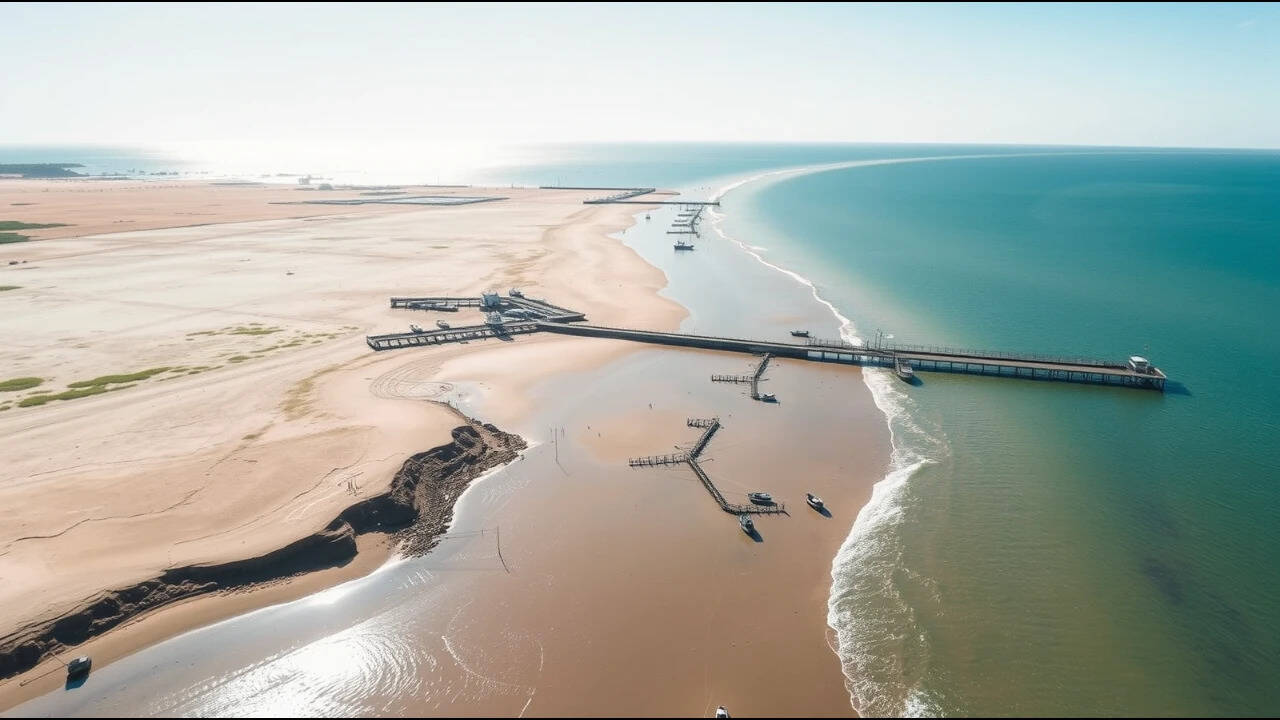
Along the Ban Khlong Wan and Wa Ko coastlines in Thailand, a modest 400-metre fishery pier was constructed to support local maritime commerce. Thirteen years later, researchers evaluated the aftermath using high-resolution spatial tracking. The changes weren't subtle.
The shoreline on one side advanced outward by an incredible 250 metres.
When you block the natural flow of coastal currents, sand has nowhere to go. The pier acted like a massive concrete trap, choking longshore sediment transport. Sand piled up relentlessly on the updrift side, dragging the beach miles outward and completely altering local marine habits. Meanwhile, adjacent areas dealt with entirely different pressures, proving that coastal engineering triggers a chain reaction rather than a localized fix.
Why Longshore Transport Catches Engineers Off Guard
Water moves sideways along coastlines constantly. Waves rarely strike the beach head-on; they hit at an angle, pushing sand grains in a zigzag migration pattern parallel to the shore. This process is called longshore drift.
Drop a massive solid object right across that path, and you break the system.
The Thai pier project demonstrates a classic textbook lesson in coastal physics that planners routinely underestimate.
- Sand piles up aggressively against the barrier on one side.
- The opposite side gets starved of its natural sediment supply, accelerating erosion.
- Local ecosystems, from tidal flats to shallow nurseries, face radical shifts in water depth and clarity.
You can't mess with natural sediment budgets without paying a toll. The study recorded a mean shoreline change rate of 0.28 metres per year, with peak accretion hitting nearly 12 metres annually during active phases. Those numbers show a landscape actively fighting to find a new equilibrium.
The Broader Context of Changing Asian Coastlines
This isn't just an isolated case study about a Thai fishing pier. Across Southeast Asia, rapid coastal development clashes with rising sea levels and shifting weather patterns. From artificial breakwaters to commercial harbors, hard engineering solutions often create secondary crises.
What makes this particular 13-year study valuable is its use of advanced monitoring tech, including UAV-based LiDAR systems. Instead of guessing how beaches evolve over decades, researchers can now map centimeter-level shifts year over year. They discovered that the shoreline changes weren't solely driven by the pier itself. Shifts in upstream land use, including wetland-to-aquaculture conversions, also changed the amount of sediment washing down into the coastal zone.
Multiple human pressures stack on top of each other. You change the inland wetlands, you build a concrete pier, and suddenly the ocean responds by rewriting the geography of the beach entirely.
What This Means for Future Coastal Planning
Building resilient coastal infrastructure requires humility. We can't just drop massive concrete structures into dynamic marine environments and hope for the best.
If you're involved in coastal management or local environmental policy, the takeaway is clear. Environmental impact assessments must model multi-decade sediment trapping, not just immediate construction footprints. Planners need to incorporate bypass systems, porous pier designs, or regular sand replenishment schedules from day one.
Ignoring how water moves will always cost more in the long run. Nature always bats last, and she keeps score in meters of displaced sand.