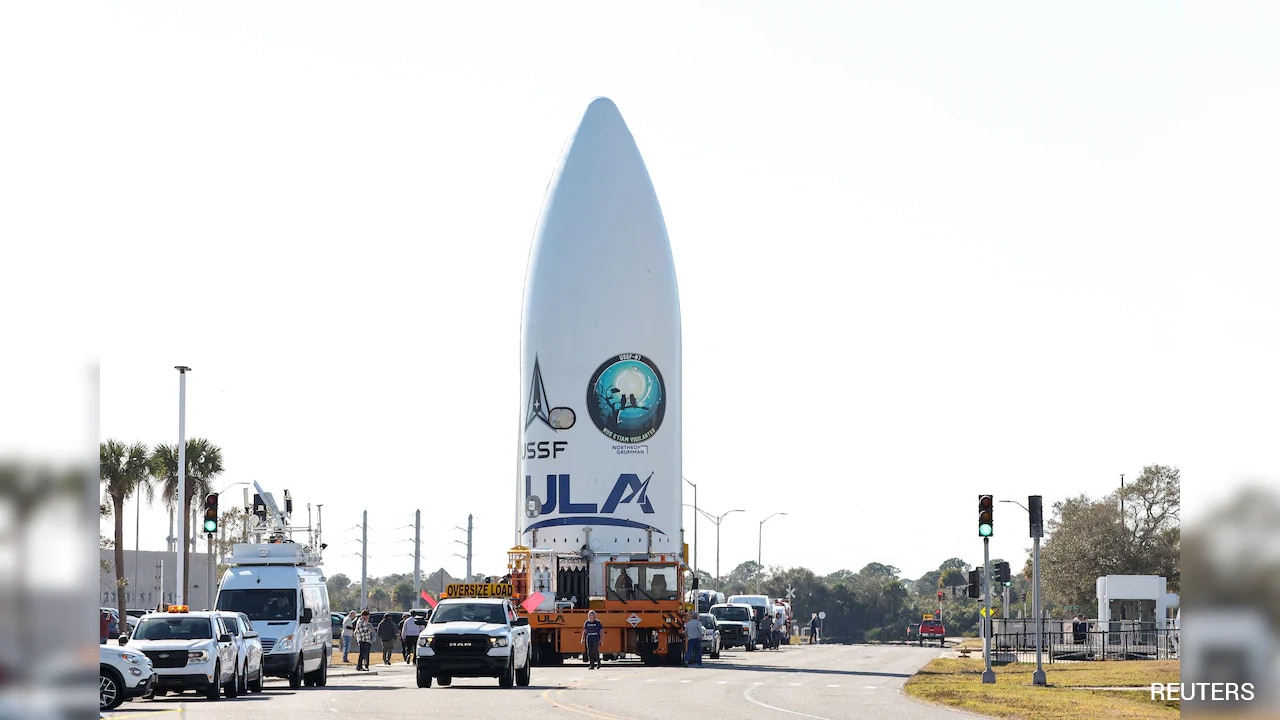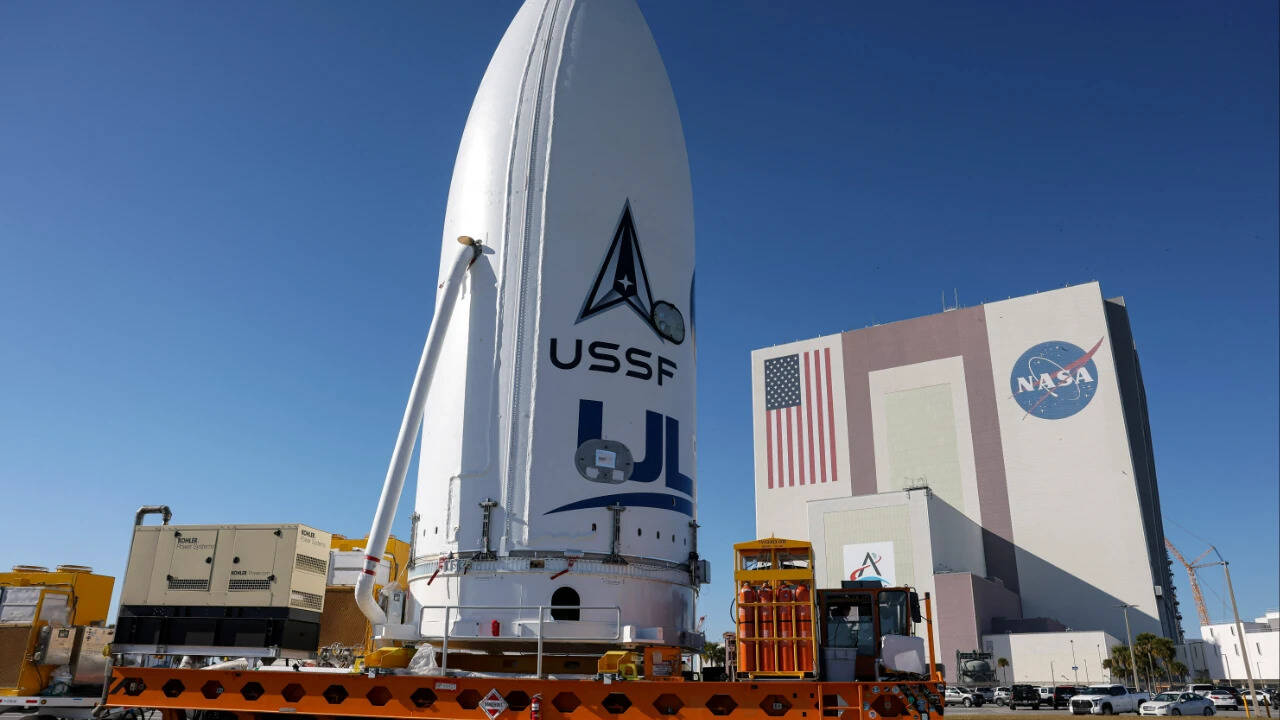
The loss of 40 Amazon Leo satellites during a United Launch Alliance (ULA) Vulcan rocket failure minutes after liftoff exposes a structural vulnerability in capital-intensive Low Earth Orbit (LEO) constellation economics. When an operator relies on heavy-lift launch vehicles to achieve rapid orbital deployment, the cost function shifts from marginal per-unit manufacturing risk to catastrophic batch-level schedule compression.
Standard reporting treats a launch anomaly as an isolated aerospace engineering failure. From a systems engineering and supply chain perspective, losing 40 spacecraft in a single ascent event represents a compounding shock across three distinct operational layers: orbital mechanics, launch manifest elasticity, and regulatory spectrum clocks.
The Batch-Size Paradox in Constellation Logistics
Deploying a broadband mega-constellation requires balancing two competing optimization variables: launch cost per kilogram and deployment cadence. Heavy-lift vehicles like ULA's Vulcan Centaur minimize the unit cost of mass to orbit by bundling dozens of flat-panel satellites into a single payload fairing. This batching strategy introduces acute concentration risk.
- Capital Immobilization: Unlike traditional geostationary communications satellites, where a single high-value asset carries the entire mission risk, LEO constellations distribute network capacity across thousands of nodes. Packing 40 nodes onto one booster re-aggregates that distributed risk back into a single point of failure during the ascent phase.
- Manufacturing Buffer Depletion: High-cadence satellite factories operate on lean inventory principles to control working capital. Losing an entire flight set forces production lines to divert capacity from future orbital shells to backfill the missing plane, creating a cascading delay across the entire deployment schedule.
- Insurance Market Friction: Launch insurance premiums for nascent launch vehicles carrying high-density payloads reflect elevated actuarial uncertainty. A failure early in a rocket's operational lifecycle triggers immediate rate hardening across the broader commercial launch sector, increasing the weighted average cost of capital for subsequent missions.
Failure Modes in the Ascent Phase
When a launch vehicle fails minutes after liftoff, the anomaly typically occurs during the transition between first-stage booster separation, upper-stage ignition, or payload fairing jettison. This window represents the highest dynamic and thermal stress regime of the flight profile.
Propulsion and Stage Separation Dynamics
In a two-stage-to-orbit architecture like Vulcan, the first stage must expend its propellant, shut down cleanly, and separate from the Centaur upper stage while traveling at hypersonic velocities in the upper atmosphere. Any deviation in thrust vector control, propellant tank pressurization, or separation pyrotechnics induces an immediate attitude excursion. At those velocities, aerodynamic forces rapidly exceed the structural margins of the vehicle, leading to automated flight termination or structural breakup.
Payload Integration Vulnerability
Stacking 40 satellites inside a single fairing requires a complex dispenser architecture engineered to withstand multi-axis vibrational loads during max-Q (maximum dynamic pressure) and stage separation. Even if an upper-stage anomaly does not destroy the vehicle outright, an off-nominal trajectory leaves the dispenser in an unusable orbit. Without sufficient onboard propellant to raise their perigee against atmospheric drag, the deployed satellites face rapid orbital decay and destructive reentry within days or weeks.
Regulatory Spectrum Clocks and Manifest Elasticity
The operational impact of losing 40 satellites extends far beyond the hardware replacement cost. Commercial satellite operators operate under strict regulatory milestones enforced by the Federal Communications Commission (FCC) and the International Telecommunication Union (ITU).
To retain priority rights to valuable Ka-band and Ku-band radio frequency spectrum, an operator must deploy and operate a specified percentage of its authorized constellation by hard statutory deadlines. A launch failure simultaneously removes active nodes from the deployment count and freezes the launch provider's manifest while the Federal Aviation Administration (FAA) oversees a mishap investigation.
- The Investigation Bottleneck: Root-cause analysis, telemetry reconstruction, and corrective action verification routinely ground a launch vehicle family for months.
- Launch Provider Substitution Limits: Commercial heavy-lift capacity is globally constrained. Satellite dispensers, electrical interfaces, and acoustic dampening systems are custom-engineered for specific launch vehicles. Re-manifesting 40 satellites from a grounded Vulcan rocket onto an alternative booster requires structural adapter redesigns, coupled loads analysis, and slot negotiations in an already saturated global launch market.
- Orbital Plane Synchronization: LEO constellations rely on precise nodal precession to maintain continuous global coverage. Missing a single launch window disrupts the geometric spacing between adjacent orbital planes, forcing operators to either accept coverage gaps at specific latitudes or expend precious station-keeping propellant to re-phase surviving satellites.
Strategic Risk Mitigation for Mega-Constellations
Relying on multi-provider launch procurement mitigates long-term vendor lock-in, yet it does not insulate a constellation program from batch-level failure on an unseasoned vehicle. Mature launch architectures achieve reliability through high flight cadence, allowing engineers to identify and eliminate subtle failure modes across dozens of missions.
- Decouple Early Flight Risk from Full Batch Payloads: Operators should cap payload density on early operational flights of any new launch vehicle. Accepting a higher per-kilogram launch cost during a booster's initial flight manifest protects capital-intensive satellite inventory until the vehicle demonstrates statistical reliability.
- Standardize Multi-Vehicle Dispenser Interfaces: Engineering a vehicle-agnostic payload adapter with unified mechanical and electrical interfaces reduces the switching time required to re-manifest satellites onto secondary launch providers during a primary booster stand-down.
- Maintain Rolling Strategic Flight Reserves: Instead of sizing factory output strictly to the nominal launch schedule, constellation operators must maintain a dedicated buffer of completed spacecraft and pre-allocated secondary launch slots to absorb single-launch anomalies without breaching regulatory spectrum milestones.