International humanitarian intervention operates within strict logistical constraints where the speed of deployment directly dictates casualty rates and operational efficacy. When Singapore dispatches a Disaster Victim Identification team and associated aid to support flood-hit Nepal, the action represents a targeted intersection of specialized forensic capability and constrained airlift capacity. Evaluating this deployment requires a structural examination of how small nation-states execute foreign disaster assistance, the mechanics of Disaster Victim Identification under field conditions, and the cascading secondary effects of monsoon-induced infrastructure failure.
Standard diplomatic announcements regarding humanitarian assistance often obscure the complex mechanical supply chain required to move personnel, specialized equipment, and medical consumables into a landlocked, disaster-affected terrain. Nepal presents severe geographical hurdles, characterized by high-altitude airports, restricted air corridors, and compromised ground routes caused by landslides and washouts. Singapore intervention strategy relies on high-readiness civil-defence units trained to operate independently in austere environments. Rather than offering generalized manpower, the deployment targets high-value operational bottlenecks: forensic verification and specialized rescue support.
The Operational Anatomy of Disaster Victim Identification
Disaster Victim Identification, commonly known by the acronym DVI, represents a standardized international protocol governed by Interpol guidelines. The primary objective is not merely body recovery, but the irrefutable, scientific identification of deceased individuals to ensure legal closure, public health safety, and accurate epidemiological tracking.
The deployment of a specialized DVI team addresses a specific technical deficit in local disaster response infrastructure. Following catastrophic flooding and landslides, local forensic pathologists and law enforcement agencies are typically overwhelmed by the sheer volume of fatalities, compounded by the rapid decomposition rates inherent to humid, post-flood environments.
The operational workflow executed by deployed forensic teams follows four distinct phases:
- The Scene Phase: Mapping coordinates, recovering human remains with strict chain-of-custody protocols, and preventing contamination or loss of associative evidence.
- The Post-Mortem Phase: Conducting systematic examinations at secure temporary mortuaries, collecting primary identifiers including fingerprints, dental records, and DNA profiles.
- The Ante-Mortem Phase: Gathering comparative data from families of the missing, medical records, and personal effects through liaison with local authorities.
- The Reconciliation Phase: Matching post-mortem data against ante-mortem data through strict committee review to achieve positive identifications before issuing death certificates.
The logistical friction point in this workflow lies in the transition from the scene phase to the post-mortem phase. Without cold-chain maintenance, mobile laboratory units, and secure communication networks to cross-reference databases, forensic verification stalls. Singapore specialized units mitigate this by bringing self-contained operational modules that bypass local grid failures.
Logistical Bottlenecks in Landlocked Humanitarian Relief
Deploying aid to Nepal during a monsoon disaster tests the limits of strategic transport logistics. Unlike coastal nations where naval assets can offload heavy machinery and supplies directly onto ports, landlocked nations rely exclusively on air transport or overland transit through neighboring states.
The geographical reality of Kathmandu Tribhuvan International Airport creates a single-point-of-failure choke point for all international heavy airlift. The airport features a single runway situated in a valley surrounded by high terrain, strictly limiting aircraft turnaround times, maximum landing weights, and night-operation capabilities during severe weather events.
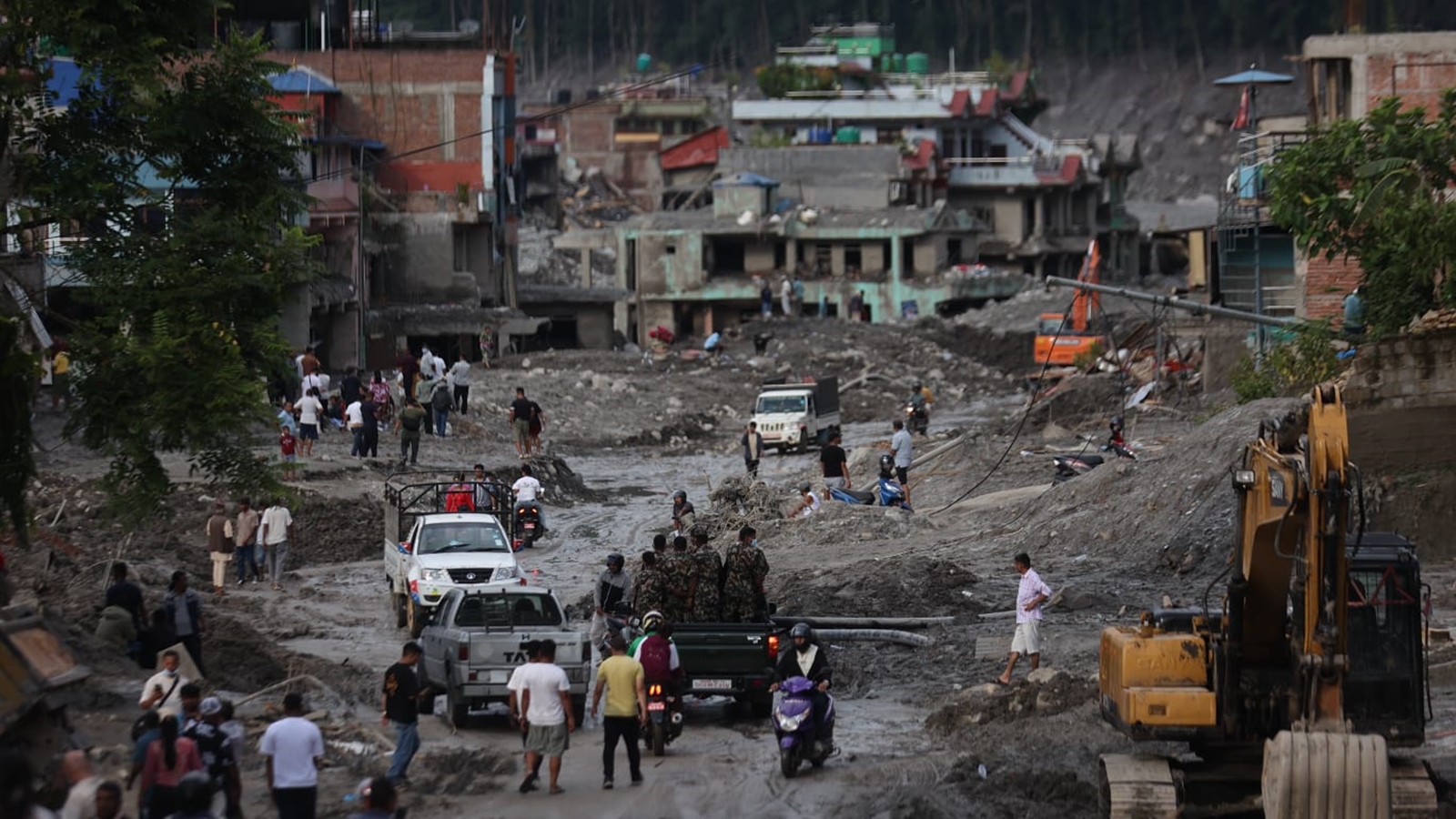
When international relief flights land, secondary distribution presents an even steeper barrier. Monsoon floods frequently shear away bridge abutments, inundate valley floors, and destabilize mountain highways. Heavy trucks carrying water purification units, shelter materials, and medical kits cannot reach isolated communities in Sindhupalchowk, Kaski, or other severely impacted districts.
This creates a mandatory reliance on rotary-wing aircraft for the final leg of the supply chain. Helicopters, however, face severe payload-versus-altitude penalties. Operating in thin air at high density altitudes reduces lift capacity significantly, requiring careful calculation of fuel loads versus cargo weight. Singapore operational planners factor these aerodynamic constraints into deployment sizing, ensuring that the aid packages match the exact cargo lifting thresholds of available regional transport assets.
The Economic and Epidemiological Fallout of Monsoon Disasters
Catastrophic flooding in South Asia generates immediate trauma losses followed by protracted economic and public health crises. The destruction of potable water systems mixes sewage with runoff, creating ideal vectors for waterborne diseases such as cholera, typhoid, and leptospirosis.
The economic cost function of such disasters operates on a multiplier effect. Agricultural productivity collapses when topsoil is washed away and irrigation canals are silted up. Road destruction severs market access for perishable goods, causing localized price spikes and immediate income loss for agrarian populations. Remittance dependence increases as families seek external liquidity to rebuild destroyed dwellings.
International aid mitigates the initial shock, but long-term recovery depends entirely on the velocity of infrastructure rehabilitation. When foreign governments supply water purification units and emergency medical teams, they temporarily stabilize the epidemiological curve, preventing secondary mortality waves that often exceed the direct casualties of the initial impact event.
Strategic Allocation of Specialized State Capacity
Small, highly developed nations like Singapore maintain outsized disaster response capabilities precisely because their domestic risk profile leaves little room for ad-hoc improvisation. Their domestic civil defense structures function on a standing-force model where specialists maintain dual readiness for domestic urban contingencies and international humanitarian assistance deployments.
This approach reflects a calculated deployment of soft power coupled with rigorous operational testing. By maintaining standardized modules that integrate seamlessly with United Nations Disaster Assessment and Coordination mechanisms, these teams avoid the common pitfall of uncoordinated aid, where well-meaning actors swamp local logistics networks with unsolicited, unusable supplies.
The dispatch of a DVI team and targeted humanitarian aid to Nepal is not an act of generic charity. It is a calculated deployment of high-specification forensic and logistical capital designed to resolve specific operational bottlenecks that local authorities cannot clear alone.
Integrate a decentralized, modular logistics framework into the next phase of regional disaster response protocols, prioritizing self-sustaining forensic units and high-altitude rotary-wing coordination to compress the recovery timeline in landlocked crisis zones.