Money flows where the value is, and right now, institutional players from the Lion City are betting heavily on the Pearl of the Orient. Singapore-based investors have officially overtaken mainland Chinese buyers to claim the top spot for non-local commercial property acquisitions in Hong Kong.
If you've been watching the commercial real estate market from the sidelines, this shift probably feels sudden. It isn't. When office asset prices drop by up to fifty percent from their historical peaks, smart money stops watching and starts writing checks.
The Numbers Behind the Capital Shift
Data from property agencies like Colliers show that non-local and mainland investment in Hong Kong commercial properties hit HK$5.46 billion during the second quarter. Out of that total, Singaporean buyers alone poured in HK$3.37 billion. That accounts for a staggering sixty-two percent of all external capital entering the market.
To put that into perspective, mainland investors contributed just HK$1.23 billion during the exact same period. Just a few months prior, those roles were completely reversed, with mainland capital leading the charge while Singaporean funds sat entirely on the sidelines.
What changed? Price correction. Years of prolonged slumps in the office segment created a pool of distressed and heavily discounted assets that institutional buyers simply couldn't ignore.
Major Moves in Central and Beyond
This isn't just about small-scale portfolio padding. Major institutional players are securing trophy assets at a massive discount.
Take DBS Bank (Hong Kong) Ltd, for instance. They dropped roughly HK$2.62 billion to acquire 152,000 square feet of office space across several floors at The Center, one of the most recognizable skyscrapers in Hong Kong's primary business district.
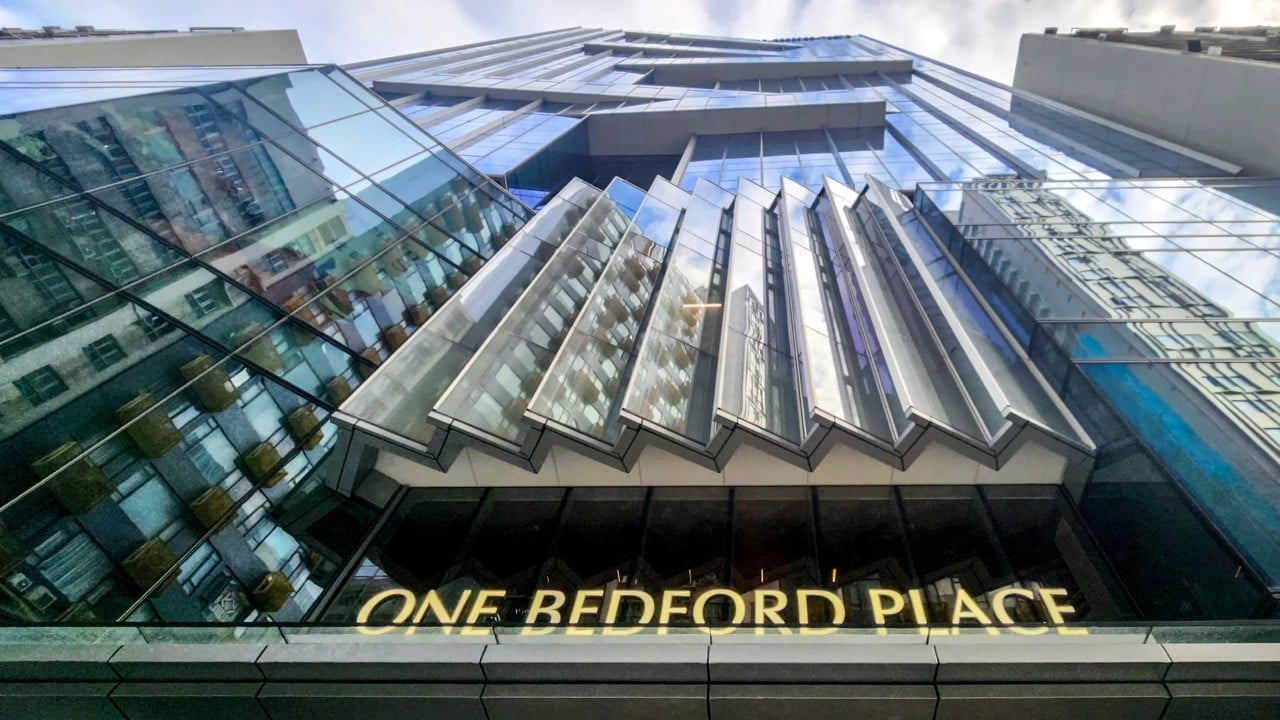
At the same time, Wee Hur Holdings executed an en bloc acquisition of One Bedford Place in Tai Kok Tsui, shelling out HK$748.8 million for 184,041 square feet of space.
These aren't speculative gambles on a dying market. They are calculated plays by entities with deep balance sheets, looking at long-term recovery curves rather than quick overnight flips.
Why Singaporean Funds Are Winning Right Now
You might wonder why Singaporean institutions are moving aggressively while others remain hesitant. Traditional lenders are tightening financing terms for Hong Kong real estate, requiring strict loan-to-value ratios due to ongoing valuation uncertainties.
Singaporean buyers, however, often rely on strong corporate liquidity and alternative capital structures that bypass the gridlock of traditional local bank financing. They possess the cash reserves necessary to absorb short-term volatility in exchange for long-term yields.
Furthermore, while grade-A office rents in prime pockets like Central have shown flashes of resilience—climbing 7.3 percent in the first half of the year—the broader market remains bruised. Buyers with heavy capital reserves hold all the leverage. They can cherry-pick properties from distressed sellers who need immediate liquidity.
What This Means for the Regional Property Dynamic
For decades, the narrative of cross-border investment in Hong Kong commercial real estate was dominated almost exclusively by mainland enterprises. Seeing Singaporean institutional capital eclipse that dominance signals a structural realignment in Asian commercial real estate.
Singaporean family offices and corporate giants are diversifying their geographic exposure. They are treating Hong Kong's correction window as a generational entry point.
If you are evaluating commercial real estate opportunities in Asia, stop looking at headline averages. The real story is happening at the asset level, where patient capital is quietly acquiring prime infrastructure at half-off valuations. Watch the tenant retention rates in buildings acquired by these foreign institutional buyers over the next four quarters. That will tell you whether the bottom is truly in.