Waiting rooms smell like floor wax and quiet panic.
Anyone who has ever sat in one of those stiff, vinyl-covered chairs knows the exact temperature of the air—just cold enough to make you pull your sleeves down over your knuckles—and the way the fluorescent lights hum a flat, indifferent note while you stare at a faded poster about handwashing. You sit there, clutching a crinkled paper gown or a laminated appointment card, listening to the muffled cadence of a doctor’s voice behind a thin drywall partition, praying that the shadow on the scan is just a shadow, a quirk of the machine, an innocent knot of scar tissue from a childhood fall. If you liked this article, you should check out: this related article.
I sat in that chair four years ago with my father. By the time the oncology nurse walked in with that specific, practiced gentleness in her posture, the shadow on his lung had already stopped being a shadow. It had a name, a stage, and a timeline measured in months rather than decades. For years, while my father was still chopping firewood, laughing at terrible television comedies, and complaining about the price of petrol, a microscopic rebellion had been gathering strength inside his chest, completely invisible to the naked eye and utterly silent until the very week it became too loud to ignore.
That silence is cancer’s greatest weapon. It is the reason so many diagnoses feel less like a medical finding and more like an ambush. For another look on this story, check out the latest update from Psychology Today.
Now, across the United Kingdom, a quiet revolution is unfolding inside thousands of ordinary blood collection clinics, driven by a simple yet audacious premise: what if we didn't have to wait for the tumor to shout?
The Tyranny of the Late Alarm
To understand why the National Health Service is embarking on massive clinical trials to test multi-cancer early detection blood tests on thousands of patients, you first have to reckon with how profoundly backward our current approach to cancer screening really is.
Right now, modern medicine mostly waits for trouble to announce itself. Aside from a handful of targeted screening programs—mammograms for breast cancer, colonoscopies or stool tests for bowel cancer, smear tests for cervical cancer, and targeted lung checks for high-risk smokers—we largely rely on symptoms to trigger an investigation. A persistent cough. Unexplained weight loss. A dull ache in the lower back that refuses to fade after a long weekend in the garden.
The biological tragedy is that many of the deadliest malignancies—pancreatic, ovarian, esophageal, liver, and certain head and neck cancers—are master illusionists. They grow in the deep, spacious caverns of the body where they can expand for years without pressing on a nerve or blocking a vital duct. When a patient finally notices something is wrong and books an appointment with their general practitioner, the disease has frequently crossed the threshold from a localized problem into a systemic crisis.
Consider the numbers, because cold statistics carry a heavy human weight when you translate them into empty chairs at dinner tables. In the UK, nearly half of all cancers are currently diagnosed at stage three or stage four. When bowel cancer is caught at stage one, more than nine in ten patients survive for at least five years. Catch it at stage four, and that survival rate plummets to roughly one in ten. The medicine hasn't changed; the biology of the disease hasn't suddenly become more malicious. The only variable that shifted was time.
A Hypothetical Tuesday in Manchester
To see what this shift looks like in practice, step into a hypothetical scenario. Picture a woman named Margaret, sixty-two years old, a retired school librarian living in a terraced house outside Manchester. She walks three miles every morning, eats porridge with berries, and hasn't had a sick day since the winter of 2018. If you asked Margaret how she felt on a crisp Tuesday morning, she would tell you she felt fine—maybe a touch tired after babysitting her twin grandsons, nothing a strong cup of tea wouldn't fix.
Under the old rules of medicine, Margaret wouldn't see an oncologist for another eighteen months, when a vague discomfort beneath her ribs would finally prompt an ultrasound, revealing an advanced pancreatic tumor that had already seeded itself into her liver.
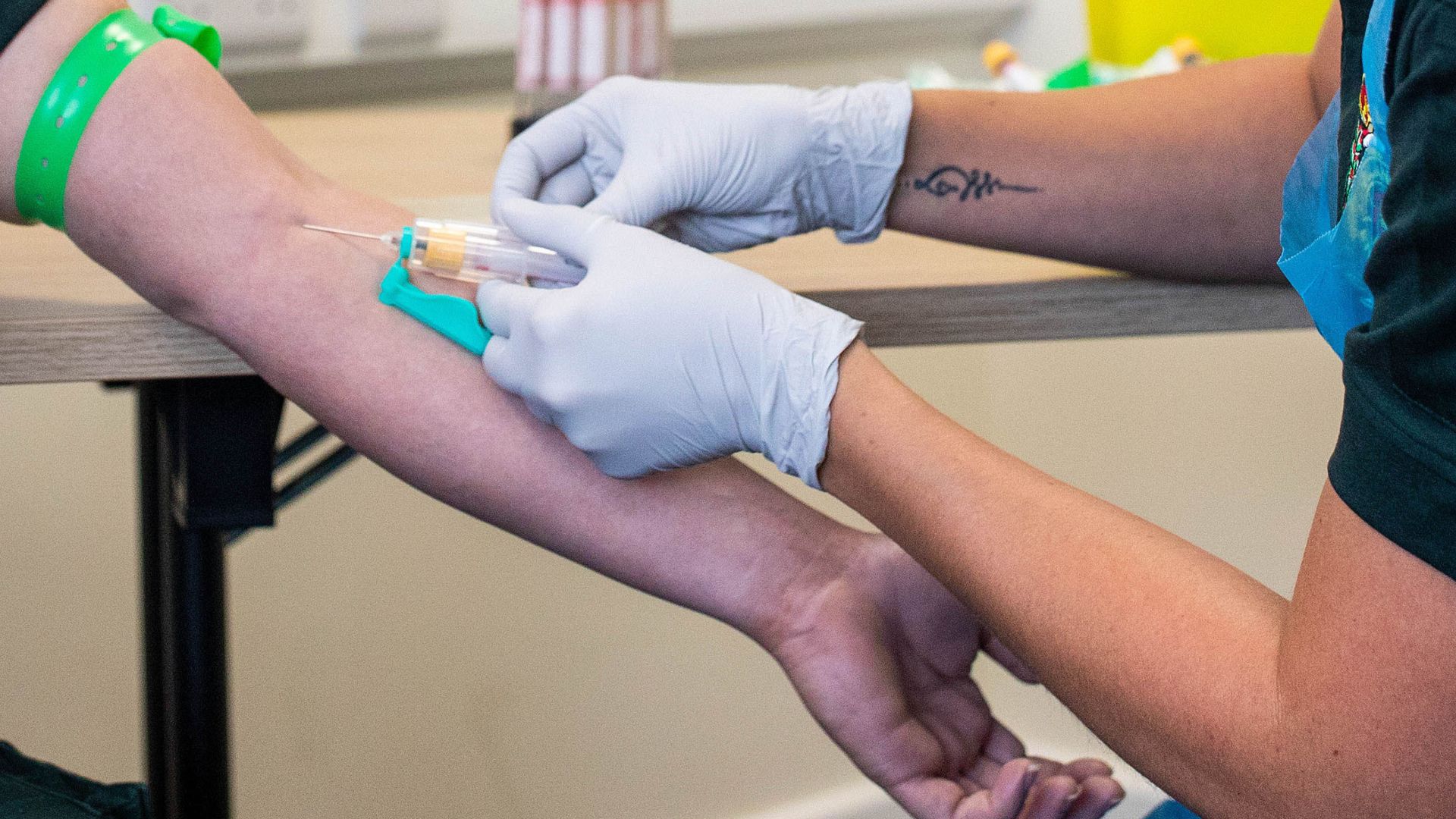
Instead, Margaret receives a letter inviting her to participate in an NHS trial. She walks down to a mobile clinic parked outside her local supermarket, rolls up her sleeve, and gives a standard vial of blood. A nurse applies a small round plaster to the crook of her elbow, and Margaret goes home to bake scones.
Inside that glass tube, suspended in warm crimson plasma, lies a biological diary of everything happening inside Margaret’s body at that exact second.
Reading the Messages in the Stream
How can a simple needle prick in the arm detect a microscopic cluster of rogue cells hiding deep inside the pancreas or the ovaries?
Think of your bloodstream not merely as a plumbing system carrying oxygen and nutrients, but as a bustling, city-wide river into which every neighborhood throws its daily correspondence. As healthy cells live, divide, and eventually die, they shed tiny fragments of their genetic code—known as cell-free DNA—into the circulation. Cancer cells, frantic and sloppy in their relentless drive to multiply, do the exact same thing, shedding what scientists call circulating tumor DNA.
For decades, finding those tumor fragments was like trying to spot a single specific grain of salt dissolved in an Olympic swimming pool. There is simply too much normal genetic noise drowning out the signal.
The breakthrough that has brought the NHS to the threshold of population-wide trials rests on a subtle chemical fingerprint called methylation. If your DNA is the hardware of a computer—the exact same sequence of letters in every cell of your body, whether it belongs to a neuron in your brain or a muscle fiber in your calf—methylation is the software. It consists of tiny chemical tags attached to the DNA strand that tell each cell which genes to turn on and which to keep silent.
When a healthy cell turns cancerous, its software goes haywire. Those chemical methylation tags rearrange themselves into distinct, abnormal patterns long before a lump is large enough to show up on an X-ray or an MRI. Even more remarkably, the specific pattern of those tags acts like a postal code. A shedding tumor in the lung leaves a different methylation signature than a tumor in the stomach or the colon.
By combining next-generation genetic sequencing with machine learning algorithms trained on tens of thousands of blood samples, these new multi-cancer early detection tests—such as the Galleri test, which has been central to major NHS evaluations—scan millions of DNA fragments in a single blood draw. The software isn't looking for a single smoking gun; it is reading the subtle, collective grammar of those chemical tags, asking two urgent questions: Is there a cancer signal present in this blood? And if so, which organ did it come from?
The Weight of the Trials
Science rarely moves in clean, triumphant leaps, and anyone who tells you a single blood test will effortlessly erase cancer from human experience is selling fairy tales. The reality inside the NHS trials is far more nuanced, cautious, and intensely human.
When the NHS launched massive initiatives—recruiting upwards of 140,000 volunteers across England for the initial NHS-Galleri trial, alongside parallel studies evaluating how these tests perform in patients presenting to their GPs with vague, non-specific symptoms—the goal wasn't simply to celebrate a shiny piece of biotechnology. The goal was to answer the hardest questions in public health.
First, does catching these cancers early via a blood test actually save lives, or does it merely start the clock earlier on diseases that were destined to take the same course? Epidemiologists call this lead-time bias, and it is a ghost that haunts every screening program. If a test finds a cancer two years earlier, and the patient passes away on the exact same date they would have otherwise, the statistics might falsely show that survival time increased by two years when nothing of substance changed. Proving true mortality reduction takes years of meticulous follow-up, tracking tens of thousands of lives across diverse communities, age groups, and socioeconomic backgrounds.
Second, there is the agonizing math of false positives and false negatives.
Imagine being Margaret, sitting at her kitchen table three weeks after that routine blood draw, opening an envelope that says a "cancer signal" has been detected, pointing toward her upper digestive tract. Her heart hammers against her ribs. Sleep evaporates. She endures endoscopies, CT scans, and weeks of breathless dread—only for doctors to find nothing at all. A false alarm. Even if a test boasts a specificity above 99 percent—meaning fewer than one in a hundred healthy people receive a false positive—when you screen ten million citizens, one percent becomes one hundred thousand terrified human beings flooding already stretched hospital imaging departments.
Conversely, what happens if a test misses an early tumor because it isn't shedding enough DNA yet, and a patient ignores a persistent, nagging symptom because they assume their clean blood test gave them a bill of health?
These are not abstract statistical puzzles. They are real anxieties that researchers, clinicians, and health economists inside the NHS are wrestling with right now. A screening tool is only as good as the healthcare system standing behind it. If a blood test flags five thousand potential cancers next month, there must be radiologists available to read the scans, endoscopists ready to perform the biopsies, and surgeons prepared to operate without six-month waiting lists. Otherwise, early detection simply becomes early anxiety.
The Shift From Sick-Care to Foreknowledge
Still, step back from the spreadsheets and look at the sheer moral urgency of what is being attempted.
For over a century, the architecture of Western medicine has been built around rescue. We build magnificent, gleaming intensive care units, invent targeted immunotherapies that cost hundreds of thousands of pounds per patient, and train surgeons to perform six-hour operations under microscopes. We are extraordinary at fighting fires once the roof is already collapsing.
What we have been terrible at is smelling the smoke while the spark is still smoldering in the floorboards.
Consider the ripple effect if these trials prove that a routine blood test can reliably shift cancer diagnoses from stage four back to stage one. Think about the chemotherapy regimens that will never need to be administered, the hair that won't fall out in clumps in the shower drain, the families spared the slow-motion grief of palliative care, and the sheer economic relief for a public health system groaning under the weight of late-stage oncology treatments. Treating a stage one bowel cancer with a straightforward surgical resection costs a fraction of managing metastatic disease over three grueling years—and leaves a whole, thriving person behind.
More than that, a blood-based screening program holds the promise of closing one of medicine’s most stubborn inequities. Right now, cancer outcomes are deeply tangled up with geography and class. People working hourly jobs, juggling multiple caregiving responsibilities, or living far from major diagnostic centers are far less likely to take time off for invasive screenings or push aggressively when a GP dismisses early fatigue as stress. A simple blood draw—something that can be done at a local pharmacy, a mobile van outside a factory gate, or alongside a routine cholesterol check—lowers the friction of survival. It meets people where they actually live.
What Happens When We Know Too Soon?
Yet there is a quiet philosophical reckoning waiting at the end of this road, one that every patient will eventually have to face if these tests become a standard part of turning fifty.
We are entering an era where technology allows us to peer into the biological future before our bodies have felt a single tremor of illness. When you feel sick, you surrender your autonomy to a doctor willingly because you want the pain to stop. When you feel completely healthy—when you just ran five miles in the park and feel the sun warm on your shoulders—being told that microscopic rebel cells are quietly organizing in your bloodstream requires a completely different kind of courage.
It asks us to trust invisible evidence over our own lived sensations. It asks us to endure the discomfort of treatment today to protect a version of ourselves five years from now.
I think back often to that cold waiting room four years ago, and the long drive home with my father after the oncologist drew a diagram of his lungs on the back of an envelope. Neither of us spoke for the first twenty minutes. We just watched the windshield wipers sweep away a steady November drizzle, both of us silently doing the arithmetic of missed chances—the routine checkup he postponed during the busy harvest season, the mild shortness of breath he blamed on getting older, the invisible months when the disease was small enough to fit on the head of a pin and nobody knew to look.
Somewhere right now, in clinics stretching from Newcastle to Southampton, thousands of ordinary people are sitting in phlebotomy chairs, rolling up their sleeves, and offering a few milliliters of blood to help science learn how to listen before the body has to scream. A nurse wipes a small patch of skin with an alcohol swab, slides a needle gently into a vein, and watches dark red life fill a narrow glass vial—holding within it the quiet hope that the next generation will never have to learn what a hospital waiting room smells like at four o'clock in the afternoon.