The smell of a charging station is never just electricity. It is hot plastic, ozone, and a faint, electric hum that vibrates right behind your teeth.
Stand on the tarmac of a European port city on a damp Tuesday morning, and you can smell the shift. Row upon row of sleek, unfamiliar cars sit waiting on the docks, their badges gleaming under a gray sky. They did not come from Wolfsburg or Detroit. They arrived from Shanghai, carrying a silent promise that has the legacy automotive capitals sweating through their wool suits. Recently making waves in related news: The Blueprint Beneath the Quiet Workshop Floor.
For a century, the West wrote the rules of the road. We perfected the internal combustion engine through decades of oil slick and grease, building an industrial religion around pistons and spark plugs. Then came the battery pack. We thought it was just a different engine. We were wrong. It is a chemistry set, a geopolitical chess match, and a race for absolute material dominance.
And right now, the people building the cars are losing sleep over a single date: 2030. Additional information into this topic are detailed by Engadget.
To understand why a year on a calendar can cause boardrooms in Munich and Stuttgart to panic, you have to look down at what sits beneath the floorboards of every modern electric vehicle. Today's cars run on liquid lithium-ion cells. They are reliable, familiar, and fundamentally flawed. Imagine carrying a glass of volatile liquid across a crowded room while someone bumps your elbow. That is liquid electrolyte. It works, but it burns. It degrades. It demands heavy, bulky cooling systems just to keep from losing its temper on a hot highway.
Enter the solid-state battery.
Remove the liquid. Replace it with a solid ceramic or polymer separator. Suddenly, you have a power source that refuses to catch fire, stores twice the energy in half the space, and charges in the time it takes to buy a bad cup of coffee. It is the holy grail of modern engineering. Everyone knew it was coming. Everyone assumed American or European laboratories would cross the finish line first, backed by centuries of academic pedigree.
Beijing decided not to wait for permission.
In laboratories tucked away in the tech corridors of Shenzhen and Hefei, billions of dollars have quietly flowed into transforming solid-state chemistry from a theoretical physics paper into an industrial assembly line. China's state-backed roadmap has planted a flag squarely in 2030 for mass commercialization. This is not a distant, vague corporate projection scribbled on a white board. It is a coordinated, national mobilization involving government subsidies, massive raw material supply chains, and an army of engineers working around the clock.
While Western executives spent the last five years debating profit margins and hedging their bets on legacy factories, Chinese manufacturers locked down the entire periodic table. They control the refining of the rare earth elements, the graphite, the lithium, and the specialized components required to build these next-generation cells.
Now, those same manufacturers are bringing the fruits of that labor directly to the European consumer.
Walk through the parking lot of a suburban shopping center in Oslo or Munich today, and you will see them. They do not look like budget imports or desperate alternatives. They boast clean lines, whisper-quiet cabins, and price tags that make traditional European brands look breathtakingly arrogant. More importantly, their software updates overnight, their infotainment systems actually work, and their range anxiety is a relic of an older generation of vehicle.
European automakers are caught in a classic innovator's dilemma. They have billions of euros tied up in traditional liquid-ion gigafactories that will be half-obsolete by the end of the decade. To pivot now requires cannibalizing their own current profits. To wait is to commit commercial suicide.
Consider what happens when a Chinese automaker drops an affordable electric vehicle with a solid-state or ultra-dense semi-solid battery into the European market with a one-thousand-kilometer range. The calculus shifts instantly. Second-hand values of traditional internal combustion cars will plummet. Charging infrastructure will transform overnight from a network of slow, frustrating plugs into high-speed energy replenishment stations.
The battle for the European car market was never really about styling or horsepower. It was about supply chain resilience and speed of execution.
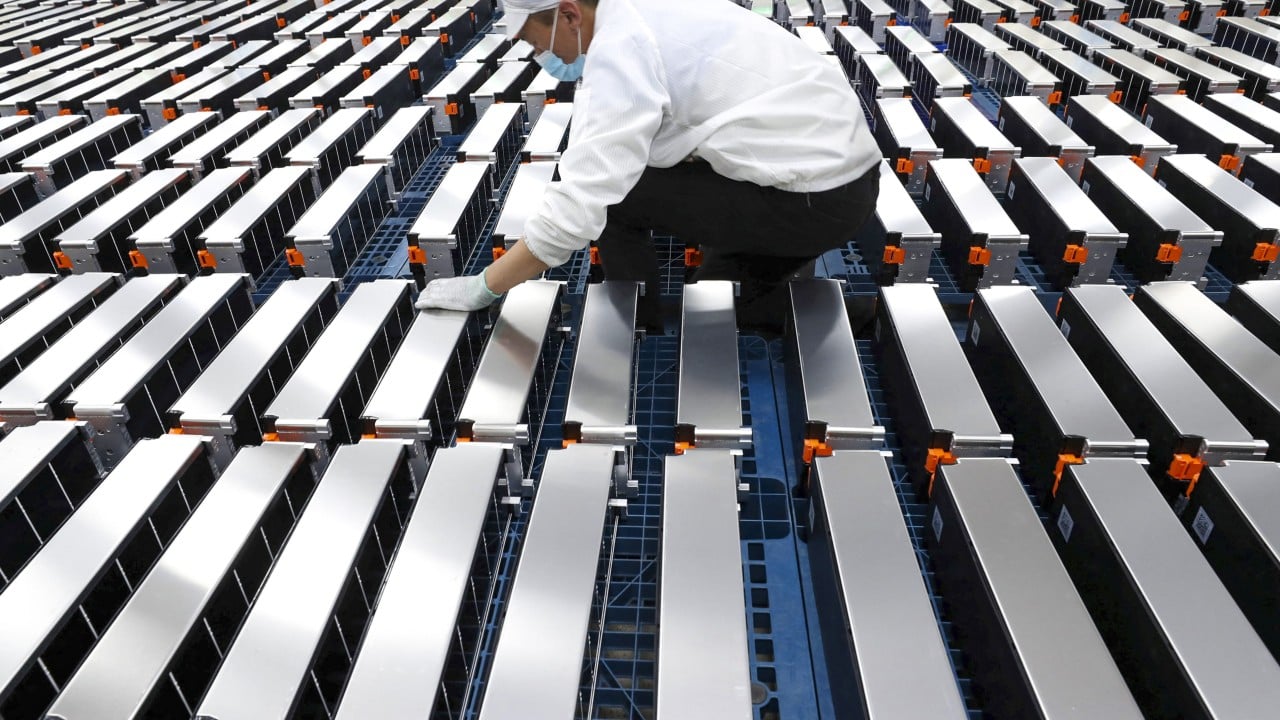
When you strip away the stock market ticker symbols and the geopolitical posturing, this is a human story of adaptation. It is about engineers in white lab coats staring at electron microscope scans at three in the morning, trying to stop microscopic dendrites from piercing a ceramic separator and short-circuiting a dream. It is about factory workers in newly built industrial parks watching massive robotic arms stack microscopic layers of anode and cathode with absolute precision.
The road ahead is not paved with asphalt anymore. It is paved with lithium, silicon, and solid electrolytes.
The ships keep arriving at the European ports. The cars roll off the ramps in silence. The hum of the electric motor is no longer the sound of the future. It is the sound of the present, echoing loudly across a continent that is suddenly realizing it has to run just to stay in place.