Imagine a heavy wooden desk in a room where the air feels thin from the weight of history. On that desk sits a secure telephone. It hasn’t rung in a long time. Across the ocean, thousands of miles away, another desk holds a similar phone. The person sitting behind that second desk looks at the receiver, rehearsing a conversation in their head that they aren't legally or politically allowed to have.
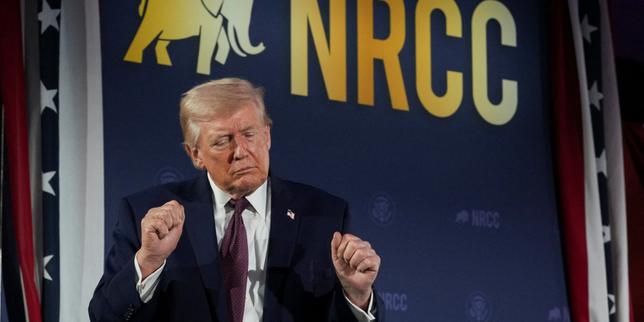
This is the agonizing geometry of modern diplomacy. It is a game of high-stakes chicken played by people who are often more afraid of their own shadows than they are of their enemies. Donald Trump recently pulled back the curtain on this tension, suggesting that Iran is desperate for a deal but paralyzed by the optics of asking for one.
The mechanics of international relations are rarely about the cold text of a treaty. They are about the human ego. They are about the fear of looking weak in front of a domestic crowd that has been fed a steady diet of "death to the enemy" rhetoric for decades. When a leader wants to pivot, they don't just walk to a podium and change their mind. They have to find a way to make the surrender look like a victory.
The Weight of the Sanction
To understand why a nation would be "desperate" for a deal, you have to look past the military parades and the fiery speeches. You have to look at the grocery store shelves in Tehran. You have to look at the father who can’t find imported medicine for his daughter because the banking channels are choked shut.
Economic sanctions are often described in dry, clinical terms—asset freezes, trade embargoes, secondary restrictions. In reality, they are a slow-motion strangulation of a nation’s heartbeat. When Trump speaks of Iran wanting a deal "so badly," he is referencing a pressure cooker that has been whistling for years. The Iranian Rial has plummeted. Inflation has turned life savings into pocket change.
Consider a hypothetical shopkeeper named Esmail. He doesn't care about the intricacies of uranium enrichment percentages or the legal jargon of the JCPOA. He cares that the price of cooking oil has tripled in six months. He cares that his son, a talented engineer, is looking for any excuse to leave the country because there is no future in a closed economy. Esmail’s quiet desperation is the real leverage at the negotiating table. It is the invisible force pushing his leaders to find a way out, even as they publicly swear they will never blink.
The Architecture of Fear
Why not just pick up the phone?
The barrier isn't a lack of technology. It is a lack of political cover. In the world of hardline geopolitics, the first person to reach for the handset is often viewed as the loser. Trump’s assessment—that they are "afraid to say it"—touches on a fundamental truth of autocratic survival. If the Iranian leadership admits they need the United States to survive, they risk losing the very foundation of their revolutionary identity.
They are trapped in a cage of their own making. For forty years, the narrative has been one of resistance. To pivot now requires a level of acrobatic storytelling that would challenge the world’s greatest novelists. They need a "face-saving" exit. They need a scenario where they can tell their people they didn't give in, but rather, they forced the Great Satan to come to his senses.
Trump knows this. His approach has always been that of a closer in a real estate deal. He understands that every party in a room has a price; they just need a way to pay it without looking like they got fleeced. By publicly stating that they want a deal, he is simultaneously applying pressure and offering a weird kind of validation. He is saying, "I know you're hurting, and I'm ready when you are."
The Shadow of 2015
We have to look back to see why the current situation is so fraught. The 2015 nuclear deal was supposed to be the end of the silence. It was a massive, complex piece of machinery designed to bring Iran back into the global fold in exchange for strict limits on its nuclear program.
But trust is a fragile thing. When the United States withdrew from that deal in 2018, the message sent to Tehran wasn't just about policy. It was a message that signatures on paper are temporary. This created a new layer of fear. Now, an Iranian negotiator isn't just worried about looking weak; they are worried about being played.
Imagine putting your entire reputation on the line to sign a contract, only to have the other party tear it up three years later. You wouldn't be in a hurry to sit back down at that table. You would be cautious. You would be cynical. You would wait for a sign that the next deal will actually stick.
The Invisible Stakes
The stakes of this silence are not confined to the Middle East. We live in a world where a spark in the Persian Gulf can lead to a fire in a gas station in Ohio. The global energy market is a nervous creature. It reacts to rumors and whispers. When the rhetoric between Washington and Tehran heats up, the world holds its breath.
There is also the terrifying reality of miscalculation. When two nations stop talking, they start guessing. They guess about troop movements. They guess about cyberattacks. They guess about intent. Most wars in history didn't start because someone wanted a massacre; they started because someone misinterpreted a signal.
The "desire" for a deal that Trump mentions isn't just about money. It’s about stability. It’s about the basic human need to know that tomorrow will look a lot like today.
The Art of the Narrative Pivot
If a deal is to happen, it won't look like a standard diplomatic summit. It will likely happen in the dark, through intermediaries in Oman or Switzerland, before it ever sees the light of a television camera. It will require a "bridge"—a common enemy or a shared crisis—that allows both sides to walk toward each other without appearing to move.
The tragedy of the current moment is the gap between what is necessary and what is possible. The necessity is clear: an end to the economic suffering of millions and a verified stop to nuclear proliferation. The possibility, however, is hamstrung by the ghosts of the past and the political realities of the present.
Trump's rhetoric is a blunt instrument. It lacks the nuance of traditional State Department cables. Yet, it captures the essential human drama of the situation. It recognizes that behind the flags and the titles, there are people who are tired of the fight but terrified of the peace.
The phone remains on the desk. The silence is heavy. It is a silence filled with the whispers of millions of people who just want to be able to buy bread, go to school, and live without the shadow of a looming conflict.
The hardest part of any journey is the first step, especially when you’re worried about who is watching you take it.
One day, that phone will ring. The person on the other end won't start with a demand or a threat. They will likely start with a long, exhausted sigh, the sound of a decade of pride finally giving way to the reality of survival.