The coffee in the breakroom at a mid-sized medical device firm in Suzhou has a bitter, metallic aftertaste today. It isn't the beans. It is the tension radiating from the procurement office, where a buyer named Chen just stared at a spreadsheet that shifted under his feet like quicksand. For three years, the world told Chen that the "chip shortage" was a ghost of the past, a fever that broke when the lockdowns ended. They lied. Or, more accurately, they didn’t specify which chips they were talking about.
While the titans of Silicon Valley trade blows over the massive, multi-billion-dollar processors that power artificial intelligence, the rest of the world runs on something much humbler. Analogue chips. These are the translators of the digital age. They don’t calculate the mysteries of the universe; they tell a ventilator how much oxygen a human lung is drawing. They tell an electric vehicle’s battery not to catch fire. They are the nervous system of everything that moves, breathes, or hums.
And right now, their price is climbing.
The Foundation is Shaking
Think of the semiconductor industry as a skyscraper. The glittering penthouse is occupied by "leading-edge" nodes—the 3-nanometer and 5-nanometer wonders that make your smartphone snappy. But the foundation, the plumbing, and the electrical wiring of that building are the "mature nodes." These are the 28-nanometer to 65-nanometer chips. They are old. They are reliable. And for a long time, they were cheap.
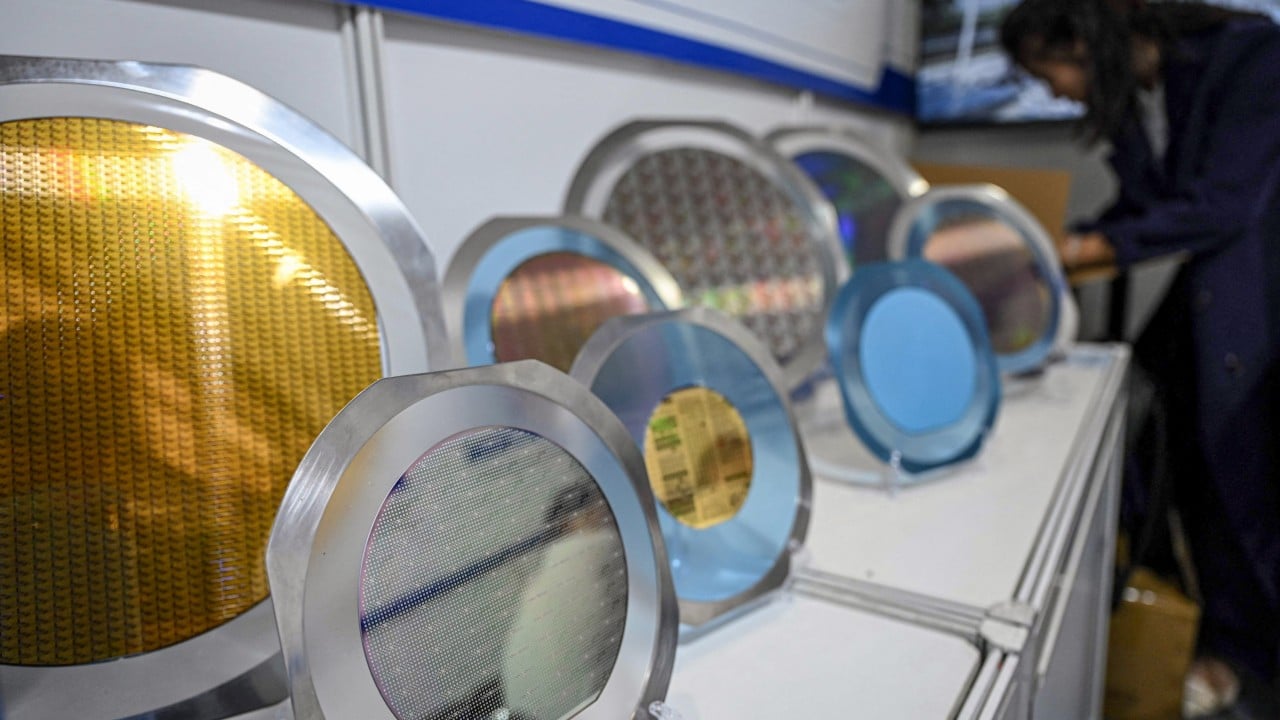
Chinese analogue giants like Silergy and Halo Microelectronics have spent years carving out a dominant space here. They weren't chasing the vanity of the smallest transistor; they were chasing the reality of the most ubiquitous one. By keeping prices razor-thin, they became the heartbeat of global manufacturing. But a fundamental shift is occurring. The cost of silicon wafers—the literal dirt-turned-crystal that these chips are printed on—is rising. Labor is more expensive. Logistics are a minefield of geopolitical tension.
When the foundation of a building starts to cost more, the rent goes up for everyone. Silergy recently signaled a price adjustment that sent ripples through the supply chain. This isn't an isolated event. It is the first heavy raindrop before a storm.
The Myth of the Commodity
There is a dangerous tendency among investors and tech enthusiasts to view analogue chips as a commodity, like wheat or crude oil. This is a mistake. If you run out of wheat, you bake with rye. If a car manufacturer cannot source a specific power management integrated circuit (PMIC) from a Chinese supplier because the price tripled or the lead time blew out to forty weeks, they don't just "swap it out."
The engineering required to redesign a circuit board for a different chip can take months. It requires re-certification, safety testing, and a mountain of bureaucratic paperwork. This creates a "sticky" relationship. Chinese chipmakers know this. They have moved from being the "budget option" to being the "only option" for thousands of manufacturers.
Consider a hypothetical scenario—let's call him Marcus, an engineer in Stuttgart. Marcus designs industrial sensors. His entire product line relies on a specific set of analogue-to-digital converters sourced from a firm in Wuxi. When his boss tells him the component cost just jumped 15 percent, Marcus doesn't look for a new supplier. He can't. He just sighs and updates the MSRP of the sensor.
The consumer at the end of that chain—the person buying a smart thermostat or a new dishwasher—won't see a line item for "Analogue Chip Price Hike." They will just see a price tag that feels slightly more aggressive than it did last year. This is how inflation hides in the silicon marrow of our lives.
A Geopolitical Seesaw
The rise in prices isn't just about raw materials. It’s about a massive, tectonic shift in where the world’s "old" technology is made. As Western sanctions and domestic policies push the US and Europe to focus on high-end AI chips, they have inadvertently handed the "mature node" kingdom to China.
China is currently building more legacy-chip factories than the rest of the world combined. This isn't a lack of ambition; it's a strategic siege. By controlling the chips that go into every toaster, car, and industrial robot, they control the inflation rate of the global middle class.
When Chinese firms like Sanan Optoelectronics or StarPower Semiconductor raise prices, it isn't just a business move. It is a demonstration of leverage. They are testing the limits of what the global market will endure. For years, the narrative was that China was "behind" in the chip wars because they couldn't make the 3-nanometer chips for high-end servers. But you don't need a 3-nanometer chip to run a power grid. You need a robust, 55-nanometer analogue chip that costs forty cents. Or, as of this week, fifty-five cents.
That fifteen-cent difference, multiplied by the billions of units shipped annually, is a massive transfer of wealth and power.
The Invisible Stakes
Why should you care if a company you’ve never heard of in Guangdong raises the price of a component the size of a fingernail?
Because the "Everything App" world we were promised relies on the "Everything Hardware" reality we currently inhabit. We are entering an era of "Embedded Costs." For a decade, technology acted as a deflationary force. Computers got faster and cheaper. Televisions became nearly disposable. That era is ending.
The complexity of modern devices means they require more analogue components than ever. An electric vehicle uses five to ten times more analogue chips than a gasoline car. As we "electrify everything," we are inadvertently tying our economic stability to the price lists of these mature-node firms.
The stress Chen feels in Suzhou is the same stress a car buyer in Ohio will feel in six months. It’s the same stress a hospital administrator in London will feel when the cost of replacing bedside monitors spikes. We are discovering that the "mature" part of "mature nodes" doesn't mean "boring." It means "essential."
Beyond the Ledger
Numbers on a screen are cold. They don't capture the frantic late-night Zoom calls between Shenzhen and Detroit. They don't show the sweat on the brow of a startup founder who realized their margins just evaporated because a Chinese supplier decided to "eye gains" in a tightening market.
This is a story of gravity. For a long time, the tech industry pretended it could defy gravity through infinite efficiency and offshore labor. But the costs are catching up. The price hikes from Chinese analogue giants are a signal that the era of "cheap digital transformation" is over. We are paying the real price now—for the energy, for the silicon, and for the strategic dominance of the factories that actually build the world.
The shift is subtle. It doesn't arrive with a bang or a market crash. It arrives in a series of small, incremental "adjustments" that eventually change the shape of our lives. We are no longer just buying gadgets; we are subscribing to a global supply chain that is rediscovering its own value.
The next time you turn a key, flip a switch, or check a pulse, remember the silent translators working in the dark. They are getting more expensive. And we have no choice but to pay.
The spreadsheet on Chen's desk finally stops moving. He highlights a row in red, hits save, and walks out to get a fresh cup of coffee. He knows what's coming. He just wonders if the rest of us are ready for the bill.