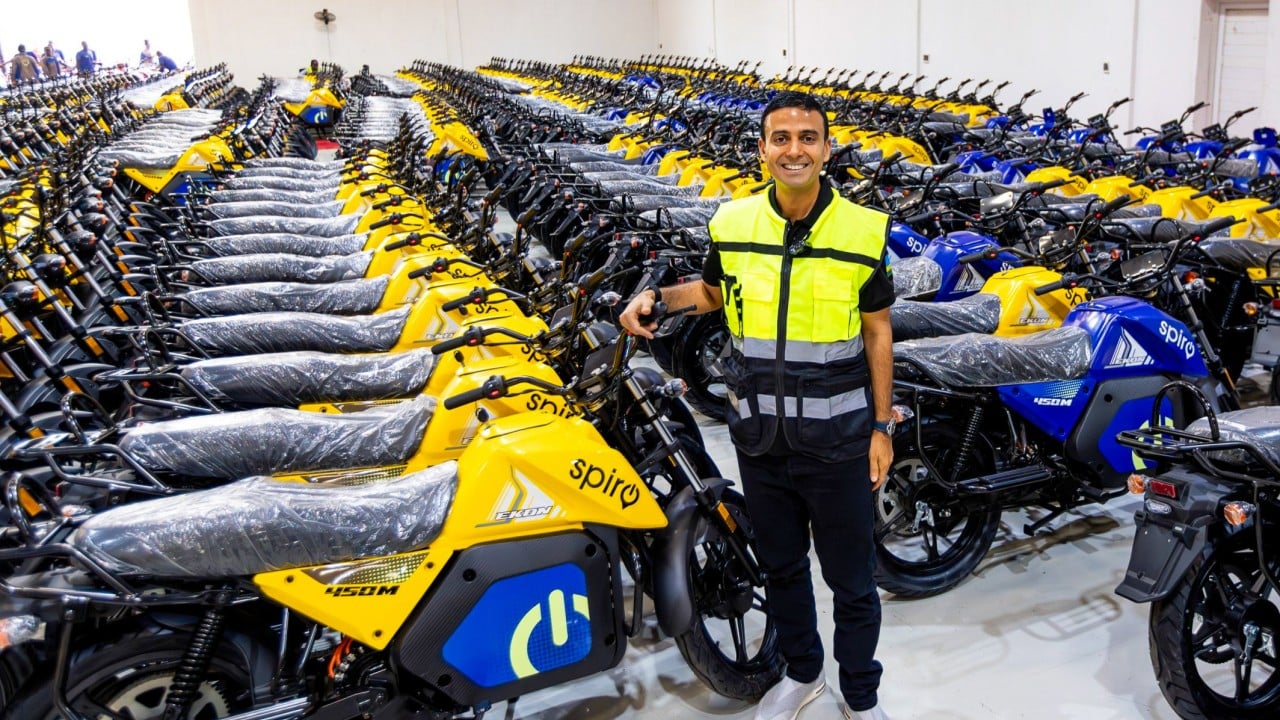
The smell of burning petrol mixed with red dust used to be the unavoidable signature of a Nairobi morning. For years, the city’s heartbeat was dictated by the aggressive roar of thousands of low-displacement, secondhand combustion-engine motorcycles. They are called boda bodas. To the untrained eye, they look like chaos. To the millions of people trying to navigate Sub-Saharan Africa’s gridlocked urban hubs, they are an essential lifeline.
But a quiet shift is replacing the roar with a hum.
Consider Juma. He is a hypothetical composite of the dozens of riders who navigate these streets every day, but his financial reality is entirely accurate to the current economic shift. Every morning at 5:00 AM, Juma used to fill the tank of his imported petrol motorcycle. On a good day, he would make about fifteen dollars. On a bad day, when traffic stood frozen on the Mombasa Road and the price of fuel ticked upward at the local pump, he might take home less than four. The math of survival was becoming impossible. Fuel costs consumed up to forty percent of his daily earnings.
Then came the batteries.
The Great Assembly Shift
The transformation didn't start with a sudden environmental awakening. It started with a calculation. Across East Africa, the total cost of owning a vehicle is the only metric that truly matters to a working driver. Petrol is an volatile expense, subject to global supply chains and fluctuating currencies. Electricity, especially in countries like Kenya where over eighty percent of the grid is powered by renewable energy like geothermal and hydro, is stable.
Chinese manufacturing giants and venture capitalists noticed this economic friction point. They realized that Africa’s two-wheeler market wasn't just a transport sector; it was a multibillion-dollar industry waiting for an efficiency upgrade.
Instead of exporting finished electric vehicles built for European or Chinese roads, these investors changed the strategy. They began partnering with local African startups to set up domestic assembly plants. The rugged terrain and heavy cargo loads of Nairobi, Kampala, and Kigali require a different kind of machine. A standard electric scooter built for the smooth pavements of Shanghai would snap in half under the weight of three hundred pounds of potatoes on a dirt road in rural Kenya.
By importing the core electronic components and high-grade lithium-ion cells from Shenzhen, but welding the reinforced steel frames and assembling the final bikes in local factories, companies managed to bypass heavy import duties. More importantly, they created local jobs. The result is a hybrid machine: Chinese battery technology wrapped in an African-tested chassis.
The Chemistry of the Swap
The real hurdle to adopting electric vehicles in developing markets has never been the vehicle itself. It is the wait time. A commercial rider cannot afford to sit next to a wall outlet for four hours waiting for a charge. If the wheels aren't turning, the driver isn't earning.
To solve this, investors poured capital into infrastructure that mimics the traditional petrol station experience but operates at a fraction of the cost: battery swapping stations.
Imagine a vending machine, but instead of snacks, it holds rows of heavy, metallic, glowing brick-shaped batteries. A rider pulls up, slides their depleted battery into an empty slot, and locks a fully charged one into their bike. The entire process takes less than sixty seconds. Faster than filling a tank of petrol.
The economics of this system rely on a model known as Battery-as-a-Service (BaaS). By separating the cost of the battery from the cost of the motorcycle, the upfront price of an electric bike drops significantly. The battery is often the most expensive component of an EV. Under the swapping model, the rider doesn't own the battery; they merely rent the energy inside it.
The financial relief for riders is immediate. A single battery swap can cost up to thirty percent less than the equivalent amount of petrol required to travel the same distance. For drivers like Juma, that margin is the difference between buying groceries or going without.
Capital Flows and Rough Roads
This is not a philanthropic endeavor. This is a high-stakes race for market dominance. Millions of dollars are flowing from Beijing, Shanghai, and tech hubs across China into African e-mobility startups. European and American venture capital firms are also entering the space, but the Chinese firms hold a distinct advantage: control over the global battery supply chain.
China refines the vast majority of the world's cobalt, lithium, and nickel. They have spent two decades perfecting the mass production of electric drivetrains. When an African e-bike startup needs to scale from one hundred bikes to ten thousand, the pipeline inevitably leads back to Chinese factories.
But the road to electrification is rarely smooth.
The challenges are structural and deeply grounded in reality. While urban centers possess relatively stable electrical grids, rural areas remain disconnected or suffer from frequent blackouts. A battery swapping network is only as strong as the grid feeding it. If the power goes out, the transportation network freezes.
There is also the question of battery degradation. The tropical heat of East Africa, combined with the demanding daily mileage of a commercial courier, puts immense stress on lithium cells. Investors are forcing local engineers to constantly iterate on thermal management systems, finding ways to keep batteries cool when the ambient temperature climbs.
Beyond the Commute
The ripple effects of this transition extend far beyond the individual rider's wallet. The reduction in urban noise pollution is palpable. Streets that once vibrated with the collective rattle of thousands of exhaust pipes are growing noticeably quieter.
Air quality is the other silent beneficiary. The World Health Organization has long warned about the dangerous levels of particulate matter in rapidly growing African cities, much of it spewed by poorly maintained, two-stroke motorcycle engines. Every electric bike that replaces a petrol counterpart chips away at that toxic haze.
But the transformation is fundamentally about human dignity and financial predictability. Under the old system, drivers were at the mercy of geopolitical shocks half a world away. A conflict in the Middle East or a shipping bottleneck in the Suez Canal could instantly spike the price of fuel in Nairobi, wiping out a week's worth of profit for a family.
Electricity localizes that dependency. It tethers the driver's livelihood to the domestic energy infrastructure. It provides a level of stability that allows a small-scale entrepreneur to plan for the future, to invest in education, to expand their business.
The sun begins to set over the horizon, casting long shadows across the tarmac of the Uhuru Highway. Juma pulls up to a brightly lit kiosk on the side of the road. His dashboard indicator shows his power is running low. He doesn't look stressed.
He dismounts, executes the quick exchange at the cabinet, and hears the reassuring click of a fresh battery locking into place beneath his seat. The digital display on his handlebars springs to life, showing a full charge. He twists the throttle. There is no cough of an engine, no puff of blue smoke. Just a clean, instantaneous forward surge as he melts silently back into the evening flow of the city.