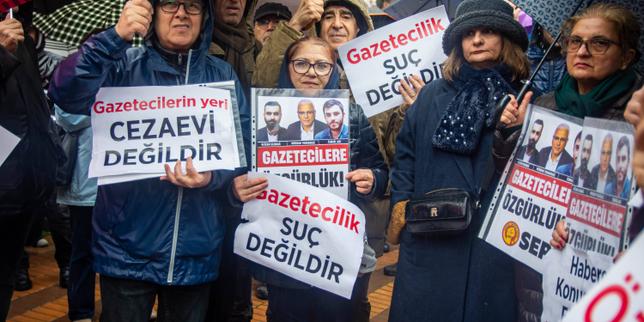
Independent journalism in Turkey just took another devastating hit. When an Istanbul court ordered the total blocking of T24, one of the country's most prominent independent news and commentary portals, it wasn't just another routine administrative action. It marked a massive escalation in how authorities target digital dissent.
Founded back in 2009 by veteran journalist Doğan Akın, T24 carved out a space where sharp analysis, diverse political columnists, and investigative reports could thrive outside state-aligned media loops. Now, that platform has been abruptly cut off from the public. If you've been following how media freedom shrinks in real time, this case offers a grim masterclass in state-level internet censorship.
Inside the "Ailem Güvende" Crackdown
The justification used by the Istanbul Chief Public Prosecutor's Office sounds technical on paper, but it reveals a dangerous legal precedent. The ban came under the umbrella of an ongoing investigation dubbed "Ailem Güvende" (Family is Safe).
Authorities claimed that out of thousands of pieces published over the years, exactly 118 specific articles and columns published within the last year constituted "propaganda" against traditional family structures or promoted LGBTI+ communities.
Instead of targeting or removing the disputed articles—which is what standard legal procedures usually dictate—the court pulled the plug on the entire domain and all official social media accounts.
Legal experts and media watchdogs immediately pointed out the glaring flaws in this logic. T24's own editorial breakdown revealed that many of the writers whose older columns were cited hadn't written for the platform in years. The sweeping nature of the ban exposed a clear reality: the 118 articles weren't the actual target; they were merely the legal vehicle used to shut down a massive independent news machine right before its audience.
The Mechanics of Sudden Censorship
Speed is everything when modern states want to silence digital opposition. The ruling from the Istanbul 1st Criminal Judgeship of Peace was finalized on September 29, 2026, and forwarded swiftly to the Cyber Security Directorate.
By late afternoon the next day, T24 was completely unreachable for web users inside the country, with notifications demanding immediate compliance within four hours.
What makes this crackdown different from older censorship models is the total erasure strategy. It wasn't just the main website domain (t24.com.tr) that got blocked; secondary social media handles created as backups were aggressively flagged and taken down within days. The state's approach demonstrates that maintaining an independent web presence in restrictive political environments requires constantly shifting technical workarounds. When a news outlet has millions of monthly readers, silencing them takes coordination across multiple regulatory bodies, internet service providers, and judicial offices.
Why T24 Mattered to Turkish Media
You can't understand the shock waves across Turkey's press corps without looking at who wrote for T24. The site functioned as a big tent for prominent independent voices—featuring heavyweights like Ertuğrul Özkök, Mehmet Y. Yılmaz, Atilla Dorsay, and many others who provided critical lenses on politics, culture, and human rights.
In a media landscape heavily dominated by pro-government conglomerates, T24 offered a rare counterweight. It combined deep-dive political commentary with breaking daily news, making it an indispensable daily habit for millions seeking unvarnished reporting.
When platforms like this vanish overnight, the chilling effect spreads instantly to smaller outlets and freelance journalists. Reporters start second-guessing every single headline, knowing that a targeted social media smear campaign by partisan accounts can quickly translate into a sweeping judicial shutdown.
The Broader Fallout for Digital Rights
International press freedom organizations, including the European Federation of Journalists (EFJ) and the International Press Institute (IPI), slammed the ruling as a blatant violation of constitutional rights and public access to free information. They noted that using broad public morality arguments to shutter entire media organizations destroys the foundations of a pluralistic society.
Yet, despite the court orders and the blocking of their primary digital gates, T24's leadership adopted a defiant stance. In statements directed to their readership, editors emphasized a core truth about modern digital journalism: physical domains can be blocked, but the fundamental need for factual reporting cannot be easily erased.
As digital authoritarianism evolves, the battle lines are shifting directly to infrastructure control, domain seizures, and platform compliance. The blocking of T24 serves as a stark warning for independent creators everywhere—relying on traditional web domains in hostile regulatory environments leaves you vulnerable to a single midnight court order. True journalistic resilience now demands decentralized distribution models, secure direct-to-reader apps, and cross-border solidarity to keep the truth alive when local servers go dark.