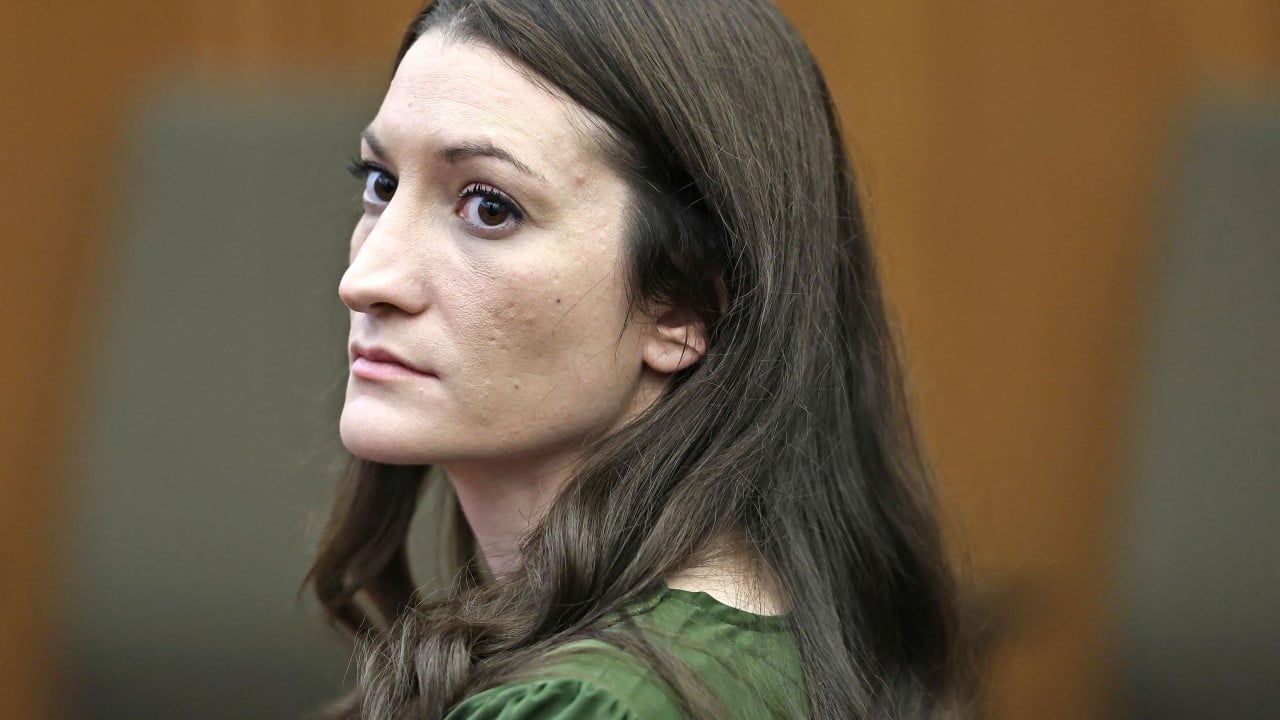
Three days. Seventy-two hours of ticking clocks, shuffled papers, and the heavy, suffocating silence of a Massachusetts jury room. Outside, winter in Plymouth County bit hard, the kind of cold that crawls inside your coat and stays there. Inside, twelve ordinary citizens wrestled with something far colder: the precise boundary between a mind shattered by illness and a hand that took the breath from three small lives.
The case of Lindsay Clancy is not just a legal puzzle. It is an American tragedy played out under the harsh glare of court transcripts and cable news tickers. Meanwhile, you can find other events here: Why the Nepal Flood Response and Rescue Operations Matter Right Now.
To understand those three days of deliberations, you have to step away from the polished oak of the courtroom and into the quiet, terrifying reality of a postpartum mind under siege.
Imagine waking up inside your own skull, but the person running the machinery is a stranger. Every thought is coated in static. Every shadow holds a threat. For months, Lindsay Clancy had sought help. She bounced through the revolving door of a mental health system stretched to its absolute breaking point, prescribed cocktail after cocktail of psychiatric medications—nine different drugs in a matter of months, according to her defense. Her husband, Patrick, watched the woman he loved slip behind a pane of glass, crying out for assistance that never quite arrived in time. To see the full picture, check out the detailed analysis by BBC News.
On a freezing evening in January 2023, that glass shattered.
When the police arrived at the Clancy home in Duxbury, they found a nightmare that defies easy categorization. Five-year-old Cora, three-year-old Dawson, and seven-month-old Callan were gone. Their mother was on the ground below a second-story window, having jumped in an attempt to end her own life after the unimaginable had already occurred.
Now, the jury has been tasked with deciding what to do with a broken brain.
The legal battle in Plymouth Superior Court boiled down to a single, agonizing question: Was Lindsay Clancy suffering from severe postpartum psychosis so profound that she could not comprehend the nature of her actions, or was she simply a depressed mother who chose to kill?
The prosecution pointed to the methodical nature of the moments leading up to the tragedy. She sent her husband out for takeout. She used that brief window of time. There was purpose, they argued. There was intent. They painted a picture of a woman who knew what she was doing, holding fast to the idea that responsibility must be assigned when innocent lives are extinguished.
The defense offered a window into a different kind of horror. They called experts who spoke of a brain hijacked by a rare and violent form of psychosis, a condition where hallucinations and delusions distort reality beyond recognition. They argued that Lindsay was trapped in a psychotic delirium, driven by a belief system entirely untethered from the world the rest of us inhabit. To her, in those fractured moments, she may have believed she was saving her children from a world of unimaginable suffering, or that she was releasing them from a torment only her sickened mind could perceive.
This is where the law collides with human biology in a terrifying way.
We like our villains clearly marked. We want our monsters to wear horns and lurk in dark alleys. We want simple narratives of good versus evil because simple narratives make us feel safe. When a mother destroys the things she loves most, the mind recoils. It demands an explanation that fits our moral framework.
Yet medical science tells us that the human brain is a delicate, fragile web of chemistry and electricity. Change the balance just enough, and the person you love vanishes, replaced by a ghost fueled by chemical terror. Postpartum psychosis affects a fraction of new mothers, but its shadows reach far and wide. It is a medical emergency as real as a heart attack or a stroke, yet it carries a shroud of shame and silence that keeps women from speaking up until it is too late.
Consider what happens when a system fails to recognize the storm. Lindsay's descent was not hidden. She told professionals she was having thoughts of self-harm and harm toward her children. She checked herself into a psychiatric facility just weeks before the tragedy, pleading for stabilization. Yet she was released back into her home, back to the overwhelming demands of caring for three children under five, while her medication levels shifted like sand under her feet.
The jury's inability to reach a quick verdict speaks volumes. Three days of deliberation mean there is deep division, deep soul-searching, and an agonizing awareness of the stakes. They are not just deciding Lindsay Clancy's fate; they are holding a mirror up to a society that routinely underfunds maternal mental health, stigmatizes postpartum struggles, and expects mothers to carry impossible burdens without cracking.
If she is found not guilty by reason of insanity, it does not mean she walks free. It means she spends her life in a high-security psychiatric hospital, grappling with what she did in the rare moments her mind clears enough to understand it. If she is convicted of murder, it sends a message that the law has no room for the biochemical fractures of the human psyche, drawing a rigid line between body and mind that modern medicine knows does not exist.
Either way, there are no victors in that courtroom. There is only the memory of Cora, Dawson, and Callan—children whose laughter once filled a Duxbury home, now reduced to exhibits and closing arguments.
The deliberation room doors remain closed for now. The clock keeps ticking. And somewhere in the dark, the larger question remains unanswered, waiting for the rest of us to wake up.