Ink dries slowly on court filings.
For months, the conference rooms smelled of cold coffee, stale upholstery, and the quiet panic of multi-billion-dollar legal teams trying to outrun a calendar. Outside those windows, the industry kept shifting. Audiences changed their habits with the flick of a thumb. Streaming apps updated their interfaces. Entire studio lots stood half-empty, waiting for a verdict that could redraw the map of American entertainment.
Then came the signature.
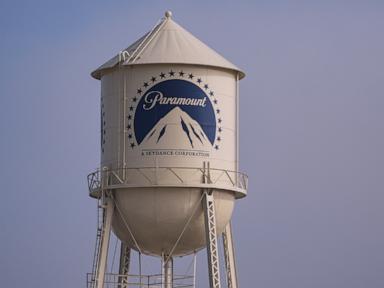
Paramount reached a deal with a coalition of state attorneys general, quietly untying a knot that threatened to choke its acquisition strategy and stall a merger challenge over the Warner bros. Discovery footprint and broader market consolidation. On paper, it looks like a footnote. A legal settlement. A line item in a quarterly filing.
It is anything but.
To understand why this agreement matters, you have to look past the corporate seal and step back into the room where the leverage was held.
Imagine walking into an antitrust division office on a Tuesday morning. The files stacked on the mahogany tables do not look like art; they look like telephone directories. They are dense with market share percentages, regional distribution metrics, and subscriber churn rates. To a consumer sitting on a couch in Ohio or Oregon, scrolling through a menu of competing streaming services, those numbers feel entirely disconnected from daily life.
Yet those numbers dictate what stories get told.
When media giants merge, reshape, or settle under the watchful eye of state regulators, they are negotiating over the architecture of culture. Every corporate consolidation creates a gravitational pull. Smaller production houses find fewer doors open. Independent filmmakers pitch to fewer buyers. The risk tolerance of executive boards shrinks because the stakes of failure grow exponentially larger.
The states that challenged Paramount understood this dynamic intimately. Led by aggressive consumer protection divisions, they asked a fundamental question that corporate prospectuses usually prefer to omit: What happens to the local voice when the national megaphone belongs to just a handful of entities?
For a long time, the answer was silence.
Then the antitrust lawsuits materialized. State regulators, wielding laws designed to protect local economies from monopolistic chokepoints, stepped into the arena. They argued that letting massive media distributors knit themselves too closely together starves competition, driving up consumer subscription costs while quietly narrowing the corridor of creative output.
Consider what happens next in any high-stakes corporate negotiation. The initial posture is always defiance. Press releases declare absolute confidence. Legal briefs cite decades-old precedents. Behind the scenes, however, the calculus is brutal. Trials are public, messy, and unpredictable. Discovery processes drag corporate emails into the harsh light of judicial record. And most importantly, time is capital. Every month a merger hangs in legal limbo is a month of strategic paralysis.
So the parties talk.
Settlements are rarely moments of dramatic courtroom catharsis. They are compromises born of exhaustion and pragmatism. Paramount’s agreement with the states to settle the challenge surrounding the Warner-related buyout landscape represents precisely this kind of calculated retreat into middle ground.
Details of such settlements typically read like a diplomatic treaty negotiated between cautious adversaries. There are compliance monitoring requirements. There are pledges to preserve distribution access. There are structural concessions designed to prove to skeptical judges that competition will not be suffocated in the crib.
Yet the deeper story is about power shifting its weight.
When state attorneys general band together to extract concessions from media conglomerates, a new precedent takes root. Federal regulators no longer hold a monopoly on antitrust oversight. State-level enforcement has grown teeth, fueled by localized consumer concerns and political imperatives that look very different from the bureaucratic inertia of Washington, D.C.
This is the invisible architecture of modern business. We tend to judge media mergers by their splashy headlines—the billion-dollar valuations, the celebrity CEO departures, the red-carpet launch parties. We forget that empires are built, and occasionally fenced in, by dusty legal settlements hammered out in windowless rooms by lawyers who have not seen daylight in three days.
When the dust settles on this agreement, the immediate operational landscape for Paramount clears significantly. The legal dark cloud lifts. Capital can move again. Strategic partnerships that were frozen in place can finally thaw.
But the broader industry watches with a nervous eye.
Every time a major studio settles an antitrust challenge, the playbook gets updated. Competitors take notes. They measure how far regulators can be pushed before they bite. They calculate the precise cost of compliance versus the potential upside of market dominance.
And the viewer? The viewer keeps scrolling.
We flick through our screens late at night, searching for something original, something urgent, something that feels like it was made by human hands rather than an algorithmic spreadsheet. We rarely think about the legal friction that made those choices possible—or restricted them in the first place.
That is the hidden irony of the entertainment business. The most consequential drama rarely happens on screen. It happens in the margins, where lawyers trade clauses and states draw lines in the corporate sand.
The ink is dry now. The filing is logged. But the shift in how corporate empires navigate public scrutiny has only just begun.