The modern political arena operates on an asymmetric premium where perceived strength mitigates operational liability, while perceived intellectual deficit creates systemic vulnerability. When a national leader explicitly states a preference for the designation of a "brilliant total tyrant dictator" over being labeled "dumb," they are not engaging in rhetorical hyperroutines or uncalculated emotional outbursts. They are executing a precise maximization strategy within the economy of political signaling.
To analyze this shift from standard democratic consensus-building to the overt embrace of authoritarian archetypes, one must dissect the cost-benefit matrix of presidential branding, the structural dynamics of competitive midterms, and the psychological mechanics of populist mobilization. Recently making waves lately: The Architecture of Escalation Management: Game Theory and Asymmetric Leverage in the United States Iran Ceasefire Negotiations.
The Cost Function of Competence Versus Benevolence
In elite executive signaling, leadership attributes are primarily mapped across two intersecting dimensions: competence (the perceived capacity to execute outcomes) and benevolence (the perceived intent to benefit the collective).
Traditional democratic theory assumes that voters optimize for both vectors simultaneously. However, highly polarized political environments experience a structural decoupling of these attributes. More insights into this topic are detailed by The Guardian.
                    High Competence
                           ▲
                           │   [The Authoritarian Premium]
                           │   Perceived as ruthless but effective.
                           │   High leverage in crisis execution.
                           │
                           │
Low Benevolence ───────────┼───────────► High Benevolence
                           │
                           │
                           │   [The Incompetence Trap]
                           │   Perceived as weak or manipulable.
                           │   Zero strategic leverage.
                           │
                           ▼
                    Low Competence
Within this matrix, a leader who is classified as a "tyrant" retains a high competence valuation. The designation implies absolute agency, systemic control, and the structural power to bend institutions to their will. Conversely, the label of intellectual deficit ("dumb") drops the actor into the lowest quadrant of the matrix: low competence and low structural utility.
The strategic choice between these two negative labels exposes an underlying calculation. Autocratic strength satisfies a fundamental voter demand for protective insulation against external economic or geopolitical volatility. Intellectual inadequacy, by contrast, signals an inability to navigate complex bureaucratic, legislative, or international systems, rendering the executive obsolete.
By accepting the tyrant archetype while aggressively defending cognitive sharpness through institutional validations—such as referencing standardized cognitive assessments—an executive insulates their core value proposition: the raw capacity to govern.
Midterm Mobilization Dynamics and District-Level Pressures
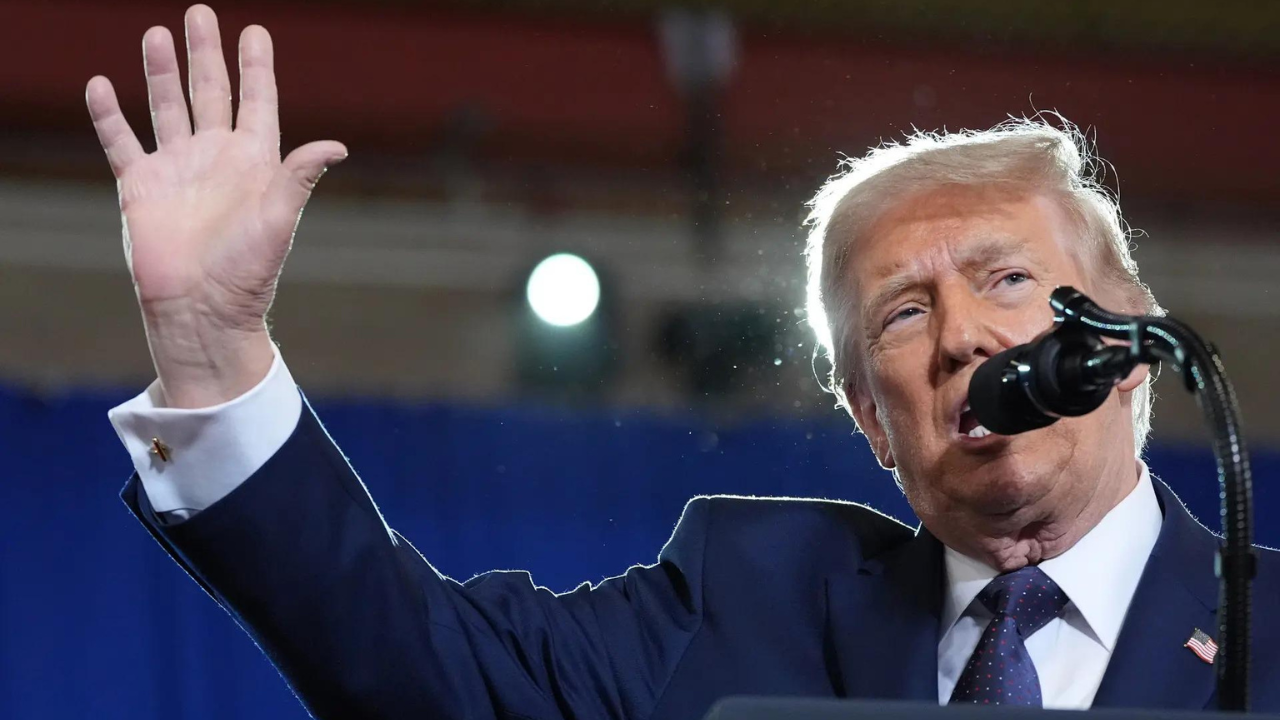
Rhetorical pivots towards absolute executive authority rarely occur in isolation; they are deeply tied to immediate electoral vulnerabilities. When an incumbent administration deploys high-variance rhetoric at a regional rally, the primary objective is the extraction of maximum voter turnout in hyper-competitive legislative districts.
Consider the structural mechanics of a competitive congressional race, such as New York’s 17th Congressional District in the Hudson Valley. This landscape represents a critical demographic pivot point: a district secured by the opposition party in a previous presidential cycle but currently held by a vulnerable down-ballot ally. The political math governing these specific geographies dictates two distinct tactical imperatives:
- The Turnout Maximization Threshold: In midterm cycles, the dominant variable governing outcome variance is not voter persuasion, but differential turnout. High-intensity, polarizing rhetoric serves as a low-cost mechanism to lower the activation energy required for low-propensity voters to reach the polls.
- The Dilution of Localized Liability: Down-ballot candidates in moderate or swing districts frequently suffer from national-level headwind variables, such as structural inflation or escalating energy costs linked to foreign conflicts. By shifting the public discourse from concrete economic indicators to a high-stakes referendum on executive cognitive dominance, the national apparatus attempts to override localized material grievances with cultural-ideological alignment.
This creates an acute bottleneck for moderate down-ballot incumbents. They must leverage the base-mobilizing energy generated by the executive's high-variance rhetoric while simultaneously insulating themselves from the moderate suburban backlash that such authoritarian framing typically induces.
The Strategic Diversion Framework: Rhetorical Substitution
A core technique in political crisis communications is structural substitution—the deliberate displacement of high-liability material realities with high-engagement abstract debates.
When an administration faces compounding macro-economic indicators that negatively impact public approval, standard policy defenses lose utility. A direct comparison of the structural trade-offs illustrates how rhetorical substitution alters public focus:
- Material Liabilities (The Reality): Rising consumer price indices, elevated global fuel costs resulting from persistent Middle Eastern conflicts, and the legislative friction of defending historical tax policies. These issues possess low narrative elasticity; they are experienced directly by the electorate as decreased purchasing power.
- Rhetorical Substitutes (The Displacement): Debates over cognitive fitness, direct linguistic attacks on opposition parties (e.g., using pejorative institutional renames), and expansive, unsubstantiated claims regarding foreign wealth extraction—such as the hypothetical liquidation of foreign oil reserves to offset domestic military expenditures.
[Macro-Economic Liabilities] ──► (High Risk / Low Approval)
                                       │
                                       ▼  [Rhetorical Substitution]
[Cognitive Fitness / Tyrant Debate] ──► (High Engagement / Controlled Polarization)
The substitution strategy works because media ecosystems are optimized to process conflict over complexity. A complex debate regarding the structural drivers of inflation requires deep policy analysis. A binary conflict over whether a leader is a "brilliant tyrant" or intellectually deficient fits perfectly within current digital transmission channels, effectively starving the underlying economic vulnerabilities of sustained media focus.
Structural Limitations of the Strength-First Paradigm
While prioritizing perceived strength over intellectual validation offers immediate defensive utility, the strategy operates under distinct structural limitations that introduce long-term instability into a political coalition.
First, the strategy accelerates institutional decoupling. By signaling a tolerance for the "tyrant" label, the executive explicitly devalues conventional institutional norms and legal frameworks. This erodes the systemic trust required for predictable legislative negotiation, forcing the administration to rely increasingly on unilateral executive actions or decrees.
Second, it narrows the coalition's growth vector. A brand built on absolute strength and high polarization operates at maximum efficiency when motivating an existing base. However, it experiences severe diminishing returns among unaligned, pragmatic centrist voters who prioritize stability, predictable economic governance, and institutional decorum over ideological warfare.
Ultimately, this rhetorical framework transforms political capital from a renewable asset based on broad policy consensus into a volatile commodity dependent entirely on continuous escalation and the perpetual framing of internal and external threats.
To counter these vulnerabilities, an executive strategy must move beyond defensive rhetorical posturing and aggressively anchor these assertions of strength to tangible, systemic wins. The administration must transition from defending personal cognitive capacity to demonstrating institutional dominance through concrete execution.
This requires the immediate deployment of executive authority to stabilize volatile supply chains, the rapid enforcement of targeted bilateral trade measures to offset domestic inflation, and the continuous framing of all future legislative initiatives not as compromises, but as absolute strategic victories over institutional inertia. Strength, to remain a viable political asset, must ultimately deliver measurable material stability.