The headlines are running the exact same lazy narrative again. Reuters drops a dispatch about shipping traffic at key Gulf waterways remaining little changed amid uncertain peace talks, and the entire market groans, assuming stasis equals health. Analysts nod sagely. Traders adjust their positions by fractions of a cent. Everyone agrees that flat numbers mean flat conditions.
They are dead wrong. Expanding on this theme, you can also read: The $100 Billion Tariff Refund Myth and the Structural Fracture of US Trade Policy.
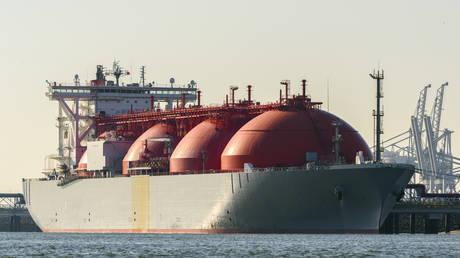
I have spent twenty years watching supply chain executives panic over every ripple in the Strait of Hormuz and the Suez Canal, and I have seen companies blow millions on redundant vessel routing based entirely on these static volume reports. The consensus view treats shipping lanes like open highways: if the car count doesn't change, the traffic jam must be holding steady. That is a fundamental misunderstanding of how modern maritime logistics actually functions under geopolitical stress.
Flat traffic numbers do not mean peace or stability. They mean the system has locked into a defensive equilibrium. Experts at CNBC have provided expertise on this matter.
The Myth of the Moving Needle
Let us clear up the core misconception immediately. Volume metrics measure bodies, not behavior. When a Reuters or Bloomberg ticker tells you that daily vessel transits through a chokepoint match last month's averages, it tells you precisely zero about the cost, risk, or strategic positioning of the cargo inside those hulls.
During prolonged uncertainty, smart operators do not stop moving goods. They change how they move them. They absorb friction. They re-insure. They take longer routes wrapped in shorter documentation cycles. When peace talks stall, the physical throughput might look identical on a satellite ping, but the financial architecture supporting every single container has fundamentally mutated.
I watched this exact phenomenon play out during the early disruptions in the Red Sea. Analysts looked at tonnage reports and declared that trade routes were normalizing because the number of passing vessels ticked up by five percent. They completely missed the fact that insurance premiums had spiked by four hundred percent, vessel speeds had dropped to conserve bunker fuel against potential threat vectors, and smaller independent operators had been entirely priced out of the market, replaced by massive state-backed conglomerates who could absorb the margin destruction.
Flat traffic is a mask. It hides a brutal weeding-out process where only the heavily capitalized survive the invisible tax of prolonged instability.
Why Peace Talks Are a Distraction
The market obsessively ties maritime behavior to diplomatic headlines. Peace talks start, analysts expect a surge. Peace talks stall, analysts expect a plunge. This binary thinking assumes that shipping companies operate on hope.
They do not. They operate on insurance underwriter mandates.
Maritime insurers do not care about a communiqué coming out of a ministerial meeting in Geneva. They care about risk exposure, liability caps, and historical incident rates. Even if two warring factions sign a ceasefire tomorrow, the maritime security apparatus required to lift high-risk zone classifications takes months, sometimes years, to unwind.
Imagine a scenario where a total peace agreement is ratified tonight. Do you honestly believe a container ship captain is going to drop anchor, kill the engines, and take the shortest shortcut through a contested Gulf passage tomorrow morning? Of course not. The liability exposure alone would bankrupt the carrier if a rogue splinter group launched a single unguided projectile.
The market is pricing in a binary switch where none exists. Peace talks are noise. The structural rewiring of global trade routes is the signal.
The Cost of Staying Still
When traffic volume refuses to budge during high-stakes diplomatic paralysis, it indicates that the industry has fully priced in the crisis. This is where the standard financial media narrative completely collapses. They view adaptation as temporary emergency behavior. It is not. It has become the baseline operating cost.
Consider what is actually happening behind those static traffic numbers:
- Dark Routing: A growing percentage of tonnage is turning off transponders or utilizing flag-hopping maneuvers to bypass regional monitoring without technically violating sanctions or safety advisories.
- Inventory Cushioning: Shippers are utilizing stationary vessels as floating warehouses, parking raw materials offshore rather than committing them to land-based supply chains that remain vulnerable to sudden municipal policy shifts.
- Modal Shifting: Rail and air freight corridors parallel to these waterways are quietly siphoning off high-value payloads, leaving only low-margin bulk goods to slog through the traditional chokepoints.
When you aggregate these shifts, a static transit count is actually the footprint of an industry retreating into defensive crouches. It is the economic equivalent of trench warfare. Both sides are sitting in the mud, staring at each other across no man's land, while the daily casualty reports show zero territory gained or lost.
The Contrarian Playbook
If you are running logistics or capital allocation based on the assumption that flat Gulf shipping data means business as usual, you are steering straight into a reef. Here is how you actually trade and operate against this reality:
Ignore the transit volume tickers. They are lagging indicators wrapped in corporate PR. Instead, track marine fuel bunker sales at regional refueling hubs. Track independent hull war-risk underwriting rates. Track the average age of vessels utilizing the route—older, uninsurable tonnage getting scrapped or sidelined tells you more about future capacity crunches than any diplomatic summit ever will.
The danger of the mainstream narrative is that it lulls executives into complacency. They see steady numbers, assume the plumbing is fine, and fail to secure long-term capacity hedges outside the danger zones. When the inevitable structural break occurs—not because of a war escalation, but because the economics of running a ship through a high-risk corridor finally break the balance sheet of the smallest surviving carrier—the collapse will be swift.
The waterways are quiet on the radar screens. The books behind them are screaming.
Stop waiting for the peace talks to save your supply chain. They won't.