You can't talk about artificial intelligence without talking about the massive amount of electricity it swallows. For years, tech hubs built data centers wherever they could secure land and fiber optic cables, treating the electric grid as an infinite, passive extension cord. That era is officially over.
Shanghai is currently proving that treating power supply and computing capacity as two separate industries doesn't work anymore. The city's recent municipal push to directly fuse its intelligent computing centers with its local energy infrastructure isn't just a minor technical upgrade. It's a fundamental architectural shift. Instead of forcing an already stressed urban grid to deliver gigawatts of power to massive server farms, Shanghai is integrating these compute hubs directly into the grid's operational framework.
If you think this is just about buying green energy certificates or installing backup batteries, you're missing the bigger picture.
The Power Problem Most Tech Hubs Get Wrong
Conventional planning treats data centers as static loads. Engineers calculate the peak megawatt requirement, ask the local utility for a connection, and expect the power to flow continuously. But with Shanghai's intelligent computing capacity soaring past 120,000 petaFLOPS, the sheer concentrated energy demand makes the old way impossible. AI and high-performance computing now consume an annual rate of energy that is actively reshaping urban planning.
When you run massive large language models, power consumption spikes unpredictably during heavy training runs. If a data center sits on a standard municipal grid, those spikes threaten local grid stability. Shanghai's strategy flips the relationship. Data centers are no longer just massive consumers; they are being rebuilt to act as shock absorbers for the grid.
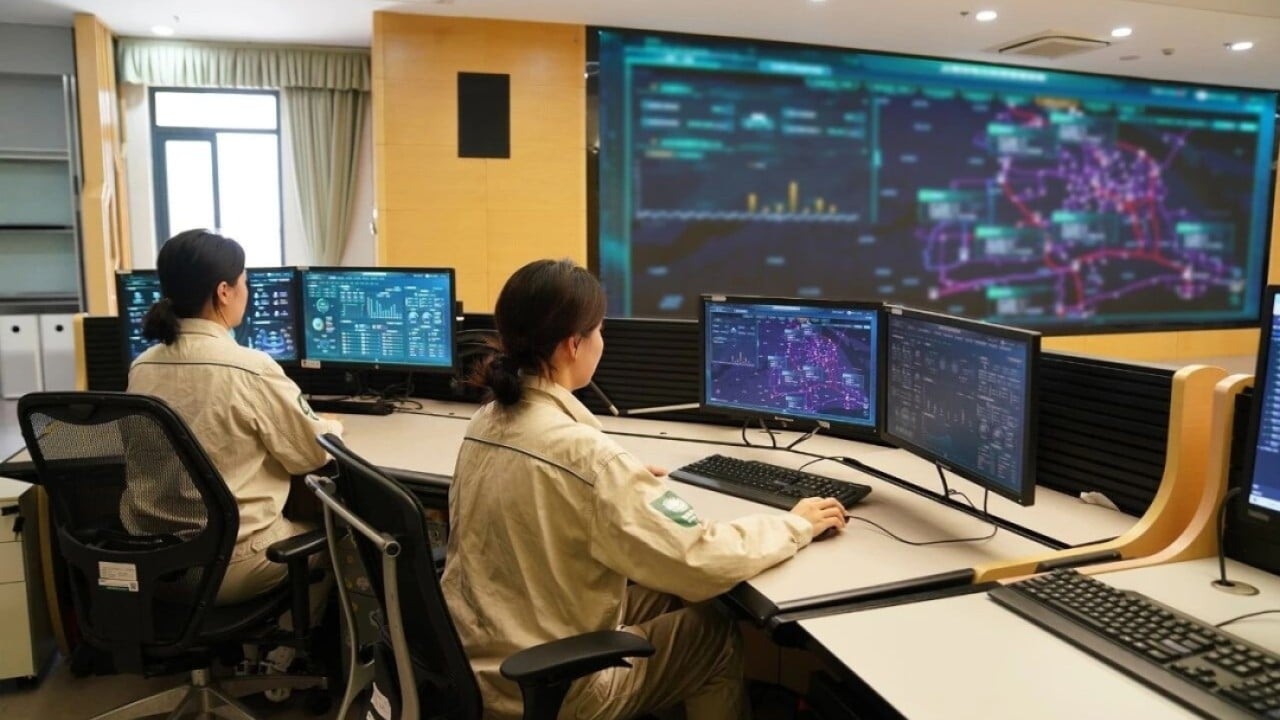
The city is doing this by folding data center energy storage facilities into provincial virtual power plants (VPPs). During a cold snap or a summer heatwave, the local VPP doesn't just ask factories to slow down. It dynamically communicates with computing centers to throttle non-urgent workloads, shifting computing tasks across networks or drawing from the data center's own massive battery arrays to feed power back into the city.
Cutting the Grid Out of the Equation Entirely
The most aggressive example of this integration isn't happening on land. Look at the Lin-gang demonstration project off Shanghai's eastern coast, which began operating recently.
Instead of building a massive concrete facility in downtown Shanghai, engineers submerged data modules six miles offshore. They hooked them directly to offshore wind farms using subsea photoelectric composite cables. This design entirely bypasses the traditional onshore grid transmission bottlenecks. The electricity goes straight from the turbine to the server rack.
It solves the cooling crisis at the same time. Traditional facilities use roughly one-third of their total electricity just on air conditioning and environmental cooling. The Lin-gang underwater facility uses a circulating copper-pipe heat exchange system that lets seawater do the work naturally. It cuts total cooling electricity consumption by over 20 percent and uses zero freshwater.
This project blurs the lines completely. You aren't looking at a power plant supplying a data center anymore. You're looking at a single machine that turns wind directly into tokens and data processing.
Market Inflexibility and the Real Bottlenecks
Honestly, it isn't all smooth sailing. While the engineering behind underwater servers and AI-managed virtual power plants sounds flawless, the underlying electricity markets don't always keep up.
Experts from institutions like the Oxford Institute for Energy Studies point out that China's power grids traditionally prioritize absolute reliability over dynamic flexibility. For an AI algorithm to perfectly balance a VPP, it needs instant pricing feedback and fluid power dispatch rules. If the local energy market relies on rigid, pre-allocated power quotas, the tech's ability to balance the grid hits a wall.
Right now, Shanghai's AI systems can predict real-time consumption with high accuracy, but actually moving that power precisely where it's needed across a rigid provincial network remains incredibly difficult. Commercial operators care about speed and reliability above everything else. They won't delay a critical AI training model just because the grid is having a bad day unless the financial incentives make sense.
What Corporate Planners Need to Do Next
If you manage infrastructure or plan enterprise tech deployments, stop looking at data centers through a pure real estate lens. Shanghai's infrastructure pivot shows exactly where global tech is headed. You can't just hunt for cheap land and fast fiber anymore.
Start evaluating your infrastructure partners based on their direct energy integration. Ask your providers how their facilities connect to regional VPP networks. Look for locations that offer co-located renewable generation or direct, off-grid power links. If your data center provider treats the power grid as someone else's problem, your operational costs and regulatory risks are going to skyrocket over the next few years.
The future belongs to operators who treat power and compute as a single piece of hardware.