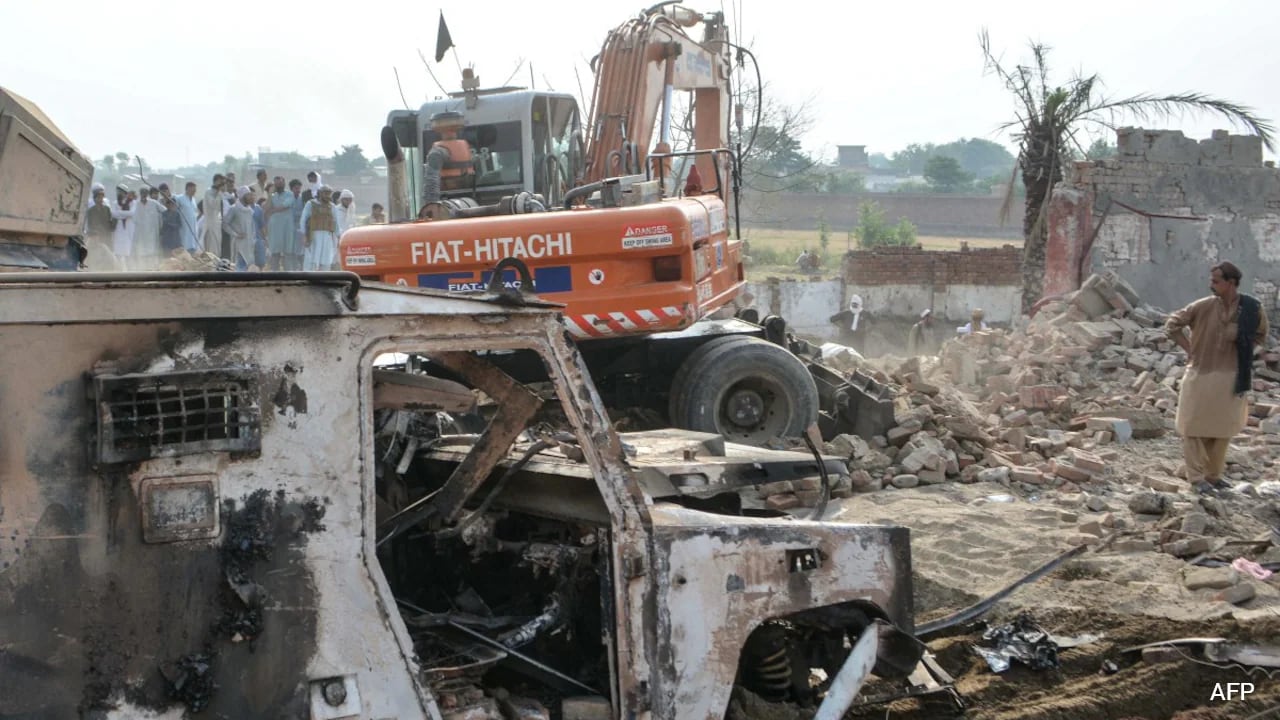
The teacup was still warm when the first blast echoed through the valley.
In the police stations of Khyber Pakhtunkhwa, Pakistan, the morning routine rarely changes. A scratched kettle hums on a gas ring. Blue uniform shirts, stiff with cheap starch, hang from wooden pegs. Men swap stories about their children’s upcoming exams or the rising cost of flour in the local bazaar. It is a fragile veneer of normalcy draped over one of the most dangerous assignments on earth. If you enjoyed this article, you might want to check out: this related article.
Then, the air shatters.
We often read about conflict in the bloodless language of casualty counts. Three dead. Thirty-four injured. The numbers flash across news tickers, geometric and sterile. They fit neatly into spreadsheets and geopolitical briefings. But numbers do not capture the smell of cordite mixed with morning rain. They do not record the sound of a plastic digital watch ringing endlessly on the wrist of a man who will never answer it again. For another perspective on this development, refer to the latest coverage from Al Jazeera.
To understand what happened during the twin terrorist attacks in Pakistan, you have to look past the front-page statistics. You have to step into the dust.
The Geography of Vulnerability
The first assault targeted a routine security checkpoint, a concrete slab dropped onto a dirt crossroads. These outposts are designed to project authority, but in reality, they often serve as lightning rods.
Imagine standing in a small booth on a highway, knowing that every approaching headlights could be a delivery or a detonation. The psychological weight is immense. Officers do not just look at licenses; they scan the posture of the driver, the sag of the vehicle's rear axle, the slight tremor in a stranger's hand.
On this specific morning, the threat did not arrive with a screech of tires. It came with premeditated precision. A group of heavily armed militants opened fire, utilizing the surrounding terrain to pin down the small contingent of officers. The geometry of the firefight was unforgiving. Low concrete walls offer little protection against high-velocity rounds fired from elevated positions.
The officers fired back. They used standard-issue rifles against weapons built for modern warfare. In the exchange, two lives ended instantly.
A third officer would survive the initial onslaught, only to succumb to his wounds on the metal bed of a speeding ambulance, miles away from a surgical theater.
Consider the reality of those left behind. Thirty-four individuals did not simply walk away with scratches. In the lexicon of regional conflict, "injured" covers a horrifying spectrum. It means shattered shrapnel embedded in muscle tissue. It means ruptured eardrums that will ring for the rest of a person's life. It means the profound, silent shock of surviving while the colleague who was sharing your tobacco twenty minutes ago lies beneath a white sheet.
The Secondary Strike
Before the dust from the first attack could even settle, the second blow landed. This is a classic, cruel tactical pattern known as the secondary strike.
The strategy relies on human empathy. When an explosion occurs, the immediate instinct of nearby forces, medical personnel, and bystanders is to rush toward the smoke. They want to help. They want to pull survivors from the debris. The attackers know this. They wait for the crowd to gather, for the chaos to reach its peak, and then they strike again.
This second ambush took place near a district headquarters, expanding the radius of terror. By targeting a secondary location almost simultaneously, the attackers achieved a specific psychological goal: they paralyzed the response mechanism. Local commanders were forced to split their attention, unsure if a third or fourth attack was imminent.
This is not conventional warfare. There are no front lines, no declarations of intent, and no visible uniforms. It is an exercise in asymmetric attrition, where the state's forces must be right every single second of the day, but the insurgent only needs to be lucky once.
The Invisible Ripples
When a policeman dies in Pakistan, the economic fallout is swift and devastating. These officers are frequently the sole breadwinners for extended families that include elderly parents, unmarried siblings, and multiple children.
The government provides compensation, certainly, but the bureaucratic machinery moves with agonizing slowness. In the interim, the rent falls due. The school fees go unpaid. The local grocer, sympathetic but struggling himself, cannot extend credit forever.
The true cost of these attacks is paid out over decades in dimly lit living rooms. It is paid by mothers who must now navigate a society that offers few safety nets for widows. It is paid by sons who drop out of school early to take up menial jobs, sometimes inheriting the very uniform that claimed their fathers' lives because it represents the only steady paycheck available.
The regional impact is equally profound. Every time a station is hit, a shadow falls over the local economy. Shopkeepers close their shutters early. Parents keep their daughters home from school. Investors look at the map and decide to move their capital elsewhere. The violence does not just end lives; it actively erodes the future of the community.
The Starch and the Dust
Back in the precinct, the remaining officers must still report for duty. There is no grief counseling. There are no mental health days. The shift change occurs exactly on time, because the alternative is to cede the territory entirely.
A new officer takes his place at the crossroads. He adjusts his belt. He looks down the long, empty road stretching toward the hills, watching the dust rise in the heat. He knows the statistics. He knows exactly what happened here yesterday. Yet, he stands there anyway, a solitary figure against the horizon, waiting for the next vehicle to appear.