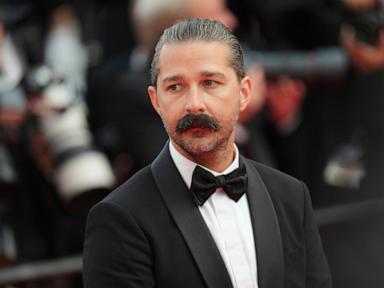
Shia LaBeouf just escaped jail time again. If you feel like you've read this exact headline before, it's because you have. The 39-year-old actor stood in an Orleans Parish courtroom and pleaded guilty to three counts of misdemeanor simple battery. The charges stem from a chaotic February morning during Mardi Gras, where a shirtless LaBeouf decided to turn a local New Orleans bar into his personal fight club.
The sentence? Two years of probation, alcohol rehab, anger management, and sensitivity training. If he screws up, he faces six months in jail. His legal team immediately tried to spin the violent outburst as a "minor Mardi Gras bar tussle." But looking closely at the details of the police report and the actor's history reveals this wasn't just a standard drunken night out. It's part of a multi-decade pattern that the justice system seems totally unequipped—or unwilling—to break.
What Actually Happened at the R Bar
The incident went down around 12:45 AM on February 17 at the R Bar in New Orleans' Faubourg Marigny neighborhood. According to police documents and video footage, LaBeouf became aggressively hostile inside the venue, prompting staff to order him out. Once outside, things turned physical.
LaBeouf, completely shirtless, attacked three separate people. He shoved one person to the pavement, punched another squarely in the face with enough force to potentially dislocate the man's nose, and head-butted a third.
One of his targets was Jeffrey Klein, a prominent local entertainer who performs under the name Jeffrey Damnit. Klein reported that LaBeouf initially blindsided him inside the bar, pushing him from behind, threatening his life, and hurling homophobic slurs. When Klein and other patrons tried to de-escalate the situation and force the actor to leave, LaBeouf doubled down on the aggression.
The Controversy Over Slurs and Hate Crime Charges
The most toxic element of the brawl centers on the language LaBeouf used. New Orleans police confirmed that the actor repeatedly shouted anti-gay slurs throughout the fights and continued doing so during his arrest.
Despite his defense attorney, Sarah Chervinsky, insisting there was "no evidence it was about bias or prejudice," the victims and local community view it differently. Reports indicated that one of the victims identifies as queer and another frequently performs in drag. Klein’s legal team openly pushed for hate crime charges early in the process.
Instead, Orleans Parish District Attorney Jason Williams pursued standard misdemeanor battery. Williams stated his office consulted the victims before finalizing the plea deal, ensuring they supported the terms. While the DA argues this deal guarantees enforceable conditions and real penalties if violated, local critics and court observers feel the celebrity treatment saved LaBeouf from harsher consequences. Michael Kennedy, Klein’s attorney, pointedly remarked outside court that the resolution serves as a reminder that everyone should be equal in New Orleans, regardless of relative fame.
Ego, Anger, and the Andrew Callaghan Interview
The defense tried to frame this entirely around substance abuse, but LaBeouf himself offered a different, stranger explanation. Shortly after his February arrest, a judge ordered him back to rehab. Days later, he sat down for an interview with independent journalist Andrew Callaghan and explicitly denied having a drinking problem.
LaBeouf told Callaghan that rehab wouldn't fix him because his issues are rooted in "anger and ego," not alcohol. He then blamed his violent reaction on a fear of gay men.
"When I'm standing by myself and three gay dudes are next to me touching my leg, I get scared," LaBeouf said in the interview. "I'm sorry. If that's homophobic, then I'm that."
This bizarre admission directly contradicts his lawyer's court statements downplaying the bias angle. It shows an actor who is highly aware of his own volatility but uses a mix of pseudo-psychology and blunt honesty to deflect accountability.
A Timeline of Defiance
The justice system keeps offering LaBeouf rehabilitation, yet his legal track record over the last decade proves that court-ordered counseling has done very little to alter his behavior.
- 2017 (New York): Arrested for misdemeanor assault and harassment during his "He Will Not Divide Us" livestream project.
- 2017 (Georgia): Arrested while filming The Peanut Butter Falcon for public drunkenness, disorderly conduct, and obstruction. He received probation and was ordered into anger management.
- 2020 (Los Angeles): Charged with misdemeanor battery and petty theft following a physical altercation with a man named Tyler Murphy.
- 2020 (Civil Lawsuit): Musician FKA Twigs filed a lawsuit detailing horrific physical and emotional abuse during their relationship. That lawsuit was settled quietly just last year.
Every single time, the resolution follows the exact same script: a public apology, a pivot to faith or personal growth, a stint in a private rehab facility, and a plea deal that keeps him out of a jail cell.
Why the System Fails Standard Accountability
This case highlights a broader flaw in how the legal system handles high-profile, wealthy offenders who struggle with chronic behavioral issues. A standard misdemeanor battery charge rarely results in heavy jail time for first-time offenders. But LaBeouf is not a first-time offender. He is a repeat offender who utilizes his financial resources to cycle through top-tier defense attorneys and high-end rehabilitation programs as a shield against true criminal penalties.
When the court hands down sensitivity training and probation to someone who has already broken those exact conditions in multiple states, it stops looking like rehabilitation. It looks like a legal loophole.
LaBeouf’s attorney says he is now looking forward to focusing on family and new creative projects. The victims are left hoping the court-mandated classes finally stick. History suggests we will be right back here in a few years, watching the same cycle repeat while the public grows increasingly tired of the excuses.