In the quiet backstreets of North Tehran, the sound used to be different. A decade ago, you might hear the muffled bass of a forbidden Western pop song vibrating through a basement wall or the sharp, spirited debate of students over tea and pomegranate seeds. Today, that air feels heavy, compressed by a silence that isn't peaceful. It is the silence of a city that has learned to hold its breath.
When Israeli intelligence officials recently sounded the alarm that the Islamic Republic is no longer merely "influenced" by the Islamic Revolutionary Guard Corps (IRGC) but is now entirely subsumed by it, they weren't describing a simple policy shift. They were describing the death of a dual-state system. For decades, Iran functioned like a strained marriage between a semi-civilian government and a sprawling military-industrial complex. Now, the marriage is over. The military has moved into every room, changed the locks, and started burning the old furniture.
The Man in the Green Uniform
Consider a hypothetical shopkeeper named Reza. In 2015, Reza’s biggest worry was the price of imported lightbulbs and whether the latest round of nuclear talks would let him expand his business. He dealt with bureaucrats—flawed, often corrupt, but fundamentally civilian. He could grumble about them to his neighbors.
But today, Reza doesn't just face a tax collector. He faces a shadow. The IRGC isn't just an army; it is a conglomerate that owns the construction firms, the telecommunications networks, the airports, and the very ports where Reza’s lightbulbs arrive. When the IRGC controls the economy, a business dispute isn't a civil matter anymore. It’s a matter of national security.
The shift toward a "hardline" stance isn't an ideological whim. It is a survival strategy. By installing former Guard commanders in nearly every seat of power—from the presidency down to provincial governorships—the Iranian leadership has effectively militarized the soul of the nation. This is the "Israel report" in human terms: the transition from a complex religious autocracy to a streamlined, iron-clad military junta.
The Architecture of the New Guard
The world often views Iran through the lens of the Supreme Leader, an aging figurehead surrounded by scrolls and scripture. But look closer at the men standing behind him. They aren't theologians. They are tacticians who grew up in the trenches of the Iran-Iraq war and sharpened their teeth in the proxy battlefields of Syria and Iraq.
This new elite doesn't care about the delicate dance of international diplomacy. They view the world through a sights-and-scope perspective. To them, the "moderates" of the past—men like Javad Zarif or Hassan Rouhani—were merely useful shields, faces to show the West while the Guard built its tunnels and refined its drones. Now, the shields have been discarded.
The stakes are invisible until they aren't. We see them when a drone strikes a tanker in the Gulf of Oman, or when a protest in Isfahan is met not with riot police, but with the terrifying precision of paramilitary squads who view their own citizens as enemy combatants. The Israeli assessment highlights a chilling reality: when the military becomes the state, there is no longer a "pressure point" for diplomacy. You cannot bargain with an institution whose entire identity is predicated on perpetual struggle.
The Economic Fortress
Money is the blood of this story. For years, the West believed that sanctions would force the "pragmatists" to the table. It was a logical theory. If you make it hard to do business, the businessmen will complain to the politicians.
But what happens when the businessmen are the generals?
The IRGC has turned Iran into a fortress economy. They have spent decades mastering the art of the "black market" at a state scale. They don't just bypass sanctions; they profit from them. By controlling the smuggling routes and the front companies, the Guard ensures that even as the average Iranian family struggles to buy meat, the IRGC’s coffers remain full. They have a vested interest in isolation. Peace, or even a cold detente, is a threat to their business model.
This is why the "hardline" shift is so permanent. It isn't a phase. It’s a takeover of the national checkbook.
The Ghost of the Ballot Box
There was a time when elections in Iran felt like they mattered, even if the choices were curated. There was a spark of hope, a belief that the system could be nudged from within.
That spark died in the recent election cycles. When the IRGC-aligned hardliners took control, they didn't just win; they cleared the field. They disqualified anyone who breathed a word of reform. The result was a ghost election, attended by the few and ignored by the many.
For the youth in Tehran—the tech-savvy, globalized generation—this is a slow-motion heartbreak. They are living in a country that is moving backward while they are trying to sprint forward. They see the Guard’s influence in their internet filters, in the morality police on the street corners, and in the lack of a future that doesn't involve working for a state-affiliated entity.
The Regional Ripple
If the internal shift is a tragedy for Iranians, the external shift is a nightmare for the region. A civilian-led Iran might weigh the costs of supporting Hezbollah or the Houthis against the benefits of international trade. A Guard-led Iran sees those proxies as their primary export.
The Israeli intelligence community isn't just worried about a nuclear bomb. They are worried about a state that has no internal "stop" button. When the IRGC runs the show, the "export of the revolution" isn't a slogan—it’s a departmental KPI. Every drone sent to Russia, every missile sent to Lebanon, and every cell activated in the West Bank is a testament to a leadership that knows only one direction: forward, at any cost.
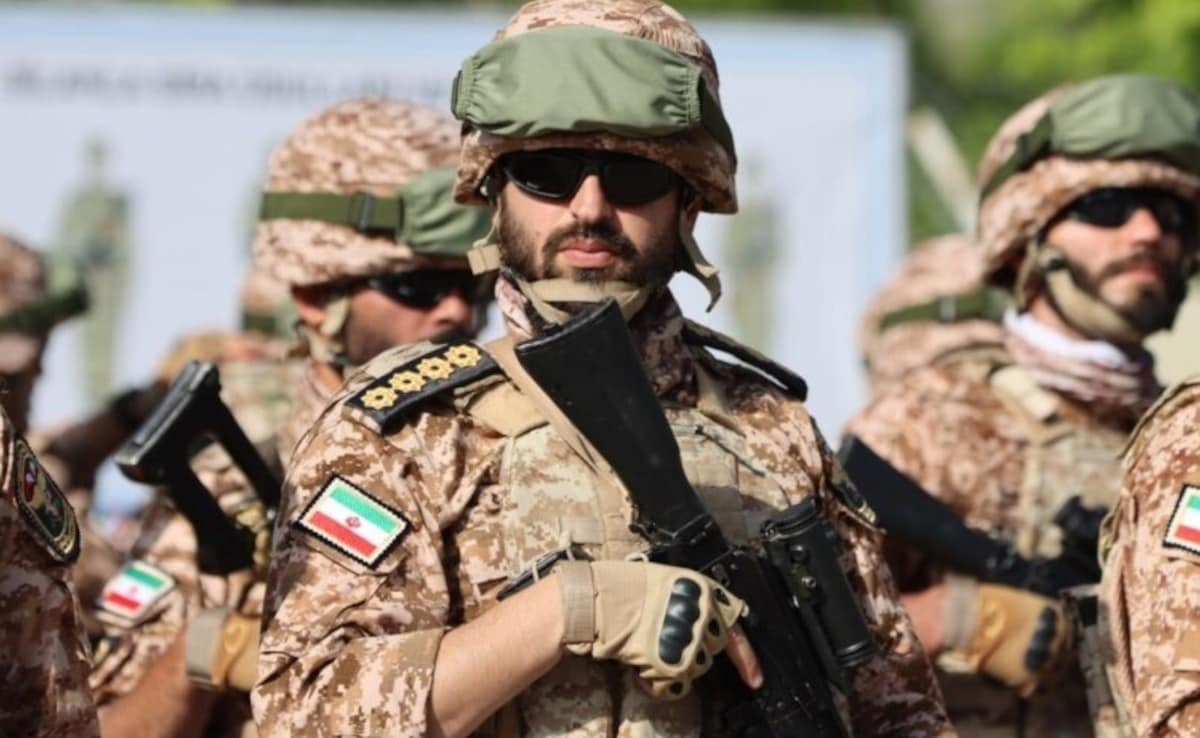
We are witnessing the transformation of a nation into a garrison. The nuances of Persian history, the beauty of its art, and the warmth of its people are being buried under layers of olive-drab paint.
The Finality of the Green Tide
It is tempting to think of this as a temporary swing of the pendulum. History is full of regimes that overreached and eventually crumbled. But the IRGC is different. They have learned from the fall of the Shah and the collapse of the Soviet Union. They haven't just taken power; they have woven themselves into the literal infrastructure of Iranian life.
They are the builders of the dams, the providers of the internet, the keepers of the oil, and the arbiters of the faith.
The "hardline" turn isn't just about a few more speeches against the Great Satan. It is the sound of a heavy iron door slamming shut. Inside, a nation is being reconfigured into a weapon. Outside, the world watches the smoke rise from a fire that no longer has a fireman, only a group of generals holding the matches.
The revolution has finally eaten its parents, and now it is looking at the neighbors.