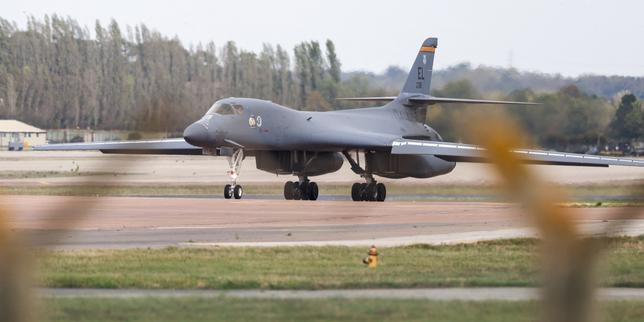
The mist does not roll off the English countryside; it seeps. It clings to the chain-link fences, dampens the camouflage netting, and hangs low over the perimeter paths where boots crunch quietly on gravel that has been raked flat every single morning for decades.
To the casual traveler driving down the narrow bitumen lanes of Suffolk or Norfolk—lanes overarched by ancient oaks and bounded by mossy stone walls—these installations appear almost benign. They are quiet giants resting in the green heart of rural England. Behind the razor wire and the heavy steel gates, however, the air is different. It vibrates with an invisible tension. It is the hum of high-frequency data, the weight of strategic deterrence, and, lately, the heavy, suffocating atmosphere of a hunt.
Seventeen miles outside the base, in a modest brick-fronted terrace house where the tea kettle has long since gone cold on the counter, the floorboards groaned under the weight of heavy boots.
They did not knock.
When you live within the shadow of a military installation that commands the attention of global superpowers, you learn the language of sirens. You know the difference between a routine drill and the sharp, jagged wail that sends local school children ducking under desks. But sirens are loud. They give you a target for your fear. What happened in the predawn hours of this particular Tuesday was silent. It was administrative, methodical, and chillingly precise.
A seventh suspect. Shackled in numbers, stripped of a proper name in the initial police briefs, and categorized under the cold, bureaucratic heading of "preparation of acts of terrorism."
Consider the anatomy of a modern threat. We are conditioned to look for the cinematic explosion, the Hollywood villain with a detonator, the chaotic street battle. But real security breaches in the twenty-first century do not look like war movies. They look like boredom. They look like a figure sitting in a parked sedan with tinted windows for four hours, jotting down shift changes on the back of a receipt. They look like a drone humming invisibly above the treeline, its camera lens unblinking and cold. They look like a digital handshake executed through a compromised router three thousand miles away, or a whispered conversation in a dimly lit village pub where the stranger in the corner asks a few too many questions about runway lighting.
The local butcher down the road, a man whose family has wrapped meat in greaseproof paper in the same village since the Suez Crisis, remembers when the bases were friendly neighbors.
"My granddad delivered beef to the officers' mess," he told me once, leaning over the glass counter while the November rain tapped a restless rhythm against the storefront. "Back then, everyone knew who belonged. If a stranger walked down our lane with a notebook, half the village would offer him a cup of tea just to find out who his mother was. Now? You don't know who’s walking past your gate. You don't know what they’re looking at on their phones."
That is the true erosion. It isn't just the concrete walls or the perimeter sensors; it is the slow, agonizing poisoning of local trust.
When the counter-terrorism command moves in, they do not arrive in a flurry of dramatic heroics. They come in unmarked vans. They cordon off the street with white-and-yellow tape that flaps monotonously in the North Sea wind. They bag hard drives, burner phones, notebooks filled with scribbled coordinates, and USB sticks containing blueprints that should never have existed outside a vault in Whitehall.
And then comes the arrest tally. One. Two. Three. Four. Five. Six.
And now, seven.
Each number represents a turning screw. Each detained individual—whether they are a radicalized ideologue, a mercenary proxy, or a pawn in a sophisticated state-sponsored intelligence game—draws the noose a little tighter around the community. People begin to lock their doors twice. They look twice at the grey van parked by the community hall. They wonder if the quiet young man who moved into the rental cottage down the lane last month is sketching aircraft trajectories or simply enjoying the country air.
The official statements from the Metropolitan Police and the regional constabularies are masterpieces of clinical detachment. They speak of "pre-planned and intelligence-led operations." They reassure the public that there is "no immediate wider threat to the community," a phrase so heavily used it has begun to sound like an incantation chanted to ward off panic.
But talk to the people who walk their dogs along the perimeter firebreaks. They will tell you a different story. They will tell you that the threat doesn't have to be immediate to be corrosive. It lives in the background radiation of their daily lives.
Why these bases? Why now?
The answer requires stepping back from the damp lanes of England and looking at the jagged map of modern geopolitics. These are not merely storage depots for fuel and rations. They are the logistical and tactical nerve centers of Western deterrence. From their runways launch the aircraft that monitor the eastern flank of Europe, where the skies over the continent are heavy with the threat of a larger, uncontained conflagration. They are the ears that listen to the chatter of the stratosphere and the eyes that watch the dark waters of the North Atlantic.
To compromise them is not merely to attack a piece of British sovereign territory; it is to blind the collective watchtower.
That is why the arrest of a seventh suspect is not just a police blotter item. It is a symptom of a silent war—a subterranean conflict fought in the shadows of data centers, through encrypted messaging apps, and along the fog-shrouded fences of military reserves. It is a war of reconnaissance, where the opening salvos are fired long before a single shot is heard.
Imagine sitting in a dim command center fifty feet below the surface, staring at a wall of screens where red dots pulse against a digital map of the British Isles. Each dot represents an anomaly, a ping, a potential breach. The analysts do not sleep much. They watch the metadata cascade down the monitors like digital rain, hunting for the needle in a haystack of terabytes. They know that an adversary doesn't need to blow up the runway to win; they only need to know when the planes are grounded, when the fuel trucks roll, and who holds the keys to the cryptographic gates.
When the seventh suspect was led out of that terrace house in handcuffs, his head bowed beneath a heavy blue jacket, the flashbulbs didn't blind him. There were no reporters screaming questions. There was only the steady, indifferent hum of police radios and the cold drizzle falling on the asphalt.
He was just a face in a growing gallery. But behind him lay a complex web of financing, handlers, encrypted comms, and ideological or financial desperation.
The investigation continues. Raids are quiet. Digital forensics take months. The Crown Prosecution Service builds its wall of evidence brick by legal brick, ensuring that when these individuals face a judge, the case is airtight. There is no room for theatrical flair in the courtroom; there is only the slow, grinding machinery of British justice, moving with the heavy deliberateness of an iron wheel.
Yet, out in the villages, the mist remains.
The sheep graze unbothered in the pastures that butt up against the razor wire. The fighter jets still roar overhead at unexpected hours, tearing the sky apart with a sudden, window-rattling violence that makes the tea cups chatter in their saucers. The locals look up, wince for a fraction of a second, and then go back to what they were doing.
They have adapted. They have integrated the shadow into their routines.
Because that is what living near the edge of the empire requires now. You learn to live with the watchers and the watched, the locked gates and the unmarked vans, and the quiet, unending vigilance of people who spend their lives guarding the wire so that the rest of the world can pretend the dark doesn't exist.


