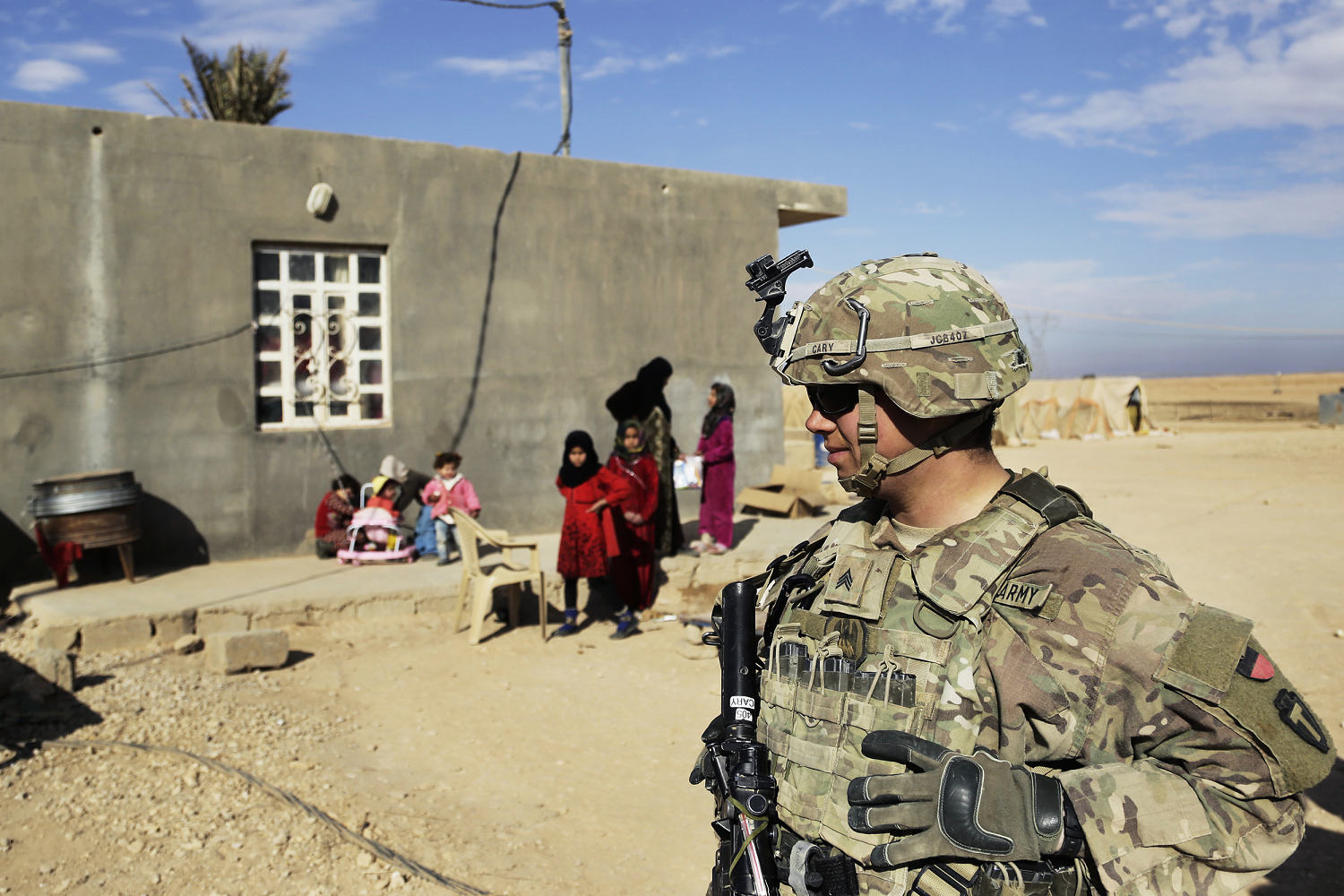
Dawn breaks differently over an airfield when the air itself feels heavy with unspoken calculations. Out on the tarmac, the ground crew moves with practiced, quiet efficiency, their breath pluming in the chill morning frost. They check the hydraulics, monitor the telemetry, and run through checklists that have been rehearsed a thousand times. Yet today, the routine hides a jagged edge. Somewhere beyond the perimeter fence, across miles of open desert and geopolitical friction, a shadow has lengthened.
Prime Minister Andy Burnham stepped up to the podium with a gravity that did not need to be forced. The words came carefully measured, yet they carried the unmistakable weight of a threshold crossed. Britain believes Iran was involved in an incident near an air base heavily utilized by United States forces.
Consider what happens next.
A radar blips on a screen hundreds of miles away. To an operator sitting in a climate-controlled room, it looks like a green pixel shifting across a grid. To the families living near the installation, it is the sudden tightening in the chest when a low rumble shakes the windowpanes. Distance compresses. An event thousands of miles away instantly pulls local communities into a global slipstream of tension.
We often talk about international relations as if they are chess pieces moving silently across a polished mahogany board. We use terms like deterrence, airspace, and escalation metrics. But those abstractions are paid for in blood, sweat, and sleepless nights by people who never signed up to be symbols.
Imagine a young technician stationed at that very base. Let us call him Mark. Mark is twenty-four, originally from a quiet town where the biggest local drama is a delayed train. He spends his afternoons troubleshooting navigation arrays, listening to the hum of cooling fans, and texting his mother back home that everything is fine. He tries not to read the headlines. He focuses on the cables, the screws, the green indicator lights.
Then the alert sounds.
It is not the cinematic klaxon of Hollywood movies. It is a sharp, persistent tone that cuts through the hum of the hangar, instantly freezing every conversation. In that single second, the abstract debate over foreign policy vanishes. Geopolitics becomes a matter of whether the blast doors will hold, whether the incoming telemetry is a ghost or a threat, and whether tomorrow will arrive as scheduled.
When leaders point fingers across continents, they are translating the chaos of a disrupted world into a language of diplomatic accountability. Burnham’s statement was not merely an administrative update. It was a flare shot into the dark sky, illuminating a landscape where invisible lines are constantly tested.
Why does this matter to someone sitting thousands of miles away, drinking morning coffee in a quiet kitchen?
Because security is a fragile illusion. We build our daily lives on the assumption of order. We assume the lights will stay on, the supply chains will flow, and the distant conflicts will remain neatly contained behind television screens. But incidents near strategic military installations are the frayed threads at the edge of that blanket. Pull one hard enough, and the whole thing unravels.
History teaches us this lesson with brutal repetition. Small sparks near dry tinder rarely stay small for long. The incident near the American-utilized base was not an isolated blip in a vacuum. It fits into a long, agonizing pattern of friction where regional actors test the boundaries of global superpowers. Every drone, every missile, every electronic pulse is a question directed at a rival: How far can we push before you break?
And the response from London is an attempt to draw a hard line in the sand.
By publicly attributing involvement, the British government is doing more than sharing intelligence. It is trying to establish a perimeter of consequence. It is saying that actions taken in the shadows have witnesses, and those witnesses are comparing notes.
Yet transparency in times of crisis is a double-edged sword. Too little information breeds panic and speculation. Too much, delivered all at once, can accelerate a slide toward confrontation. Leaders must walk a razor-thin ledge between keeping the public informed and preventing an escalation spiral that feeds on its own momentum.
We look for certainty in a world that refuses to provide it. We want clean answers, clear villains, and predictable resolutions. Instead, we get twilight zones of plausible deniability, contested radar tracks, and statements that leave more unsaid than they reveal.
Back at the air base, the shift ends. Mark walks out of the hangar into the harsh afternoon sun. The sky above is vast, indifferent, and deceptively calm. He pulls out his phone, looks at the screen, and starts typing a message home. Everything is fine, he writes.
He hopes it is true.
The horizon remains quiet, for now. But the radar screen is still glowing, and somewhere out in the dark, the next pixel is already beginning to move.