The salt air of the Red Sea carries a smell that veterans of these waters know too well: the faint, metallic tang of scorched oil and the suffocating heat of a desert wind that refuses to quit. Out on the horizon, massive container vessels crawl like slow beetles across a glass-flat mirror, their crews staring anxiously toward a shoreline hidden behind a haze of dust and distance.
For months, the water has been a theater of quiet terror. Missiles arc out of the fractured hills of Yemen, screaming through the stratosphere before slamming into commercial cargo ships whose only crime is trying to deliver ordinary goods to ordinary ports. The men and women standing watch on the bridges of those ships are not soldiers. They are engineers from the Philippines, captains from Greece, cooks from India—people whose greatest ambition used to be making enough money to send their children to university. Now, they check their radar screens every twenty minutes, wondering if the next blip will be a warning or an end.
And far away, in the manicured silence of a Florida estate or the high-backed leather chairs of a Washington conference room, calculations are being made.
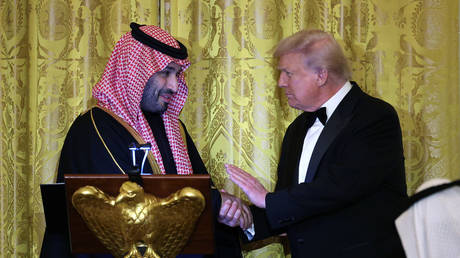
Donald Trump’s recent declaration that the United States could join Saudi strikes on Yemen is not merely a policy shift; it is an ominous widening of a gyre that has already spun out of control. It signals a potential fusing of two powerful military engines—American high-altitude precision and Saudi Arabia’s immediate, frontline regional stakes—aimed squarely at the Houthi movement.
To understand why this moment matters, you have to look past the maps and the missile statistics. You have to look at the human cost of a widening circle of fire.
The Geography of Fragility
Yemen is a country carved up by ghosts and broken promises. To walk through its interior is to witness a civilization suffocating beneath the weight of a decade of civil war, crumbling infrastructure, and a humanitarian crisis that routinely slips from the front pages because the world has grown weary of the suffering.
When foreign bombs begin to fall—whether they come from Saudi jets or American carrier groups—they do not land in a vacuum. They land in neighbourhoods where children play football in alleys choked with rubble. They land near water treatment plants that barely function. Every escalation sends shockwaves through a population that has already endured more than its share of catastrophe.
Yet the international conversation rarely lingers on the civilian in Sana'a or Hodeidah. Instead, it fixes on the choke points of global commerce.
Consider the Bab el-Mandeb strait. It is a narrow ribbon of water, barely twenty miles wide at its skinniest point, connecting the Indian Ocean to the Red Sea and, ultimately, the Suez Canal. Through this watery corridor passes a staggering volume of the world’s daily oil and consumer goods. When the Houthis began targeting shipping lanes in late 2023 and 2024, ostensibly in response to the conflict in Gaza, they did not just disrupt regional politics. They threw a wrench into the delicate, invisible machinery of modern life.
A pair of sneakers manufactured in Vietnam, a laptop component shipped from Taiwan, a tank of liquefied natural gas bound for Europe—all of them suddenly had to take the long, expensive detour around the Cape of Good Hope. Prices ticked upward. Delivery times stretched from weeks to months. The average shopper in Chicago or London might never hear the word Houthi, but they felt the friction every time they bought groceries or filled their car.
This is the central tension of the crisis. It is a local war with global symptoms. And the proposed cure—joining forces to strike the launch sites, the radar installations, and the supply depots—risks opening a door that may be impossible to close.
The Logic of Retaliation
There is a seductive simplicity to military force. When someone shoots at you, the primal urge is to shoot back harder.
For years, the Saudi-led coalition tried to pound the Houthi movement into submission from the air. The campaign was costly, destructive, and ultimately inconclusive. The Houthis proved remarkably resilient, burrowing into mountainous terrain, manufacturing improvised drones from commercially available parts, and maintaining a fanatical internal cohesion forged by years of siege.
When the United States launched its own airstrikes alongside allies, the goal was deterrence. The idea was simple: break their toys until they stop playing.
But deterrence is a finicky beast. It assumes the adversary shares your definition of pain. For a movement that has spent a generation under bombardment, the destruction of a warehouse or a radar station is not a psychological breaking point; it is Tuesday.
By openly contemplating a joint US-Saudi military campaign against these positions, the calculus shifts once more. It re-ties knots that regional diplomats have spent the past year trying to untangle. Saudi Arabia, having suffered years of cross-border drone and missile attacks on its oil facilities, had cautiously stepped back from active offensive operations in Yemen to pursue a delicate peace dialogue with the Houthis. Riyadh wants a secure southern border to clear the way for its sweeping economic modernization plans, known as Vision 2030. You cannot build futuristic neon cities in the desert if your oil refineries are catching fire every other week.
If Washington steps back into the fray shoulder-to-shoulder with Riyadh, it reassures the kingdom that the United States remains the ultimate guarantor of regional security. But it also signals to the Houthis—and, by extension, their primary benefactor, Iran—that the door to a diplomatic settlement is being bolted shut from the outside.
The Human Equation in the Smoke
Imagine sitting in a cramped control room in a naval destroyer slicing through the dark waters of the Gulf of Aden. The glow of green screens illuminates the faces of young sailors who have been awake for thirty-six hours straight. A warning klaxon blares, short and sharp. An incoming contact is detected—low, fast, and erratic.
In a matter of seconds, human beings must decide whether a speck of metal on a radar screen is a fisherman’s skiff or a suicide drone packed with explosives. They fire a multi-million-dollar interceptor missile into the night sky. There is a blinding flash, a dull thud across the water, and then silence returns.
Multiply that scene across months of attrition.
The pilots launching from aircraft carriers, the maintenance crews sweating on sun-baked flight decks, the diplomats working behind closed doors in Geneva and Muscat, the mothers in Yemen waking up at night to the terrifying whistle of descending ordinance—all of them are trapped inside a narrative written by decisions made far away.
The tragedy of the situation is its inevitability. Each escalation feels justified by the provocation that preceded it, yet each step forward plunges the region deeper into an unpredictable morass.
If US forces commit more deeply to strikes on Yemeni soil, the risk of regional spillover escalates exponentially. Iran watches closely, weighing its own calculus of proxy influence. Other regional actors adjust their postures. And the civilian population of Yemen absorbs the collateral damage of a geopolitical chess game they never asked to join.
The Unresolved Horizon
We stand at a strange crossroads in modern history. Technology has made the world remarkably small and interconnected, yet our methods for resolving conflict remain stubbornly primitive. We throw iron at iron and hope the other side breaks first.
The proposed alignment between American firepower and Saudi strategic objectives may temporarily clear a path for container ships through the Bab el-Navdeb. It may temporarily reassure jittery markets that the flow of commerce will not be choked off by asymmetric warfare.
But power projection is not peace.
Until someone addresses the root causes of the misery—the political fragmentation of Yemen, the desperate poverty of its people, the regional proxy struggles that feed the flames—every bomb dropped is merely a down payment on the next crisis.
Out on the Red Sea, the wind continues to blow across the water, kicking up whitecaps that wash against the hulls of waiting ships. The sailors keep watching the radar. The commanders keep updating their target lists. And somewhere in the mountains of Yemen, a young fighter tightens his belt, listens to the distant rumble of a jet high above the clouds, and waits for the night to speak.