Two hundred kilometers separate Skopje from Thessaloniki. On a map, it is a negligible line—a three-hour drive down the E75 highway, passing through rolling hills, sparse farmland, and the quiet, sun-bleached border crossing at Evzoni. People make the trip every weekend for shopping, for coffee by the sea, for a change of air.
In the spring of 2026, someone made that journey with a very different itinerary.
We do not know his name. We do not know what kind of coffee he ordered at the rest stops, or whether he tapped his fingers against the steering wheel while waiting for customs officers to stamp his passport. What we know—because the authorities in North Macedonia finally broke their silence—is that he was carrying the machinery of a political execution, and his target was waiting across the border in Greece.
Behind him stood a shadow network linked to Iran.
If you read the standard wire reports, the story feels tidy, almost clinical. A foiled plot. An intelligence success. A press release scrubbed of blood and panic. You read it over breakfast, nod at the competence of the Balkan security services, and turn the page to the weather forecast.
That is a mistake. Because beneath the dry diplomatic phrasing of North Macedonia’s announcement lies a terrifying reality about how modern proxy warfare actually works—and how easily the quietest corners of Europe can become the staging ground for someone else’s war.
The Anatomy of an Invisible War
To understand what happened between Skopje and Athens, you first have to abandon the Hollywood version of espionage. There are no sleek tuxedos in Monte Carlo, no poisoned umbrellas on rain-slicked London bridges.
Modern covert operations look much more like logistics.
Think of it as a franchise model for violence. When a state actor like Iran wants to strike a target abroad—whether a dissident, a diplomat, or an Israeli or Western interest in Europe—it rarely sends its own elite operatives across multiple international borders. Too risky. Too traceable. If an intelligence officer is caught with a diplomatic passport in his pocket, the geopolitical fallout is immediate and devastating.
Instead, Tehran outsources.
Consider a hypothetical scenario that mirrors how intelligence analysts describe these operations: A handler sitting in an office thousands of miles away never meets the triggerman. The handler uses encrypted messaging apps to contact an intermediary—perhaps a mid-level figure in a criminal syndicate operating out of the Balkans or the Middle East. Money changes hands in cryptocurrency or through informal hawala networks. That intermediary recruits a local criminal, someone who already knows how to move stolen cars, smuggle cigarettes, or acquire unregistered firearms across porous borders.
The local operative does not care about ideology. He does not care about nuclear negotiations, regional hegemony, or decades-old grievances in the Levant. He cares about fifty thousand euros in untraceable cash.
And just like that, a geopolitical assassination becomes a gig-economy transaction.
This is what makes the North Macedonian disruption so chilling. The Balkans have spent three decades trying to shed their reputation as Europe’s powder keg, building highways, joining NATO, and integrating into Western security frameworks. Yet the very geography that makes North Macedonia a bridge between Central Europe and the Aegean Sea also makes it a corridor for shadows.
The Weight of a Border Crossing
I remember standing at the Bogordica-Evzoni border crossing a few summers ago during a heatwave. The air smelled of hot asphalt, diesel exhaust, and roasting corn sold from roadside stands. Families leaned out of compact cars, fanning themselves with folded maps while border guards moved lethargically from window to window.
Nothing about that place suggests high-stakes international intrigue. It feels aggressively ordinary.
And that ordinariness is the entire point.
When North Macedonian intelligence services intercepted the plot—working alongside regional and international partners—they were not just stopping a single gunman. They were tearing open a covert supply chain that relies on the mundane predictability of daily life. A suspect blends in precisely because millions of people cross those borders every year without incident.
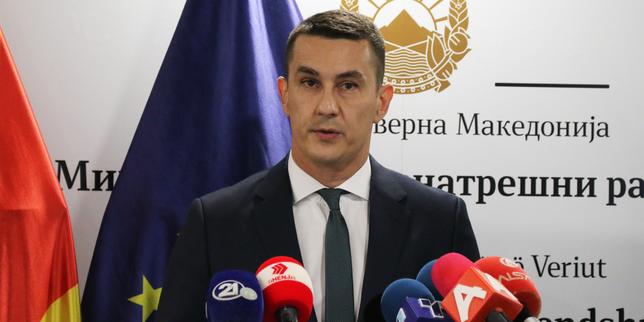
According to official disclosures from Skopje, the operation targeted an individual in Greece, orchestrated through a network tied to Iranian intelligence structures. The authorities arrested the suspect in North Macedonia before the attack could be carried out, seizing evidence that linked the preparation directly to a transnational terrorist cell.
Silence.
That is what usually follows these arrests. For weeks, sometimes months, intelligence agencies sit on the information while they trace phone records, map financial transfers, and determine who else in the network might still be moving through Athens, Sofia, or Belgrade. When the announcement finally comes, it is stripped of operational detail to protect ongoing investigations.
The public gets three paragraphs. The intelligence community gets sleepless nights.
Why Greece, and Why Now?
You might wonder why a plot linked to Iran would run through North Macedonia into Greece. Neither country is at war with Tehran. Both maintain diplomatic relations with the Islamic Republic. On the surface, neither appears to be the epicenter of Middle Eastern conflict.
Look closer at the map.
Greece sits at the southeastern edge of the European Union, a vital hub for tourism, shipping, and regional diplomacy. Athens has deepened its strategic, military, and energy partnerships with Israel and the United States over the past decade. For an adversary looking to send a message—or strike a soft target without triggering a full-scale military retaliation—Greece offers proximity, open borders within the Schengen zone, and a constant flow of international visitors.
In 2023, Greek police dismantled a separate, Pakistan-born network operating under Iranian direction that had planned attacks on a Jewish restaurant and community center in central Athens. The suspects in that case had conducted surveillance, taken photographs, and awaited final orders before Greek intelligence, acting on a tip from Israel’s Mossad, moved in.
Look at the pattern.
This is not an isolated aberration. It is a sustained, methodical campaign of external operations designed to prove that no target is out of reach, even inside the European Union. By routing operatives through non-Schengen neighbors like North Macedonia, planners attempt to exploit intelligence gaps between different jurisdictions. One country watches the border; another watches the cities. The operative slips through the seam between them.
Except this time, the seam held.
The Human Cost of What Never Happens
There is a strange paradox at the heart of counterterrorism: success looks like nothing at all.
When a bridge collapses, we see the twisted steel, the rescue workers, the grieving families on the evening news. The tragedy is visceral and undeniable. When an intelligence officer notices an anomaly in a financial transfer, or an informant whispers a name in a smoky café in Skopje, and an arrest is made in the dead of night, nothing happens.
A person in Greece woke up on an ordinary morning, drank their coffee, walked out their front door, and went to work—completely unaware that a stranger had been paid to end their life.
We rarely stop to feel the weight of a prevented catastrophe. It feels abstract, almost theoretical, until you remember how thin the margin actually is. One missed phone call. One overloaded customs officer waving a car through during a shift change. One encrypted message that goes undetected.
For the security analysts and investigators working in small, under-resourced Balkan agencies, the pressure is relentless. Unlike massive intelligence bureaucracies in Washington or London, services in countries like North Macedonia operate with tight budgets and immense regional complexity. Every tip has to be weighed against the risk of blowing a source. Every arrest risks tipping off other cells waiting in the wings.
It is exhausting, unglamorous work, conducted entirely in the dark.
The Illusion of Distance
It is tempting, sitting thousands of miles away—or even sitting in a café in Western Europe—to view a foiled plot in the Balkans as a distant tremor. A local story. Something that happens "over there," in places with complicated histories and fragile borders.
That comfort is an illusion.
The modern world has collapsed distance. A decision made in a command room in Tehran travels through encrypted servers, passes through a financial broker in Dubai or Istanbul, recruits an operative in Skopje, and ends with a handgun on a street corner in Athens. The borders we draw on maps mean very little to networks built on digital anonymity and outsourced violence.
More unsettling still is what this reveals about the changing nature of conflict. When states cannot afford direct confrontation, they fight in the margins. They turn third-party nations into unwitting battlegrounds. North Macedonia did not ask to be a transit hub for Iranian covert operations, just as Greece did not ask to be a hunting ground for foreign intelligence services. Yet both nations found themselves drawn into a shadow war simply by virtue of where they sit on the globe.
What Remains in the Dark
North Macedonia’s announcement is a victory, and it deserves to be recognized as one. Cooperation between Balkan intelligence services and their Western counterparts prevented a murder on European soil and exposed another tentacle of a sprawling clandestine apparatus.
Yet anyone who understands how these networks operate knows that an arrest is rarely the end of the story. It is merely a snapshot of a single thread pulled from a much larger web.
Somewhere tonight, another encrypted message is being typed. Another intermediary is calculating risk against reward. Another border crossing is humming with the ordinary traffic of commuters, trucks, and tourists, all moving through the dark under the assumption that the road ahead is safe.
Two hundred kilometers separate Skopje from Thessaloniki—a straight shot down the highway, past the olive groves and the quiet hills, where the lights of the border post glow faintly against the night sky.