Dirt under the fingernails feels different when you think you own the ground it came from.
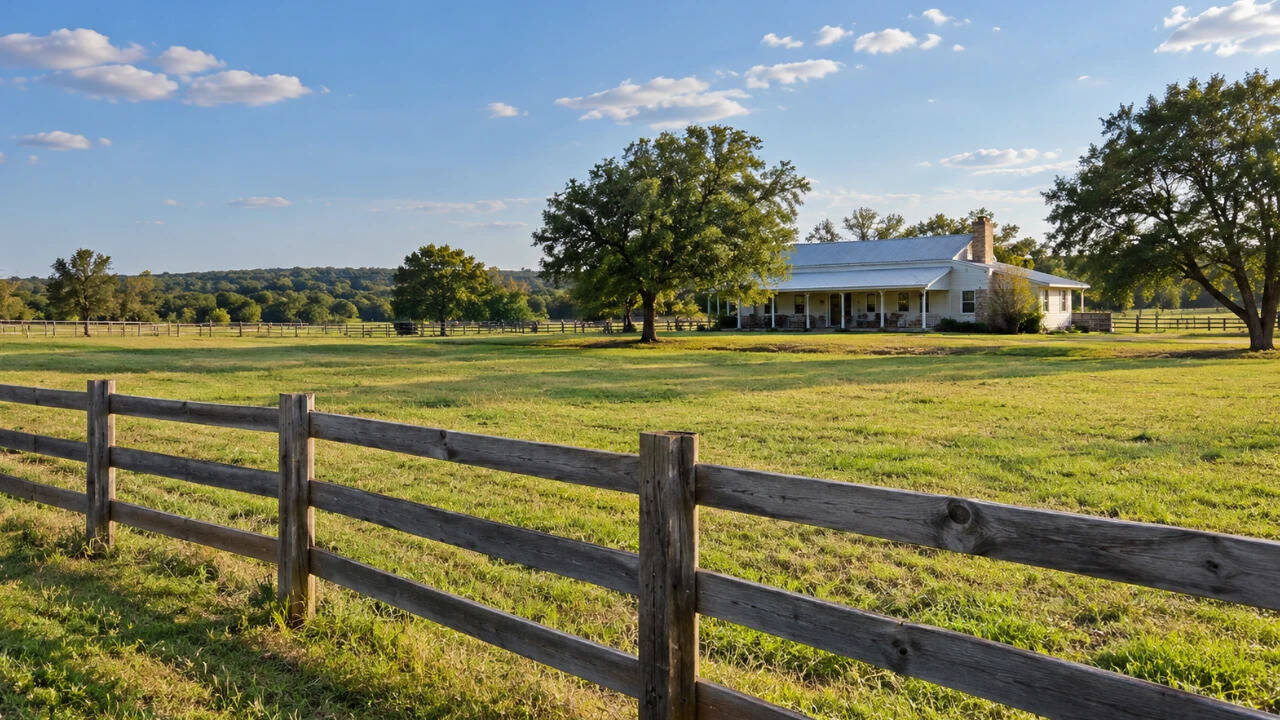
For decades, a man in Texas walked seventy acres of scrub oak, mesquite, and red clay with the quiet, unshakeable certainty that every fence post he mended and every dry creek bed he cleared was an investment in his own future. He smelled the cedar smoke in the winters. He sweated through his cotton shirts in the relentless August heat. He believed, with the primal confidence that only family history can manufacture, that the land beneath his boots was his birthright.
Then his mother died. And a single sheet of paper turned seventy acres of home into a stranger's backyard.
When the Texas appellate court handed down its ruling recently, the headlines reduced a lifetime of grief, sweat, and familial fracture into a cold, clinical blurb about a man excluded from his mother's will losing a property battle. On paper, it looks like a tidy legal dispute. A gavel falls. A statute is cited. A man walks away empty-handed.
Grief.
That is the word the court transcripts never quite capture. Because probate law does not measure the hours spent fixing a leaking roof on a farmhouse, nor does it weigh the unspoken promises whispered across a kitchen table over lukewarm coffee. The law only reads ink. And when a Texas mother leaves seventy acres to someone else—or deliberately leaves a son out of the pages entirely—the courtroom becomes a theater where memory goes to die.
The Architecture of an Unspoken Promise
To understand how a person loses a small kingdom without ever signing a deed away, you have to understand how families actually talk about money and land. They don't. Not really.
Consider a hypothetical scenario that plays out in rural counties from the Panhandle to the Piney Woods every single week. Picture a son—let us call him Caleb—who stays behind while his siblings move to Dallas or Austin for corporate jobs. Caleb stays because someone has to watch the cattle, clear the brush, and drive his aging mother to her cardiologist appointments forty miles away. Over twenty years, his mother says things like, “One day all this will be yours to worry about,” or “I don't know what I'd do without you keeping this place running.”
To Caleb, those sentences are a contract. To a Texas probate judge, they are vapor.
I have sat in the fluorescent-lit purgatory of county courthouses, watching grown men and women clutch shoeboxes of faded receipts for tractor parts and lumber, convinced that proof of devotion equals proof of ownership. The air in those rooms always smells faintly of damp wool and old paper. You watch their faces fall the moment a judge explains that maintaining property you do not hold title to is legally indistinguishable from being a generous tenant. It is a brutal awakening, and honestly, the first time you see the sheer coldness of statutory inheritance law up close, it makes your stomach drop. You start wondering if any family agreement is ever truly safe without a notary stamp.
In Texas, the freedom of testation—the right of an individual to leave their property to whomever they choose—is guarded like a sacred relic. Unlike some jurisdictions where children enjoy automatic forced-heirship protections, Texas law allows a parent to disinherit an adult child completely, for a good reason, a bad reason, or no reason at all. You do not have to explain yourself to your heirs. You only have to be of sound mind when you sign the document.
When Seventy Acres Become a Battlefield
Seventy acres is not just a number on a county tax appraisal. In Texas, seventy acres is big enough to lose yourself in, big enough to run a modest herd, big enough to feel like a sovereign nation away from the noise of the highway. When that much dirt is on the line, a will contest stops being a legal disagreement and turns into an excavation of every wound a family ever hid.
When the disinherited son in this case took his fight to the courts, he stepped into one of the hardest uphill battles in American civil law. Challenging a valid will in Texas requires proving one of two very specific, very difficult things: either the mother lacked testamentary capacity when she signed it, or someone exerted undue influence over her to bend her will to their own desires.
Proof.
Think about what it takes to prove a dead woman didn't know what she was doing, or that she was manipulated in the quiet hours behind closed doors. The burden rests entirely on the person left out in the cold.
In appellate rulings across the state, judges consistently remind grieving plaintiffs that suspicion is not evidence. Opportunity is not proof. Even if a sibling or a new acquaintance spent every waking hour with an elderly parent in their final months, that alone does not invalidate a will. The challenger must prove that the influence was so overwhelming it destroyed the mother's free agency—that the pen in her hand was effectively guided by someone else's brain.
Let us use an analogy to see why these cases collapse so often. Imagine trying to prove, three years after a house burned down, that a specific spark from a faulty toaster caused the blaze rather than a forgotten candle, using only photographs of the ashes. That is what a will contest looks like. The primary witness—the mother—is gone. Her intentions are locked inside a document drafted with formal legal language, witnessed by two people who swore she looked alert and willing on a Tuesday afternoon years ago.
Meanwhile, the son stands outside the fence line, holding nothing but his memories of how things used to be.
The Invisible Stakes of the Texas Probate Code
Why do people assume blood guarantees a share of the estate? Because human beings are wired for reciprocity. We keep invisible ledgers in our heads. We trade time for trust. When a son sacrifices career mobility to stay near family land, he assumes the ledger will balance when the final chapter is written.
History shows us that inheritance disputes have fractured dynasties since the invention of private property, yet modern families remain shockingly naive about how easily a simple estate plan can bypass expectations. According to legal researchers and estate planning surveys, more than half of American adults still die without a will, and among those who do write one, millions never discuss its contents with their children beforehand. That silence is a ticking clock.
When a parent dies without a will in Texas, the state writes one for them through intestacy laws, which generally divide assets among surviving spouses and children. When a parent does write a will and explicitly excludes a child, the state enforces that exclusion with mechanical precision.
But the real problem lies elsewhere. Most people fighting over seventy acres aren't actually fighting over the market value of the dirt. They are fighting for validation. Being cut out of a will feels like a posthumous verdict on your worth as a son or daughter. It is a permanent, public declaration that you did not matter enough to be remembered.
When the court rules against the excluded child, the pain doubles. First, the mother says no from beyond the grave. Then, the state of Texas says she was right to do it.
What Happens When Oral Promises Collide With Written Deeds
Many readers searching for answers after hearing about a ruling like this find themselves asking the exact same panicked questions in the middle of the night. Can a parent really leave everything to one child and nothing to another? What if you paid the property taxes for ten years? What if she promised you the back forty acres before she got sick?
In Texas, the Statute of Frauds is an iron wall. Any agreement involving the transfer of real estate must be in writing and signed by the person transferring it to be legally enforceable. Oral promises to leave land to someone in a will are virtually worthless in court, save for extraordinarily rare exceptions where a person can prove they took possession, paid valuable consideration, and made permanent, valuable improvements solely in reliance on that specific promise—a legal needle so small almost no one threads it.
Paying property taxes out of pocket? Usually treated as a gift or a cost of living there rent-free. Clearing brush and mending fences? Routine maintenance, not grounds to overturn a deed.
Consider what happens next in these courtroom dramas. The excluded son hires an attorney. Tens of thousands of dollars vanish into depositions, medical record subpoenas, and expert witness fees. Old family friends are forced to take sides, testifying under oath about whether the mother seemed confused at a Christmas dinner four years ago or whether she was sharp as a tack until the week she passed. By the time the appellate judges issue their dry, twenty-page opinion affirming the lower court's decision, the family is shattered beyond repair, and the land itself is often mortgaged or sold just to pay the lawyers.
Nobody wins a probate war. Some people just lose less slowly than others.
The Quiet Brutality of Legal Certainty
There is a strange, unsettling tension at the heart of cases like this. On one hand, the law has to protect the autonomy of older adults. If courts started rewriting wills every time an adult child felt slighted or unappreciated, no one's final wishes would ever be secure. An elderly mother has the absolute right to change her mind, to reward a different caregiver, to donate her land to a church, or to leave seventy acres to a neighbor who brought her soup when her own family didn't call.
On the other hand, seeing a man lose the ground he spent his life tending leaves a bitter taste that no legal citation can wash away. It forces us to confront an uncomfortable truth about family loyalty: love is an emotion, while property is a system of rules, and the two systems do not speak the same language.
If you are walking land today that belongs to your parents, assuming your sweat equity is buying you a future deed, stop. Have the awkward conversation while everyone is still breathing. Ask to see the paperwork. Put agreements in ink while voices are warm and minds are clear, because once the ink dries on a probated will, no amount of history can rewrite a single line.
At the end of the Texas ruling, when the appeals were exhausted and the court costs were tallied, the seventy acres remained exactly where they had always been—silent under the wide sky, indifferent to the names written on the deed, waiting for the next pair of boots to walk across the dust and mistake a lifetime of habit for ownership.