The lace hits the eyelet with a rhythmic, metallic click. Right foot. Left foot. Double knot. It is 6:15 AM, and the world is painted in that bruised, pre-dawn purple that suggests peace. But for Sarah, and thousands of women like her, this ritual isn't just about cardiovascular health or hitting a personal best. It is a tactical briefing.
She checks the charge on her bone-conduction headphones—open ear, because she needs to hear the gravel crunching behind her. She shares her live location with a partner who is still asleep. She picks the shirt that is baggy enough to hide her shape but breathable enough to manage the sweat. Finally, she steps out the door, eyes scanning the street not for beauty, but for exits.
This is the invisible tax on movement.
We talk about running as the ultimate democratic sport. All you need is a pair of shoes and the will to move. Yet, for half the population, the road is not a neutral space. It is a gauntlet of "beeps, shouts, and abuse," as recent police reports in the UK have catalogued. What should be a moment of clarity and endorphins is often a marathon of micro-aggressions that escalate into genuine danger.
The Anatomy of the Ambient Threat
When a car slows down next to a woman running alone, the driver might think it’s a joke. A whistle. A "compliment" shouted through a cracked window. To the person behind the wheel, it is a three-second interaction that is forgotten by the next traffic light.
To the runner, it is a spike in cortisol that ruins the next three miles.
It is the calculation of distance: Is the door locked? Can I outrun them if they get out? Is there anyone else on this path? This isn't paranoia. It is a learned survival mechanism. Data from the Office for National Statistics has repeatedly shown that women feel significantly less safe walking or running alone after dark, but the reality is that the sun offers no guaranteed shield. The harassment is a daylight phenomenon, a constant background radiation of being "watched" while simply trying to exist in a body.
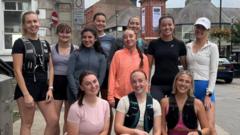
Recently, undercover and plainclothes police officers have begun joining running groups in North Yorkshire and other regions. They aren't there to pace the group or check their splits. They are there to witness the reality of the road.
Putting a Badge in a Tracksuit
The concept is simple but jarring: if you want to understand the scale of the problem, you have to run a mile in those shoes. By embedding female officers within running communities, the police are moving away from reactive "report it after it happens" models toward an active, observational presence.
Consider a hypothetical—but common—scenario on a suburban trail. A group of men stands by a trailhead. As a solo female runner passes, they make loud, suggestive comments about her pace or her leggings. In the past, this was dismissed as "low-level" antisocial behavior. It didn't meet the threshold for a 999 call.
But when a plainclothes officer is ten yards behind that runner, the dynamic shifts. The "low-level" behavior is identified for what it is: the beginning of a predatory spectrum. By identifying these individuals in real-time, police can issue warnings, create records of behavior, and, most importantly, validate the runner’s experience.
It’s about shifting the burden. For decades, the advice given to women was a list of restrictions.
Don't run at night. Don't wear bright colors. Don't use headphones. Run with a dog. These are not solutions. They are concessions. They suggest that the victim is responsible for managing the behavior of the harasser. The current shift in policing philosophy acknowledges that the pavement belongs to everyone, and the responsibility for safety lies with those who would make it unsafe.
The Psychological Finish Line
The damage of harassment isn't just physical. It is the theft of "flow."
Athletes speak of the flow state—that moment where the self vanishes and there is only the breath and the stride. Harassment shatters that state. It forces the runner back into their head, back into a state of hyper-vigilance. Over time, this leads to "exercise desertion." Women simply stop running. They join expensive gyms where they feel caged but safe. They buy treadmills and stare at basement walls.
The loss is collective. When we lose women from our parks and streets, our public spaces become less vibrant, less balanced, and ultimately, less safe for everyone. A street used by everyone is a street that is self-policing. When one demographic is driven indoors, the shadows grow longer for everyone else.
The Logistics of Change
How do we actually fix this? It isn't just about more police in Lycra. It requires a fundamental redesign of how we view public safety.
- Environmental Design: High-visibility trails aren't just about lights. They are about sightlines. Removing blind corners and ensuring that paths are overlooked by housing or businesses creates "natural surveillance."
- Legislative Teeth: Making public sexual harassment a specific, punishable offense sends a signal that the "it's just a joke" defense is dead.
- The Bystander Effect: This is where the narrative must change for men. Seeing a fellow runner being trailed or shouted at shouldn't result in a shrug. It requires an active presence—not necessarily a confrontation, but a "checking in." A simple "Are you okay?" can break the power dynamic of a harasser.
We are currently in a transitional period. The "Beeps and Shouts" campaign is a recognition that the status quo is a failure. It is an admission that for too long, we have accepted a level of toxicity in our streets that we would never tolerate in an office or a classroom.
The Distance Left to Run
Imagine Sarah again. She is four miles into her route. She passes a group of teenagers on a bench. One of them starts to say something, then notices the woman running a few paces behind Sarah—an officer who makes eye contact and holds it. The comment dies in the teenager's throat.
Sarah doesn't even notice. She is focused on her breathing. She is watching the sun finish its climb over the horizon. For the first time in weeks, she isn't thinking about her exit strategy. She is just running.
The road is long. The culture that views women in public spaces as fair game for commentary didn't sprout overnight, and it won't vanish because of a few police initiatives. But the shift is happening. We are moving away from telling women how to hide and toward telling harassers why they must stop.
Until the day comes when a double-knot is just a way to keep a shoe on, and not a preparation for a potential sprint for safety, the work remains. The goal isn't just lower crime statistics. It is the restoration of the peace that belongs to anyone brave enough to step out into the morning air.
The pavement is hard. The wind is cold. The hills are steep. Those should be the only things a runner has to fight.