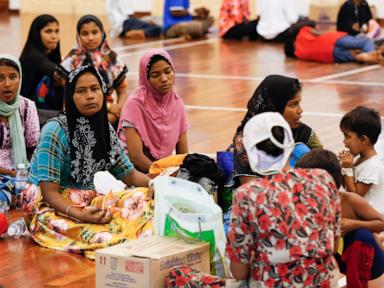
The headlines write themselves with comfortable predictability. Malaysia begins screening five thousand refugees for a planned return to Myanmar, and the mainstream press dutifully nods along, painting the bureaucratic exercise as an orderly step toward humanitarian resolution. Everyone loves a tidy narrative. Governments love closure. Commentators love a procedural milestone.
The entire premise is built on quicksand.
I have spent years watching regional policy analysts applaud paper victories while ignoring the structural gravity on the ground. To assume that a state undergoing active, violent disintegration can safely absorb thousands of returning displaced persons is not optimism; it is willful blindness. We are watching a masterclass in bureaucratic self-soothing, and nobody wants to break the spell.
Let us dismantle the lazy consensus.
The Fiction of Voluntary Repatriation in a Warzone
The standard defense of these screening initiatives rests on a technicality: the return must be voluntary. Bureaucrats will point to signed forms, interviews, and checklists as proof of informed consent.
Imagine a scenario where your home has been reduced to ash, your savings erased, and your legal status in a host country is precarious limbo characterized by daily raids, zero labor rights, and the constant threat of detention. Are you making a free choice when handed a ticket out, or are you succumbing to engineered exhaustion?
True voluntary movement requires a baseline of safety and agency. Neither exists inside Myanmar today. The military junta controls a shrinking fraction of territory while facing a relentless multi-front armed resistance. The economy is a smoking ruin. Inflation has obliterated purchasing power. Healthcare infrastructure has collapsed.
When authorities talk about screening five thousand people for return, they are treating human beings like inventory to be balanced on a spreadsheet. They are ignoring the ground truth: Myanmar is not post-conflict. It is mid-collapse.
The Institutional Blind Spot
Why do international bodies and regional governments keep playing along? Because admitting failure requires rewriting policy, and policy is sticky.
State departments and migration agencies operate on a momentum of their own. They require metrics of success. If a project label says repatriation, then repatriation must happen, regardless of whether the destination resembles a functioning society or a combat zone. I have seen administrations burn millions of dollars on logistical pipelines that lead straight into detention camps or forced conscription zones, all to preserve the illusion of a managed regional order.
Let us define terms accurately. Repatriation is a post-conflict stabilization tool. What is happening in Southeast Asia right now is displacement management disguised as policy completion.
The military junta currently ruling Myanmar has weaponized humanitarian aid and population movement for decades. Returning populations do not walk into a neutral administrative vacuum. They walk into an active surveillance state where returning refugees are routinely eyed with extreme suspicion, suspected of harboring anti-regime sympathies, or viewed as a demographic threat.
The Real Question Nobody is Asking
People ask: How do we process the backlog of refugees efficiently?
The question itself is flawed. It assumes the primary friction is administrative throughput. It treats human displacement like a customs delay at an international airport.
The correct question is: How do host nations build legal frameworks that absorb displaced populations productively instead of treating them as temporary emergencies that can be shipped back into peril?
Malaysia has kept hundreds of thousands of refugees in a legal blind spot for years—denied the right to work legally, vulnerable to exploitation, and perpetually dangling on the edge of deportation. This systemic precarity is what creates the pressure valve. Refugees do not volunteer to return because Myanmar suddenly became hospitable; they volunteer because the alternative in the host country is a slow degradation of human dignity.
By framing repatriation as a humanitarian achievement, host governments mask their own failure to integrate or legally protect vulnerable populations within their borders.
The Mechanics of Failure
Let us look at how these screening operations actually function on the ground.
- The Information Asymmetry: Refugees are given selective briefings about security conditions. Warnings about ongoing airstrikes, forced labor drafts, and arbitrary arrests are systematically minimized to fit the return narrative.
- The Economic Trap: Returning individuals are often handed nominal stipends that vanish within weeks of crossing the border, leaving them destitute in an economy devoid of formal employment.
- The Security Vacuum: Without independent international monitors capable of tracking returnees past the initial transit points, accountability drops to zero once individuals cross the border.
Admitting these downsides ruins the diplomatic script. It is much easier to issue a press release about cooperation agreements and biometric profiling than to admit that sending people back into a civil war is a human rights catastrophe in slow motion.
We are watching a tragedy masked as administration. Every stamped passport and approved checklist in this process is a brick in a wall of denial.
Stop pretending you are fixing a crisis by shuffling desperate people back into the line of fire.