Press releases from Capitol Hill staff follow a predictable script. A senior lawmaker experiences a health scare, disappears from the public eye, and a few days later, a spokesperson issues a statement assuring the public that the senator is "continuing their recovery" and "monitoring events from home."
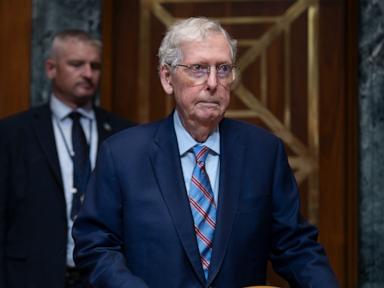
We saw this exact playbook deploy during Senator Mitch McConnell’s recovery periods following public medical episodes. The media dutifully repeats the talking points. Pundits speculate on the timeline for a return to the Senate floor. The public is left with the impression that a modern legislative office grinds to a halt when its principal is on medical leave. For a more detailed analysis into similar topics, we suggest: this related article.
This entire narrative is a fundamental misunderstanding of how power actually operates in Washington.
The media treats a senator's temporary absence as a crisis of governance. In reality, the modern Senate is built to run perfectly well without the senators themselves. The focus on a single politician's physical presence on the floor misses the real engine of legislative power: the institutional staff network and the entrenched party apparatus. For broader information on this topic, extensive coverage can also be found at NPR.
The Mirage of individual Senate Power
The lazy consensus among political commentators is that individual senators are indispensable, hands-on operators whose daily absence leaves a vacuum.
Having analyzed congressional operations and the mechanics of legislative leadership for over a decade, I can tell you that the daily operations of a leadership office are designed for continuity, not dependency. A senator's primary function in the modern era is that of a brand, a vote-caster, and a fundraising figurehead. The policy architecture, the strategic maneuvering, and the administrative execution are handled by an insular group of chief of staffs, committee directors, and senior advisors.
When a press release states a senator is "monitoring events from home," it means the staff is executing pre-determined strategies. The modern political office functions much like a corporate holding company. The CEO might be away, but the executive vice presidents are running the quarterly strategy perfectly fine.
- The Voting Illusion: Senators are needed to cast votes, yes. But in a highly polarized environment, major votes are rarely surprise events. They are scheduled weeks in advance, whipped by leadership teams, and aligned with party objectives.
- The Committee Machine: Committee work is driven by professional staff who spend years mastering specific policy areas. They draft the text, negotiate with opposition staff, and prepare briefings.
- The Leadership Apparatus: For a figure like McConnell, leadership power resides in a network of alliances and PACs that do not vanish because a leader is working remotely.
The preoccupation with physical recovery timelines distracts from a deeper, more uncomfortable truth: Washington has created a system where institutional momentum matters far more than individual vitality.
Dismantling the Premises of Congressional Health Inquiries
When political health scares happen, search engines fill with predictable questions. Let's look at the actual mechanics behind these queries, stripped of the usual public relations spin.
Can a Senate office function effectively during a prolonged recovery?
The premise of this question assumes a standard office dynamic where the boss needs to sign off on every email. A Senate office is a highly decentralized bureaucracy. A senior senator’s office operates on institutional memory. The legislative directors know the policy boundaries; the communications team knows the rhetorical guardrails.
In fact, some offices run with greater discipline when the principal is sidelined, simply because the staff can focus on executing the established long-term strategy without the disruption of daily schedule changes or impromptu media appearances. The machine keeps humming because the machine was designed to survive its operator.
What happens to leadership positions when a senator is incapacitated?
The short answer is: nothing changes until the political pain becomes unbearable for the party.
Political power is rarely surrendered voluntarily, and party conferences are loath to initiate messy leadership battles mid-session. Behind the scenes, deputy whips and trusted allies absorb the operational burden. The illusion of active leadership is maintained through coordinated statements and surrogate appearances. The system protects its own stability by pretending everything is normal until a formal transition is absolutely unavoidable.
The Cost of the Continuity Obsession
This institutional resilience is not without its downsides. While it ensures stability, it creates a dangerous accountability deficit.
When an office runs on autopilot, the democratic link between the voter and the elected official stretches thin. Staff members, who are entirely unelected and largely unaccountable to the public, wield immense influence over policy decisions, statement wording, and backroom negotiations. They operate in the name of a senator who may only be receiving high-level briefings once a day.
Imagine a scenario where major regulatory shifts or judicial confirmations are managed by thirty-something staffers operating on inherited instructions, while the public is fed a steady diet of optimistic health updates. This is not a hypothetical risk; it is the standard operating procedure for any office managing a long-term recovery.
The real debate shouldn't be about whether a senator is fit enough to walk down the hallway of the Russell Senate Office Building. The debate should be about the concentration of unelected staff power that occurs when we pretend a senator's physical presence is the only metric of a functioning office.
Stop Reading the Press Releases
If you want to understand the trajectory of legislative power during a high-profile recovery, stop looking at the official medical updates. They are crafted to project strength and prevent primary challenges or leadership coups.
Instead, look at the movement of committee staff. Watch the filing of amendments. Track the fundraising totals of the senator's leadership PAC. If the money keeps flowing and the amendments keep appearing, the power remains intact, regardless of whether the senator is sitting in a Capitol office or a recovery room.
The political class wants you to believe that our system relies on the unique genius and constant presence of a few dozen individuals. It doesn't. It relies on a sprawling, permanent apparatus that operates seamlessly in the shadows of those individuals.
The next time a spokesperson says a lawmaker is recovering well and staying briefed, understand it for what it is: an admission that the occupant of the office is optional, but the machine is permanent.