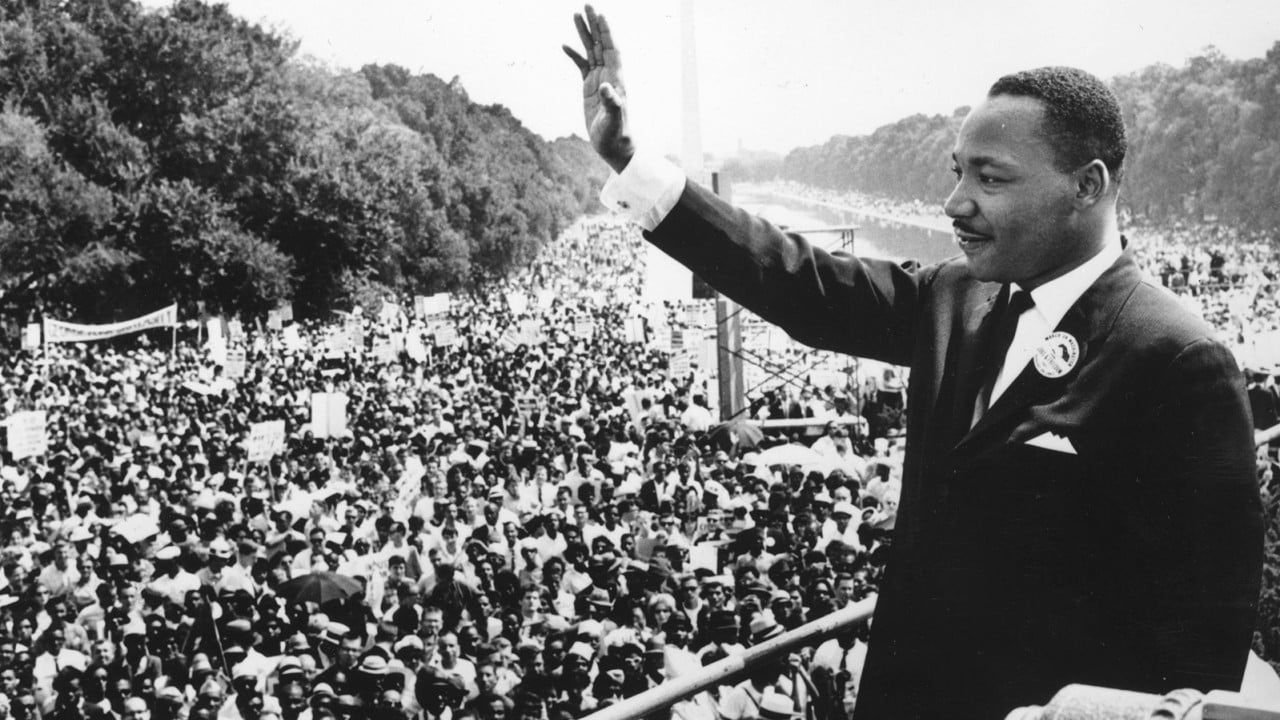
Every time a piece of Civil Rights history hits the auction block, the exact same outrage machine grinds to life. Pundits clutch their pearls. Academics pen solemn op-eds about the commodification of sacred memory. And reporters file the same predictable copy: a handwritten draft of Martin Luther King Jr.’s "I Have a Dream" speech is heading to auction, and isn't it tragic that our moral heritage is being sold to the highest bidder?
Stop falling for the lazy consensus.
The outrage surrounding the private sale of historical artifacts isn't rooted in a genuine desire to protect history. It is rooted in a fundamental misunderstanding of how preservation, capital, and public access actually work in the real world. When a handwritten draft of a foundational American text goes to auction, the worst thing that can happen isn't a billionaire buying it. The worst thing that can happen is pretending that moral sentiment alone pays for climate-controlled vaults, deacidification treatments, and public exhibitions.
The Myth of the Sacred Archive
Let’s dismantle the primary premise of the standard media coverage. The unspoken assumption in every "speech heads to auction" headline is that historical documents belong in public institutions by default, and that private auctions are vultures circling a corpse.
That is a fantasy.
Public institutions—museums, state archives, university libraries—are chronically underfunded, notoriously slow, and drowning in backlogs. I have watched priceless 20th-century manuscripts rot in uncatalogued basement boxes at major state universities because the institution had the prestige to accept a donation, but zero budget to conserve or digitize it. Acquiring a document is easy. Keeping cellulose paper from turning into acidic dust over a century costs serious money.
When an artifact enters the high-end auction market, two things happen immediately that rarely happen in a mid-tier public archive:
- Instant Valuation and Care: Nobody spends seven figures on a piece of paper and leaves it in a damp basement. High-net-worth collectors and institutional buyers who operate at the top of the auction market employ world-class paper conservators. They invest in UV-filtering museum glass, strict humidity controls, and archival framing. Financial value creates an immediate, ruthless incentive for physical preservation.
- Global Digitization: Auction houses like Sotheby’s, Christie’s, and Heritage Auctions do more for immediate public access than most regional museums. Before a major document ever crosses the block, the auction house produces ultra-high-resolution scans, hires leading historians to write exhaustive provenance essays, and blasts the contents across the internet for free. Millions of people read the text and examine the handwritten edits online before the gavel even falls.
What People Actually Get Wrong About Ownership
If you look at the standard "People Also Ask" queries whenever an MLK artifact surfaces, the questions are always framed around ethics: Should it be legal to sell MLK's speeches? Why doesn't the government just seize or buy it? Doesn't private ownership lock history away from the public?
These questions are asking the wrong thing entirely. They confuse title with access.
In the modern rare-manuscript market, owning the physical title to a major historical document rarely means locking it in a secret lair never to be seen again. Why? Because prestige is the primary currency of the ultra-wealthy collector. You do not buy a draft of "I Have a Dream" to hide it in a safe. You buy it to lend it to the Smithsonian, the National Center for Civil and Human Rights, or a major touring exhibition—with a nice brass plaque crediting your family foundation on the wall next to it.
Furthermore, look at the legal reality of copyright versus physical ownership. Buying a handwritten draft of a speech gives the buyer the ink and the paper. It does not give them the intellectual property. The Estate of Martin Luther King Jr. aggressively guards the copyright to his words. A private buyer cannot print the speech on t-shirts, license it for a movie, or monetize the text. They are literally paying millions of dollars for the privilege of acting as an unpaid, heavily insured custodian of physical paper.
The Uncomfortable Truth About Provenance and Family Estates
The mainstream narrative treats the auction block as an enemy of the Civil Rights legacy. Yet history shows that the people most frequently bringing these items to market—or fighting over their valuation—are the families, former aides, and estates directly connected to the movement.
Look at the actual track record. Over the past two decades, the most high-profile battles over King’s papers—including the famous 2006 collection of roughly 10,000 items that nearly went to auction at Sotheby's before a last-minute $32 million deal brought them to Morehouse College—were driven by the King family’s own financial and estate planning decisions. In other instances, surviving speechwriters, secretaries, and organizers who held onto working drafts for fifty years have sold them to fund their retirements or support their own charitable foundations.
To scold the market for putting a price tag on these drafts is to scold the very people who sacrificed everything for the movement when they finally cash in the only equity they were left with.
Imagine a scenario where a retired movement organizer holds an annotated typescript from August 1963. They have medical bills, grandkids to put through college, and a modest pension. A local museum offers them a handshake and a tax deduction they can't even use because their income is too low. An auction house offers them a transparent, competitive bidding process that turns that piece of paper into generational wealth for their family, while simultaneously placing the document into the hands of an institution or a donor who will lend it to a national museum.
Which outcome actually honors the spirit of economic justice?
How the High-End Manuscript Market Actually Works
To understand why the auction model works better than passive donation, you have to look at the mechanics of price discovery.
When a document is donated quietly, its cultural value remains abstract. When a draft of a historic speech enters an open auction, the market assigns a hard, undeniable number to its historical weight. That number makes front-page news. It forces a global conversation about the text, the edits, the drafting process, and the history behind it.
Consider what happens when a working draft—not the final reading copy, which is famously held by Villanova University, or the archived versions at Morehouse—surfaces on the market. Scholars get to see the architecture of persuasion in real time. They see which metaphors were cut, which rhythmic repetitions were added in the margins, and how King and his advisors—figures like Clarence Jones and Stanley Levison—calibrated the rhetoric for maximum political impact.
Auction catalogs often represent the most rigorous, fast-tracked scholarship available on a newly surfaced artifact. Because the auction house’s commission depends directly on proving authenticity and historical significance, they hire top-tier historians and forensic document examiners to verify every watermark, typewriter font, and ink stroke. They do in six weeks what an understaffed academic journal takes three years to publish.
The Real Risks Nobody Talks About
Taking a contrarian stance doesn't mean pretending the private market is flawless. If we are going to be honest about how this industry operates, we have to admit the genuine downsides of auctioning foundational history:
- Fragmentation of Archives: The biggest threat to historical scholarship isn't high prices; it's scattering. When a single archive is broken up and sold lot-by-lot to different buyers around the globe, historians lose the ability to study documents in their original context. A single speech draft sold on its own is fine; a box of correspondence chopped into fifty separate lots is a tragedy.
- The Ego Tax: Private collectors are human. Sometimes a billionaire buys a major artifact, promises to lend it to a museum, and then gets bogged down in divorce proceedings, tax audits, or estate litigation. During those years, the document can sit frozen in a bank vault, completely inaccessible to researchers.
- Market Speculation: Treating Civil Rights artifacts purely as an alternative asset class—like fine wine or blue-chip contemporary art—can inflate prices to a point where public institutions are completely priced out, forced to rely entirely on the whims of wealthy donors to buy items on their behalf.
Stop Whining and Fix the Acquisition Model
If critics are genuinely upset about private collectors buying up American history, the solution isn't to shame auction houses or demand unconstitutional bans on private sales. Banning legal sales simply drives the market underground, where documents disappear into private hands with zero public record, zero digitization, and zero provenance tracking.
The solution is to out-compete the private buyers.
If a museum, university, or municipal government wants a draft of "I Have a Dream," they need to stop acting like passive charities waiting for handouts and start operating like serious capital allocators.
- Build Rapid-Response Acquisition Funds: Public institutions lose at auction because their boards take six months to approve a purchase that an auction house executes in six weeks. Museums need pre-approved, liquid endowment funds dedicated exclusively to bidding on major historical artifacts in real time.
- Form Institutional Consortiums: Instead of three universities bidding against each other and driving up the price, institutions should pool their capital, win the lot together, and rotate physical custody of the document every two years.
- Incentivize Fractional Giving: Tax laws should be modernized to reward private buyers who purchase major artifacts at auction and immediately sign binding, multi-decade loan agreements with accredited public institutions.
History isn't preserved by good intentions, angry tweets, or nostalgic headlines. It is preserved by money, climate control, and institutional willpower. If you don't want billionaires owning the rough drafts of the American dream, stop lecturing the auctioneers and start writing bigger checks.