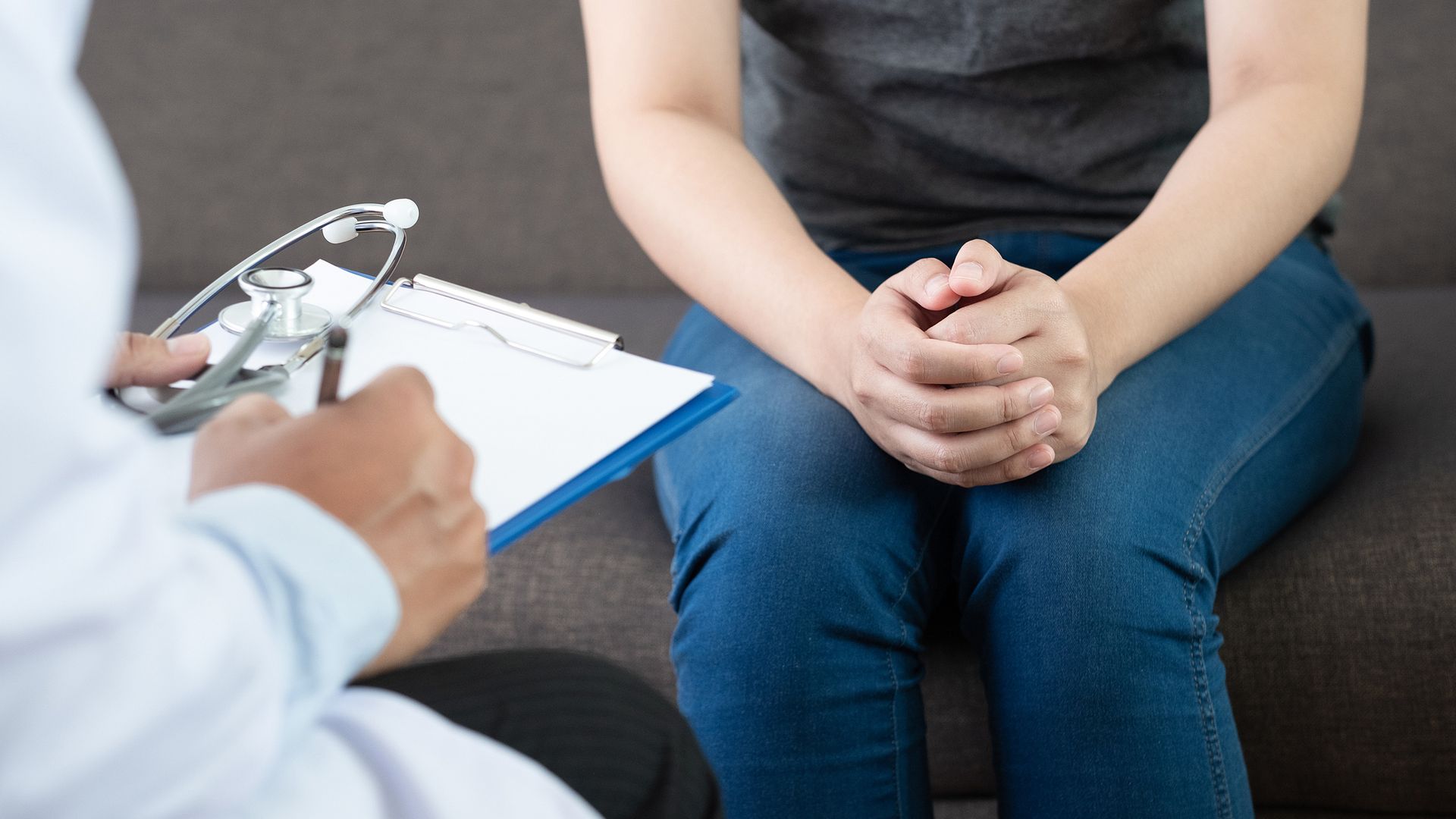
The promise sounds empowering. A startup hands you a discreet DIY kit. If the worst happens, you bypass a broken criminal justice system, take your own forensic samples in the privacy of your bathroom, and hold onto the evidence until you feel ready.
It feels like taking back control. But it is a lie. In related news, we also covered: Thermal Stress Pathology The Hidden Mechanics of Heat Driven Morbidity.
The UK’s advertising watchdog, the Advertising Standards Authority (ASA), has officially pulled back the curtain on this industry. In a damning ruling against the prominent anti-rape startup Enough, the watchdog confirmed what forensic experts and legal professionals have warned about for years. The company misled the public. They exaggerated claims. They sold an illusion of legal security to vulnerable people at their lowest moments.
When you look past the slick marketing and the pseudo-feminist branding, you find a reality that doesn't just fail survivors—it actively compromises their chances of seeing justice. WebMD has also covered this fascinating issue in extensive detail.
The Advertising Standards Authority Slams the Brakes
The ASA didn't hold back. Following a complaint by Martin Narey, the former head of the prison and probation service, the watchdog upheld multiple violations against Enough. The company breached strict codes regarding misleading advertising, substantiation, and outright exaggeration.
Enough built its entire brand on the premise that these self-swab kits could stand up in a court of law. Their website and social media channels heavily implied that if you followed the instructions, your self-collected DNA evidence would be legally admissible.
The ASA found zero evidence to back that up.
To make matters worse, the watchdog revealed that the startup cooked the books on statistics to heighten public fear. They blasted claims that 430,000 people were raped in the UK in 2024, and packaged a terrifying slogan: "A woman is twice as likely to be raped as diagnosed with cancer."
Neither claim was substantiated. Both were banned.
Shadow safeguarding minister Alicia Kearns MP didn't mince words about the ruling, stating that these kits are not empowerment but exploitation dressed up as empathy. She is right. The commercialization of trauma relies on making people feel like the state has completely abandoned them, and that a commercial product is the only savior left.
Why the Legal System Rejects DIY Forensics
Let's look at how criminal trials actually work. If a defense barrister gets hold of a case relying on a self-swab kit, they will tear it to shreds in minutes. It is a legal goldmine for a perpetrator's legal team.
Forensic evidence relies on an unyielding concept called the chain of custody. Every single hand that touches a piece of evidence from the moment it leaves a human body until it enters a lab must be logged, verified, and completely impartial.
When you introduce an unregulated home kit into the mix, that chain is broken before it even starts. Consider the immediate legal hurdles:
- Contamination risks: A bathroom is not a sterile forensic environment. Fibers, external DNA, and household bacteria easily compromise a sample.
- Procedural challenges: Under standard Criminal Practice Directions, the defense can argue the evidence is fundamentally flawed because the technique wasn't applied by an accredited professional.
- No verification: There is no independent third party to verify exactly when, where, or from whom the sample was taken.
Even AlphaBiolabs, the actual laboratory used by Enough to process these samples, openly admits on its own website that "peace of mind" tests are not legally admissible in court. Why? Because they lack independent collection. If the lab processing the kits tells you they won't hold up in court, believe them.
The Dangerous Myth of the Silver Bullet DNA
The marketing behind self-swabbing relies on a massive misconception: that DNA is the magic key to winning a rape trial.
It isn't. In the vast majority of sexual assault cases, the presence of DNA is not the issue. The defense rarely argues that sexual contact didn't happen. Instead, the entire trial hinges on the issue of consent.
A self-swab kit tells a court that DNA exists. It says absolutely nothing about consent.
By focusing entirely on capturing genetic material, these startups ignore the actual mechanics of sexual assault prosecution. If a survivor uses a home kit, gets a lab report confirming male DNA, and feels validated, they might think they have a slam-tunk case. They don't. And finding out that reality months later during a police interview causes immense re-traumatisation.
What happens if the kit comes back negative? Forensic science is finicky. It is incredibly common for semen or DNA not to be recovered after an assault, even when an assault absolutely occurred. When a trained professional performs an exam, they understand this. But a survivor looking at a negative result from a DIY kit might mistakenly believe they lack the proof to be believed. It breeds silence and shame.
What You Lose When You Skip a SARC
The push toward home kits doesn't just jeopardize legal cases; it strips away vital medical care.
In the UK, Sexual Assault Referral Centres (SARCs) are free, confidential, and completely separate from the police. You can walk into a SARC, get a full forensic exam, and choose to do absolutely nothing with the evidence. They will store it securely for years while you decide your next steps.
But a SARC is about far more than just a cotton swab. When someone bypasses these centers for a mail-order kit, they miss out on urgent healthcare that a commercial startup simply cannot provide:
- Emergency contraception: Crucial window-dependent care to prevent unwanted pregnancy.
- PEP (Post-Exposure Prophylaxis): Vital medication that can prevent HIV infection if taken within 72 hours of exposure.
- Hepatitis B immunisation and STI testing: Long-term health protections that require medical follow-up.
- Trauma-informed psychological support: Immediate crisis counseling from specialists who understand the acute phases of trauma.
Dr. Alex J Gorton, president of the Faculty for Forensic and Legal Medicine, summarized the danger perfectly by noting that self-swabbing is not the answer because victims deserve access to holistic, trauma-informed care. A plastic tube in the mail cannot replace a medical team.
Real Victims and Broken Promises
This isn't a theoretical debate about legal definitions. Unregulated kits are already leaving a trail of broken trust.
An investigation by openDemocracy exposed the story of a survivor, anonymized as Maria, who used an Enough kit distributed at a local pub. To her, that kit was the only physical proof that her trauma was real. When she tried to track it, she discovered the laboratory never even received her sample. It was lost.
The company's response? An apology text from the co-founder. Because their terms and conditions explicitly absolved the business of all social, emotional, or legal consequences, Maria was left completely powerless, holding a broken promise.
Other organizations within the sexual violence sector have flagged even more harrowing incidents, including a survivor's kit vanishing entirely in the postal system and a case involving an assaulted child being dropped completely due to the legal mess created by a self-swab device.
When private companies treat forensic evidence like a direct-to-consumer health test, these are the consequences.
Navigating the Aftermath Safely
If you or someone you know has experienced sexual assault, do not rely on commercial kits found in bars, university campuses, or online storefronts. The risks to your health and your legal rights are too high.
Take these steps instead to protect your wellbeing and keep your options open:
- Contact a SARC immediately: Find your nearest center through the NHS or dedicated support sites. You do not need to involve the police to receive care, testing, or forensic storage.
- Preserve physical evidence naturally: If you think you might want to report the assault later, try to avoid washing, brushing your teeth, or changing clothes. Store the clothing worn during the incident in a clean paper bag, not plastic.
- Reach out to accredited lifelines: Contact Rape Crisis England & Wales or national support lines. They offer free, 24/7 confidential support completely independent of the justice system.
The desire to take control of your own body and your own evidence is completely understandable. But true power comes from using systems designed to protect you, not startups designed to profit from your worst day.


