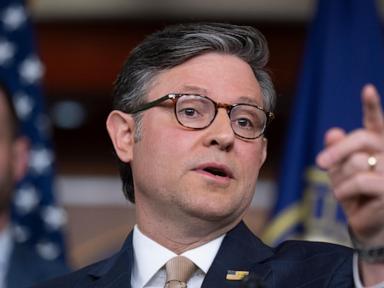
House Republicans are currently maneuvering to reauthorize Section 702 of the Foreign Intelligence Surveillance Act (FISA), a controversial tool that allows US intelligence agencies to intercept electronic communications of non-citizens abroad without a warrant. While the program is framed as a vital shield against terrorism and cyberattacks, it frequently "incidentally" collects the private data of millions of Americans. This legislative push isn't just a routine renewal; it is a high-stakes gamble over the fourth amendment in a world where data is the most valuable currency of the state.
The struggle inside the Capitol reveals a deep fracture within the GOP. On one side, the national security hawks argue that blinding the intelligence community would be a catastrophic mistake. On the other, a growing coalition of civil liberties advocates and populist conservatives demands a warrant requirement before the FBI can search the "702" database for information on US citizens. This isn't a theoretical debate. It is a fight over who owns your digital footprint.
The Architecture of Mass Collection
Section 702 was born from the ashes of the September 11 attacks, designed to close a gap that prevented the government from quickly tracking foreign targets using US-based infrastructure like Google, Yahoo, or AT&T. It works through two primary methods: PRISM and Upstream.
PRISM is the most direct route. The government sends a directive to a service provider for specific "selectors," such as email addresses or phone numbers. The company is then legally compelled to hand over communications sent to or from those selectors. Upstream is more invasive. It involves tapping into the actual fiber-optic backbone of the internet—the physical cables that move data across the globe. This allows the National Security Agency (NSA) to scan traffic as it flows through the pipes.
The problem lies in the "incidental" collection. If a foreign target emails a person in Ohio, that American's data is now sitting in a government server. Once that data is stored, the FBI has historically used a "backdoor" to search through those millions of files using the names or social security numbers of Americans, all without ever stepping foot in front of a judge to prove probable cause.
The FBI Record of Misuse
Trust is the primary casualty in this legislative battle. The FBI has a documented history of abusing its access to the 702 database. Declassified reports from the Foreign Intelligence Surveillance Court (FISC) have revealed hundreds of thousands of non-compliant searches.
Agents have queried the database for information on Black Lives Matter protesters, individuals involved in the January 6 Capitol riot, and even donors to a congressional campaign. In one instance, an agent searched for a local political party. These weren't mistakes born of technical glitches; they were systematic failures of oversight.
The Department of Justice claims it has implemented new internal "cleaning" procedures that have reduced the number of errors by over 90 percent. They point to these statistics as proof that the system can be self-regulated. However, skeptics argue that internal policy is no substitute for constitutional law. A policy can be changed by a memo; a warrant requirement is a permanent check on power.
The Surveillance Industry Complex
Behind the political rhetoric is a massive infrastructure of private contractors and tech giants who facilitate this data flow. The relationship between Silicon Valley and the intelligence community is complicated. Publicly, tech companies fight for transparency to maintain user trust. Privately, they are legally obligated to build the very "backdoors" that critics despise.
This creates a massive "gray market" for data. Even if Section 702 were to expire, the government could—and often does—simply buy the same information from data brokers. Most Americans don't realize that the apps on their phones are constantly harvesting location data, browsing habits, and contact lists. This information is packaged and sold on the open market. When the FBI can't get a warrant for 702 data, they can sometimes just open the government checkbook and buy the metadata from a private company.
This legal loophole makes the current fight in Congress feel, to some, like a performance. If the goal is truly to protect American privacy, the legislation must address not only FISA but also the commercial sale of personal data to federal agencies.
The Hawk Perspective and the Cost of Blindness
To understand why the House leadership is pushing so hard for renewal, one must look at the threats that never make the headlines. The intelligence community argues that 702 provides the majority of the President’s Daily Briefing. It has been used to identify the perpetrators of major ransomware attacks on US infrastructure, track the precursors of fentanyl entering the country, and monitor the movements of foreign adversaries like China and Russia.
The argument is one of speed. In the digital world, a lead can go cold in minutes. Hawks argue that requiring a warrant for every search of the database would create a bureaucratic logjam that would essentially neuter the program. They contend that the "incidental" collection is an unavoidable byproduct of how the internet functions. You cannot isolate a foreign thread without seeing the tapestry it is woven into.
The Warrant Requirement Deadlock
The central point of contention is the "warrant requirement" amendment. This would force the FBI to obtain a traditional warrant before searching the 702 database for an American's information.
The Biden administration and high-ranking members of the House Intelligence Committee have threatened that such a requirement would be a "poison pill." They have hinted at a presidential veto if the bill includes a strict warrant mandate. This puts House Speaker Mike Johnson in a precarious position. He must balance the demands of the "Freedom Caucus," who are increasingly suspicious of the "Deep State," against the traditional wing of the party that views national security as the highest priority.
This friction has led to several failed attempts to bring the bill to the floor. Each time, the vote is pulled because the leadership cannot guarantee they have the numbers to defeat the privacy amendments.
The Global Implications of US Surveillance
This isn't just an American issue. The way the US handles Section 702 has massive implications for international trade and data privacy agreements, particularly with the European Union. The EU has strict privacy protections under the General Data Protection Regulation (GDPR). Previous "Privacy Shield" agreements between the US and the EU have been struck down by European courts specifically because of the broad surveillance powers granted by Section 702.
If the US renews 702 without significant privacy reforms, it risks another legal battle with Europe that could disrupt billions of dollars in cross-border data flows. US tech companies are caught in the middle, trying to comply with US surveillance laws while also meeting European privacy standards.
The Myth of Minimal Impact
A common refrain among supporters of the bill is that "law-abiding citizens have nothing to fear." This is a fundamental misunderstanding of how surveillance changes the behavior of a society. When people know their communications could be swept up into a government database, it creates a "chilling effect" on free speech and association.
The "nothing to hide" argument ignores the fact that privacy isn't about hiding wrong-doing; it's about the right to control your own identity. The 702 database isn't just a list of criminals; it is a digital warehouse of human interaction. The potential for future misuse, perhaps by a more authoritarian-leaning administration of any party, is the real long-term danger.
The Path to a Compromise
There are several "middle ground" proposals currently circulating in the halls of Congress. One suggests a warrant requirement only for "content" searches, while allowing "metadata" searches (who you called and for how long) to continue without a warrant. Another proposal would require a warrant only when the FBI is conducting a search related to a domestic criminal investigation, but not for foreign counter-intelligence purposes.
These compromises rarely satisfy either side. Privacy advocates point out that metadata can be just as revealing as content. If the government knows you called a divorce lawyer, a debt collector, and a suicide hotline in the same afternoon, they don't need to read your emails to understand your life.
The struggle over Section 702 is a symptom of a larger problem: our laws are written for a physical world, but we live in a digital one. The Fourth Amendment was written when "seizure" meant a soldier walking into your home and taking your physical papers. Today, a "seizure" happens in a server farm in Virginia, and you never even know your "papers" are gone.
The Looming Deadline
The current authorization for Section 702 is set to expire shortly, and the pressure to act is mounting. If Congress fails to reach a deal, the program could go dark, or the government could attempt to keep it running through a secretive interpretation of existing law—a move that would trigger an immediate constitutional crisis.
The most likely outcome is a short-term extension, kicking the proverbial can down the road once again. This avoids a definitive stance but leaves the core issues unresolved. It allows the surveillance state to continue its work while leaving the privacy rights of Americans in a state of permanent legal limbo.
The reality of 21st-century governance is that the line between "foreign" and "domestic" has been permanently blurred by the internet. Every time you send an email, post on social media, or use a cloud-based app, your data crosses borders. Under the current interpretation of Section 702, that makes you a perpetual "incidental" target.
The fight on the House floor this week isn't just about catching terrorists. It is a referendum on whether the US government should be allowed to maintain a permanent, searchable record of its citizens' digital lives. As the bill moves toward a final vote, the question isn't whether the program is effective, but whether the cost to the American constitution is a price the public is willing to pay.
The FBI has already proven they cannot be trusted to police themselves. The only remaining question is whether Congress has the courage to do it for them.
The vote is imminent. The consequences are permanent.