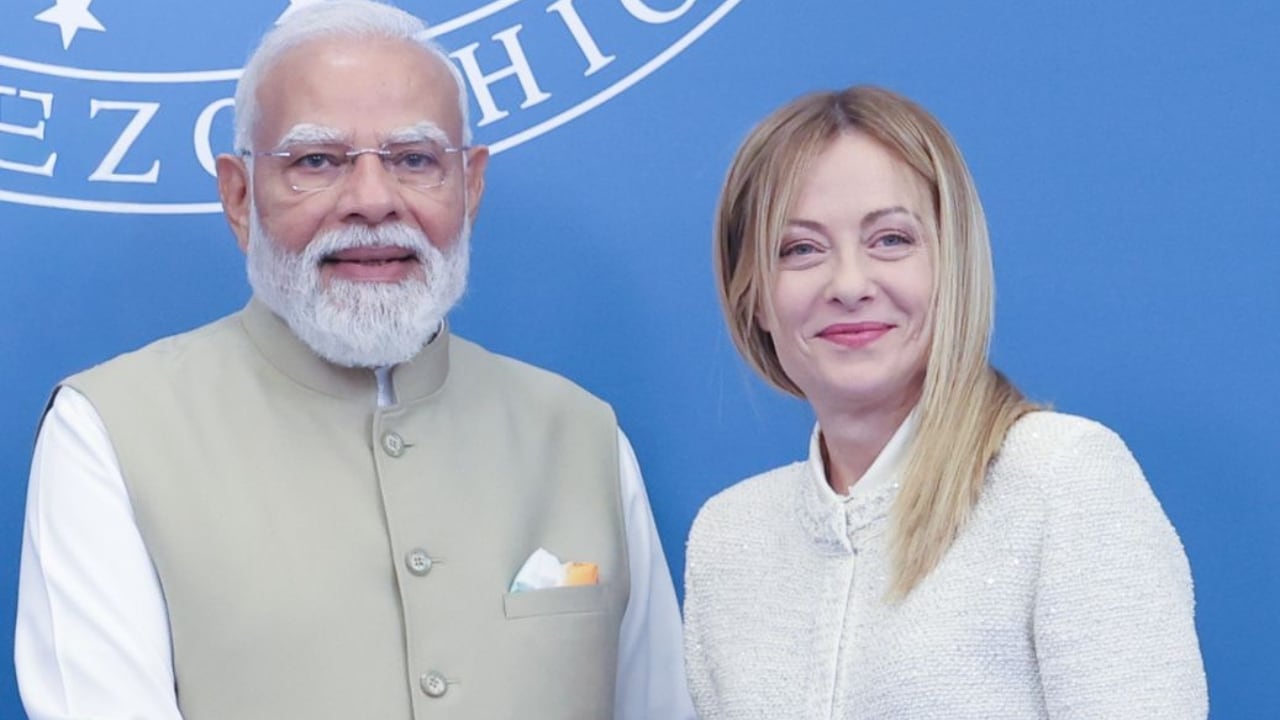
Italian Prime Minister Giorgia Meloni crossed a historical threshold by reaching 1,413 consecutive days in office, overtaking Silvio Berlusconi's second administration to become the longest continuously serving postwar prime minister in the history of the Italian Republic. Across the globe, foreign leaders rushed to offer praise. Indian Prime Minister Narendra Modi took to social media to congratulate his Italian counterpart, stating that the milestone stood as a direct reflection of public trust and confidence. Modi also pointed to their shared diplomatic alignment, emphasizing how Meloni's tenure has anchored the bilateral partnership between New Delhi and Rome. Yet behind the international plaudits and the celebratory speeches scheduled in Bari, a more granular analytical question remains. How did a politician originating from a fringe nationalist movement manage to outlast sixty-seven preceding governments in eighty years? The answer requires stripping away the diplomatic pleasantries to examine the mechanics of institutional survival in modern Southern Europe.
The Architecture of Political Longevity
Surviving in Italian politics requires a specialized survival instinct. Administrations typically collapse under the weight of internal coalition squabbles, economic stagnation, or sudden withdrawals of parliamentary support. Meloni bypassed these historical tripwires through calculated pragmatism. When her Brothers of Italy party took power in October 2022, European capitals and financial markets braced for radical confrontation. They expected fiscal brinkmanship and open warfare with Brussels. Instead, Meloni adopted a remarkably orthodox economic stance, reassuring creditors and maintaining strict compliance with European Union fiscal guidelines.
This pivot from populist firebrand to institutional stateswoman neutralized her domestic opposition and neutralized foreign skepticism. By keeping her coalition partners—namely Matteo Salvini's League and Silvio Berlusconi's Forza Italia—on a relatively short leash through steady poll numbers, she denied them the political oxygen required to trigger a government crisis. Longevity in Rome is rarely about grand ideological transformations. It is about denying ambitious junior partners a viable excuse to pull the plug.
International diplomacy played an equally critical role in domestic stabilization. By positioning herself as a reliable, Atlanticist partner on the Ukraine conflict and illegal immigration, Meloni secured tacit backing from Washington and major European powers. This external validation translated into internal armor. When foreign leaders like Narendra Modi publicly celebrate the Special Strategic Partnership between India and Italy, or when European Commission officials praise Rome's fiscal discipline, domestic critics find it significantly harder to paint the administration as an international pariah. External prestige functions as domestic insurance.
The Divergence Between Foreign Triumph and Domestic Reality
While international observers focus on the historic nature of her tenure, the view from the ground inside Italy reveals a more fractured picture. Economic indicators tell a sobering story of structural sluggishness. Inflationary pressures, persistent wage stagnation, and a stubbornly low employment rate among youth and women continue to strain working-class households. Critics argue that survival has taken precedence over reform. The administration has mastered the art of staying in power while deferring the painful structural overhauls required to jumpstart the broader Italian economy.
Take the hypothetical scenario of a mid-sized manufacturing firm operating in northern Italy. Despite national leaders boasting about macroeconomic stability and foreign trade pacts, everyday operational costs—particularly energy prices and bureaucratic red tape—remain punishingly high. For business owners navigating these conditions, a longevity record offers little immediate relief. Meloni herself acknowledged this tension, noting in public statements that her mandate was never intended to be treated as a blank check. The upcoming electoral cycles will test whether public patience can be sustained on the currency of geopolitical credibility alone, or if voters will demand tangible economic dividends.
Furthermore, the concentration of power within a tight-knit circle of loyalists has raised concerns among institutional watchdogs. Political stability in Italy has historically been preserved either through broad, unwieldy coalitions that water down policy, or through technocratic caretaker governments appointed during crises. Meloni represents something entirely different: a tightly controlled, ideologically cohesive right-wing executive that commands a stable parliamentary majority. This concentration allows for decisiveness, but it also minimizes internal dissent and marginalizes parliamentary debate.
The Road Ahead for Roman Politics
Reaching the 1,413-day mark removes a psychological barrier, but it does not alter the underlying arithmetic of Italian demographics and economic pressure. The Prime Minister has made clear that her ultimate target is completing a full five-year legislative term—a feat that has eluded every single predecessor in the history of the republic. Achieving this will require navigating upcoming budget negotiations without alienating the coalition partners who still harbor independent ambitions.
The celebrations in Bari mark an undeniable personal and political triumph for a leader who spent decades on the political margins. Yet the true measure of her tenure will not be found in the number of consecutive days survived on the Palazzo Chigi calendar. It will be determined by whether this rare window of political stability was squandered on mere survival, or used to fundamentally alter Italy's economic trajectory before the next reckoning at the ballot box.