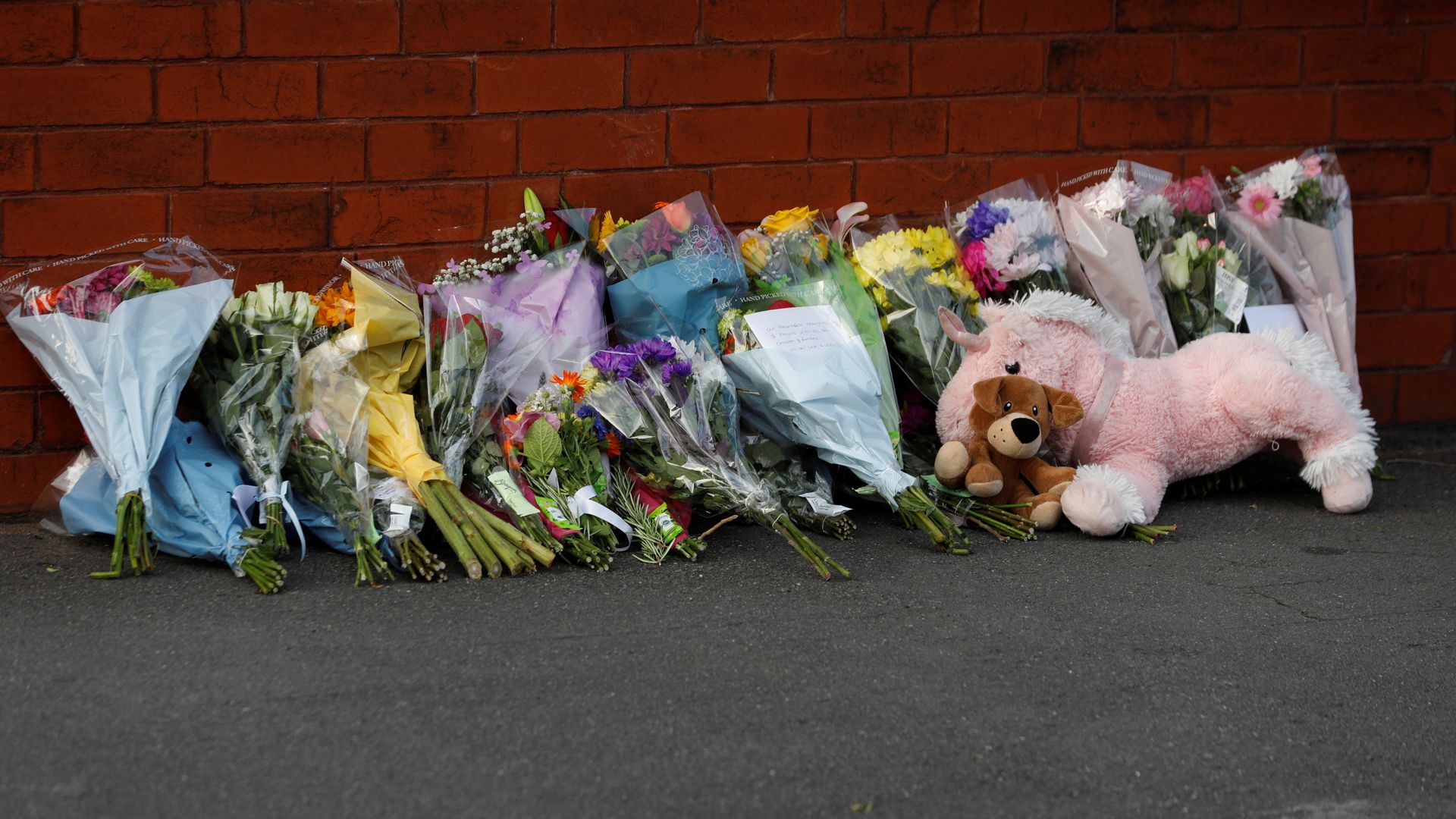
The human body is remarkably resilient. It heals. Stitched skin knits itself back together, torn muscle fibers fuse, and the mind, bruised and battered by horrors most people only witness in nightmares, slowly begins the agonizing process of rebuilding a sense of safety.
But what happens when the place that saved your life becomes the place that strips away your dignity?
Consider Leanne Lucas. In July 2024, she was a dance instructor who stood as a human shield between an armed attacker and a room full of terrified young girls during a Taylor Swift-themed workshop in Southport. She took the blade meant for them. She bled. She survived. Taken to a hospital within the University Hospitals of Liverpool Group, she was pieced back together by brilliant, tireless surgeons. Her gratitude to those medical teams was, and remains, boundless.
Then the silence began.
While she was at home trying to learn how to breathe again, how to exist in a world that had suddenly become so violent, a different kind of invasion was happening on a glowing computer screen miles away.
The Digital Voyeurs
Medical records are not mere text. They are a vulnerability map. They detail the exact trajectory of a blade, the psychological trauma assessments, the private family contacts, the visceral, documented reality of an unspeakable tragedy. They are meant to be a sacred conversation between a patient and the small team keeping them alive.
But within days of the Southport attack, an internal digital audit at the Liverpool hospital trust flagged something unusual. A spike in traffic. Sixty-four times, someone clicked on the digital files of the Southport victims.
Twelve of those clicks belonged to doctors and nurses actively trying to save lives.
The other forty-eight? Pure curiosity. Voyeurism clad in scrubs.
Nearly fifty different hospital employees, people who had absolutely no role in the care, treatment, or recovery of those traumatized children and adults, logged into the system. They typed in the names. They scrolled. They read. They satiated a dark, personal inquisitiveness on the digital remains of a national tragedy.
It was not a technical glitch. It was an intentional choice.
When we talk about data protection, we often think of shadowy hackers in Eastern Europe or complex ransomware attacks shutting down mainframes. We envision cold, mechanical failures. But the greatest threat to human privacy is often much more mundane: human nature without a conscience.
The Arrogance of Protection
If the initial breach was a betrayal by the frontline staff, what followed was a systemic betrayal by the institution itself.
The hospital board discovered the rogue access almost immediately in August 2024. They notified the Information Commissioner’s Office. They knew exactly who did it. They handed out internal disciplinary actions—written warnings, informal counseling. Not a single person was sacked.
Then, senior leadership made a decision that defies the very concept of patient autonomy.
Initially, the board planned to tell Leanne Lucas and the families of the injured children that their private lives had been turned into office gossip. But sometime in 2025, the directors changed their minds. They looked at the paperwork, looked at the victims, and decided that withholding the truth was a form of therapy. They argued that telling these broken families about the privacy breach would "retraumatize" them.
It is a familiar, patronizing corporate reflex. It is the arrogance of institutional self-preservation disguised as clinical compassion.
For nearly two years, the trust kept the secret. They decided that it was better for a survivor to live in a curated illusion of security than to know the messy, infuriating truth. The silence lasted until journalists began asking pointed questions. Only then, under the threat of public exposure, did the trust finally send the letters.
"The decision to keep this from me for almost two years is a new low," Leanne Lucas said, waiving her anonymity to expose the scandal. "I am absolutely devastated and horrified that my privacy has been invaded when I was at my most vulnerable."
A Contagion of Curiosity
To understand the weight of this, one must realize that this is not an isolated incident of "a few bad apples." It is a recurring cultural sickness within the modern, digitized healthcare system.
Just a year prior, a near-identical horror unfolded at the Nottingham University Hospitals Trust. After Valdo Calocane took the lives of three people in a horrific spree, staff members there couldn't resist the urge to peek. They logged in to view the medical records of the victims, treating a profound human catastrophe like a true-crime documentary available for early streaming. The families of those victims described the actions as sickening.
They were right.
The digitalization of medicine was supposed to revolutionize care. It allowed a specialist in London to instantly see an X-ray taken in Liverpool. It streamlined prescriptions, ended the era of lost paper files, and saved countless lives through sheer efficiency.
But it also created a terrifyingly flat architecture of information. A login credential that grants a nurse the right to see a patient on Ward A often gives them the technical ability to search for a high-profile patient in ICU. The physical locked cabinet, requiring a physical key and a physical presence, has been replaced by a search bar. And the temptation of the search bar, it seems, is too much for dozens of medical professionals to bear.
We have built systems that track everything but enforce nothing until after the damage is done. An audit that catches a predator after they have already devoured the data is not a shield. It is merely a digital autopsy.
The True Cost of Silence
Trust is a fragile, non-renewable resource. When a person is rushed into an emergency room, they surrender everything. They surrender their clothes, their consciousness, their bodily autonomy, and their deepest secrets to complete strangers. They do so because they believe in the oath.
When forty-eight members of that same institution violate that surrender, the injury isn't physical, but it cuts just as deep. It tells the survivor that even in the sanctuary of a hospital bed, they are a public commodity. They are entertainment.
The University Hospitals of Liverpool Group has since issued an apology. They noted that breaches of patient confidentiality are "inexcusable" and point to a new digital system designed to restrict access more tightly in the future.
But a software patch cannot fix a cultural rot.
True accountability does not live in a revised privacy policy or a newly implemented software permissions matrix. It lives in the consequence of the action. When forty-eight people look at a dying or traumatized child's files out of morbid curiosity and every single one of them keeps their job, the message sent to the remaining thousands of staff members is loud, clear, and devastating: your curiosity might cost you a chat with HR, but it won't cost you your career.
The physical scars from that July day in Southport will eventually fade into silver lines. But for the survivors, the digital scars are fresh, unhealed, and bleeding into the public domain. They are reminders that the monsters we face do not always carry blades in the street. Sometimes, they carry IDs around their necks, moving silently through the corridors of the places we go to be healed.